Springs · West Hill
Garage Door Balance Adjustment in West Hill
The door has grown heavy so gradually you stopped noticing, until a visitor tried to lift it and could not.
In plain words
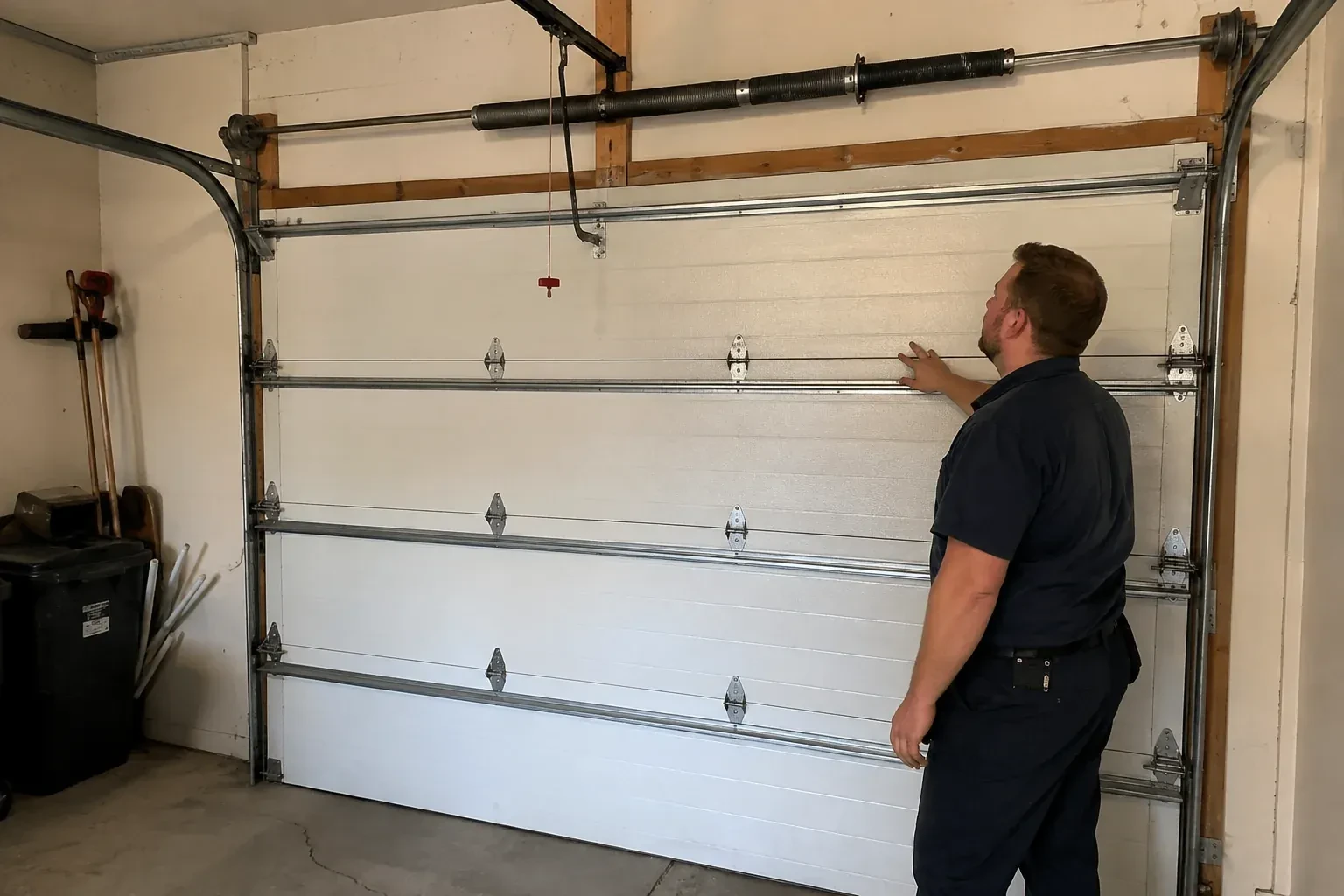
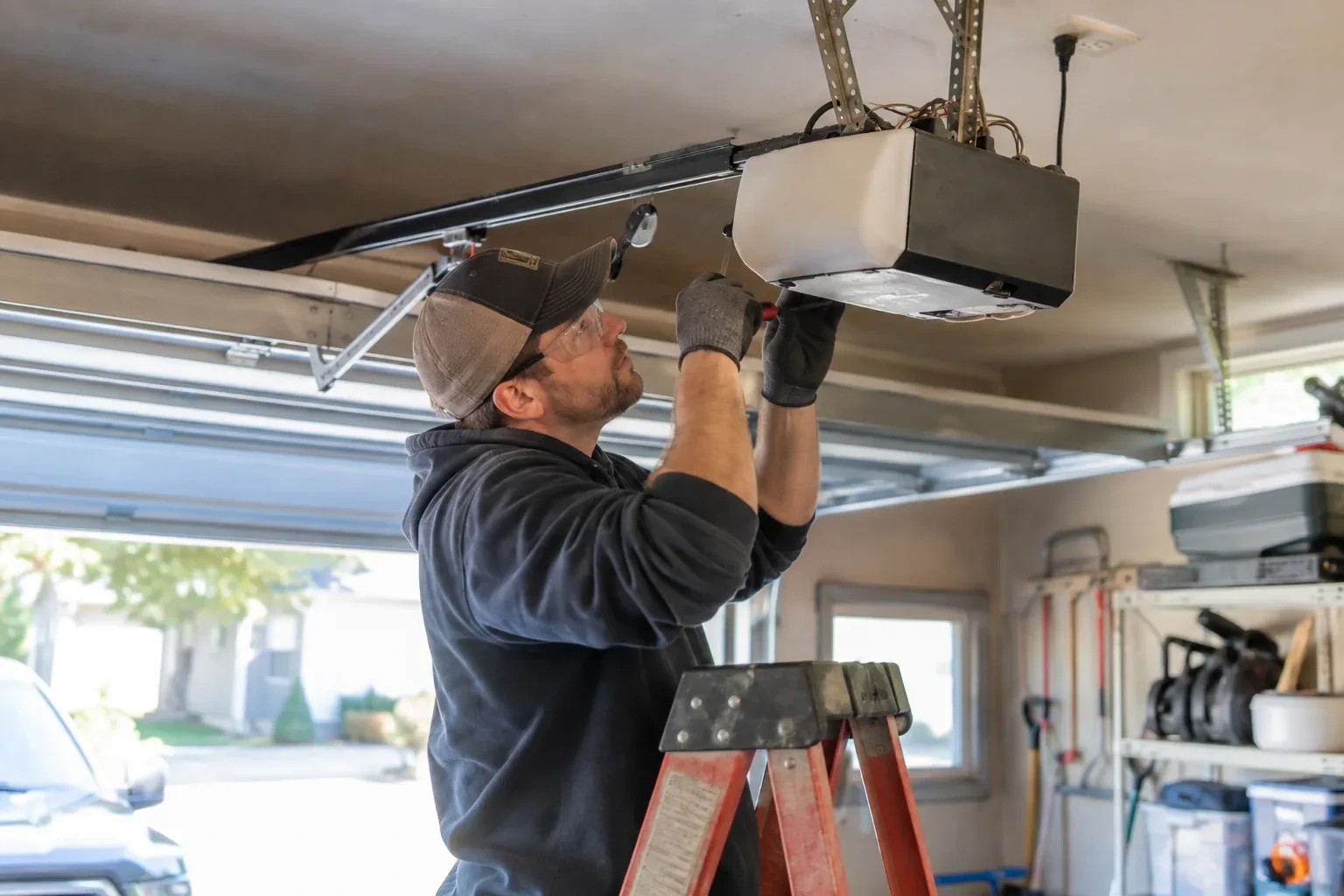
A garage door is balanced when its springs carry almost the whole weight of the door, so the door itself is nearly weightless in your hands and the opener only has to guide it. Balance adjustment is the service that restores that state. The technician disconnects the opener, moves the door by hand to see where it drifts or sinks, inspects the springs, cables and rollers, and then changes the spring tension in measured steps until the door holds still partly open, stays up when fully raised, and closes without slamming. The opener is then reconnected and its settings checked against the corrected door.
How the visit goesOn cold mornings the door barely makes it up. The motor whines, the door crawls, and once or twice it has given up halfway. By afternoon, with the sun on the garage, it runs almost normally again.
Garage Door Balance Adjustment
How the visit goes
Friction along the path
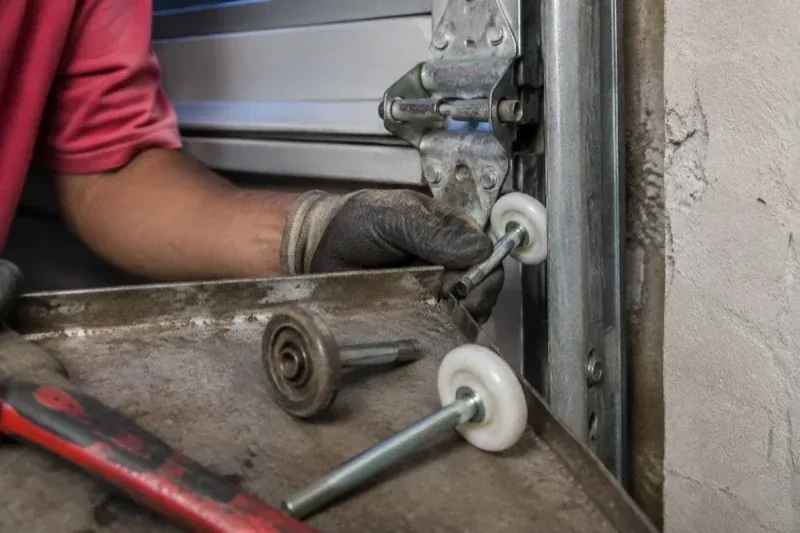
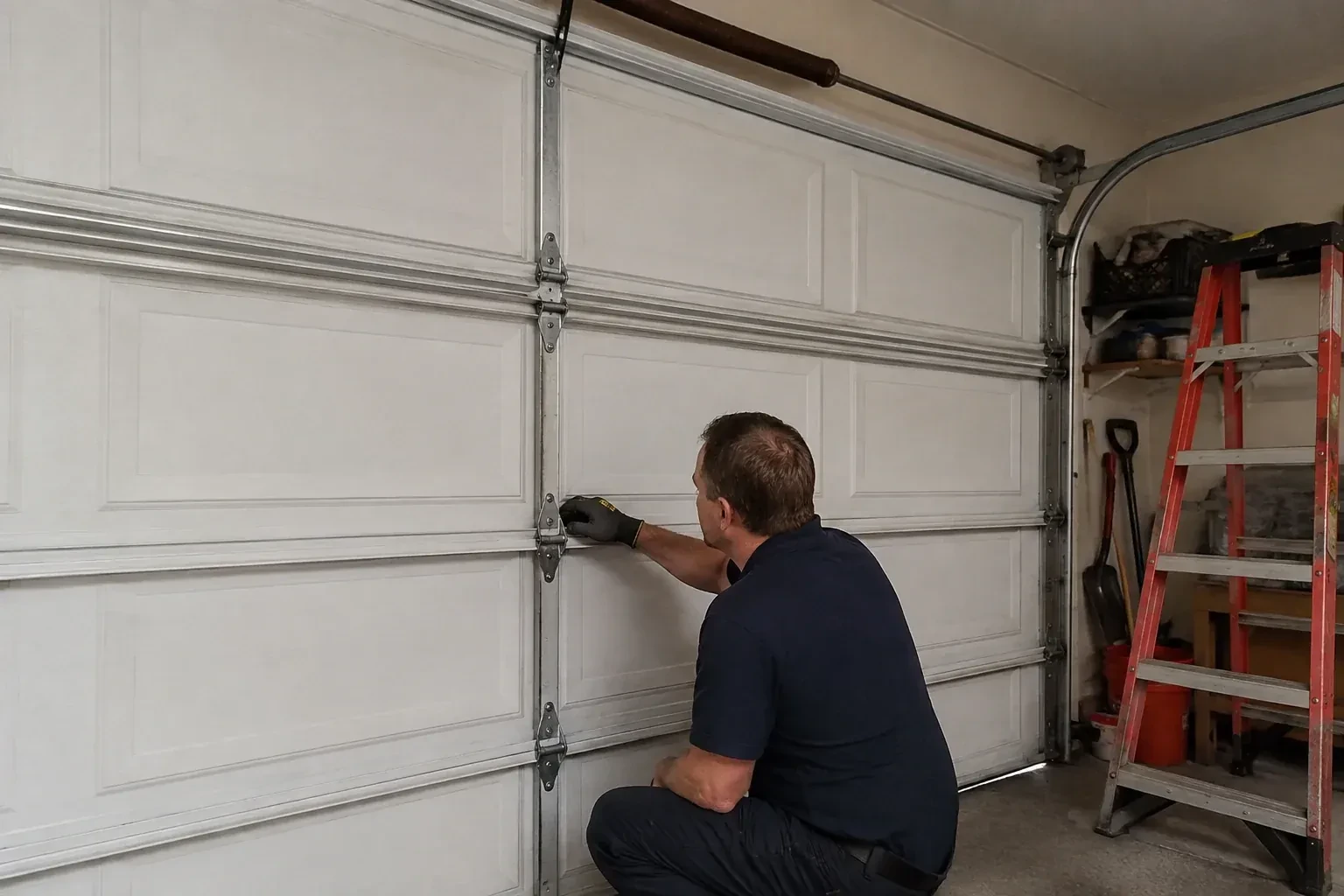
Some doors that feel heavy are not short of spring tension at all; they are dragging. The technician runs a hand and an eye along the vertical and horizontal tracks for dents, misaligned joints and brackets that have pulled away from the jamb, spins each roller to find seized bearings or cracked wheels, and flexes each hinge for play or splits. Dry, worn rollers alone can add real effort to every lift. Binding at one point in the travel, rather than heaviness everywhere, is the signature of a friction problem, and correcting it first means the springs are then adjusted to the door's true weight rather than to the drag.
Adding or releasing quarter turns on a torsion spring
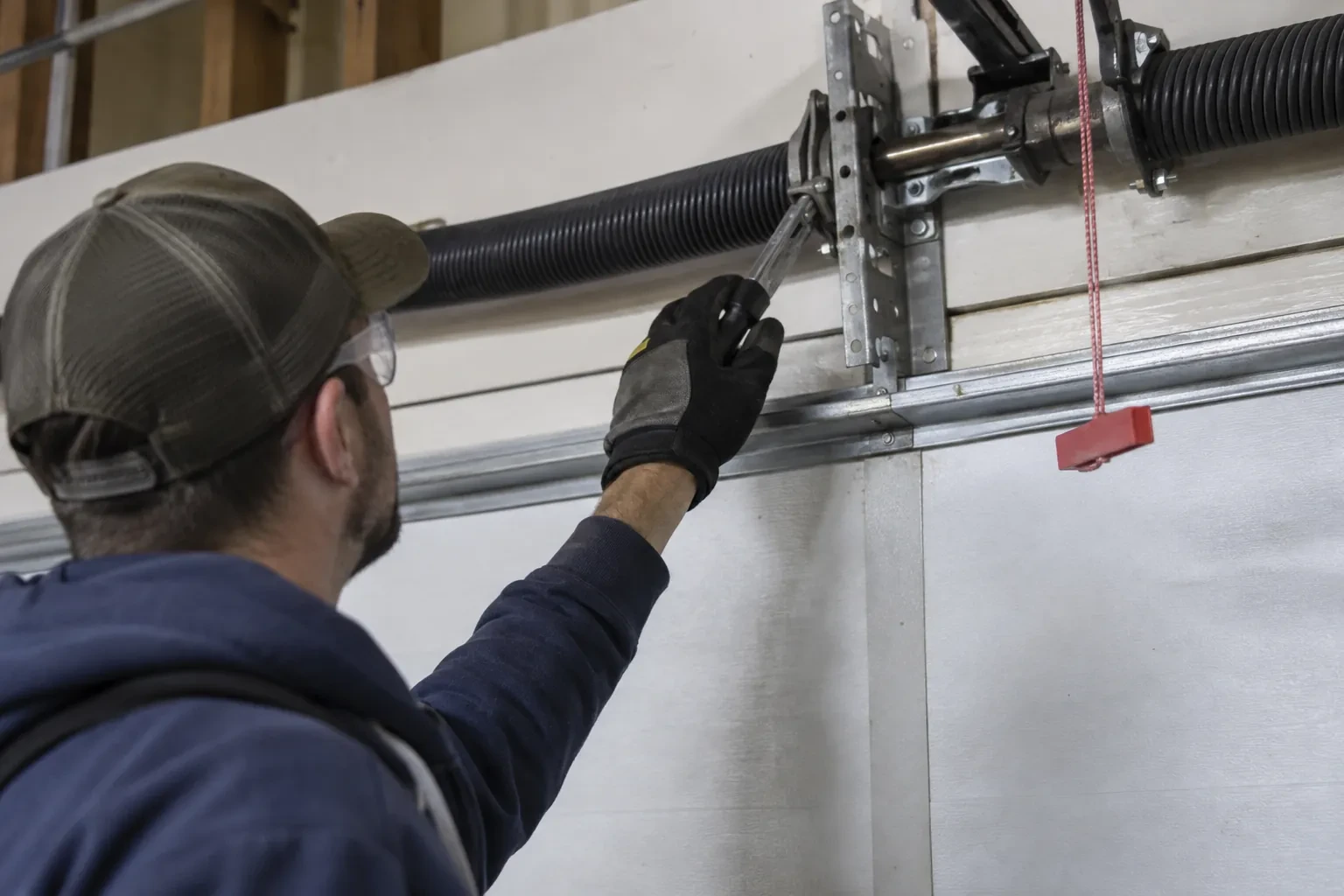
With one winding bar seated firmly in the winding cone and a second ready, the technician loosens the cone's set screws and either adds tension by levering the bar upward or releases it by letting the bar down, always a quarter turn at a time, always with a bar in the cone. After each quarter turn the set screws are tightened onto the shaft, the clamp is removed and the door is lifted by hand to test. A door that sank now holds a little higher; a door that climbed now settles. On a two-spring door the same change is made to both springs so they share the load equally.
A record of the setting
Before leaving, the technician tells you how the door was set: the number of turns on each torsion spring or the hook position on each extension spring, the spring dimensions, the door's measured weight if it was weighed, and any parts that were replaced. Writing this on a card by the opener or inside the manual saves a future technician from starting from scratch, and it gives a reference point if the door ever starts to drift. Springs age gradually, so a note that says the door held at a certain number of turns tells a later visit how far things have moved.
Garage Door Balance Adjustment
In the van
Replacement hinges
Track clamps or locking pliers
Winding bars
Lift cables
Garage-door lubricant
Garage Door Balance Adjustment
What affects the quote
Commercial or oversized doors
Doors wider or heavier than a standard residential opening use heavier springs, sometimes several on one shaft, and take longer to wind and test, which the quote reflects.
Door height and lift type
Taller doors and high-lift or vertical-lift hardware carry more spring turns and different drums, so setting and testing them takes longer than a standard seven-foot door.
Condition of cables and drums
Cables that are fraying or drums with worn grooves found during the check are recommended for replacement while the system is being set, and quoted as their own items.
What to have ready
- Is there storage or shelving near the spring shaft that needs moving?
- Has anything been added to the door, such as insulation, windows or a new section?
- Is it a single or a double door, and roughly how tall?
Garage Door Balance Adjustment: questions
QuestionsWill I need new springs, or just an adjustment?
The inspection decides, and looks past appearance alone. A spring can look sound, with tight, evenly spaced coils, no rust pitting and no gap, and still be the wrong specification for the door or nearing the end of its service life. The technician checks the spring's specification against the door's weight and history: a spring that checks out is wound and left in service, while one that is undersized, stretched, corroded or close to its cycle life is better replaced. Either path ends in a balanced door.
Can a door with a broken spring be balanced?
A broken spring is replaced rather than adjusted; there is nothing left to wind. On a two-spring door the technician normally replaces both, since the survivor has the same age and cycle count, and then balances the door on the new pair. Until the visit, leave the door closed and avoid running the opener, which is not designed to lift the door's full weight on its own.
What is the difference between balancing a torsion door and an extension-spring door?
A torsion door has springs on a shaft above the opening, and tension is changed by winding the springs with steel bars, a quarter turn at a time. An extension door has springs along the tracks, and tension is changed by moving the hook or cable clip to a different position with the door open and clamped. The hand test that proves the result is the same for both.
Related services
- Garage Door Hinge ReplacementWatching from inside as the door opens, you can see the gap between the second and third panels open up on one side as they turn the corner into the ceiling, then close again.
- Garage Door Track Repair or ReplacementHalfway up, the door lurches and one roller rides onto the lip of the channel.
- Garage Door Cable ReplacementStanding inside with the door closed, you notice the cable on the right side near the floor has gone fuzzy.