Springs · Toronto
Garage Door Track Repair or Replacement
Halfway up, the door lurches and one roller rides onto the lip of the channel.
In plain words
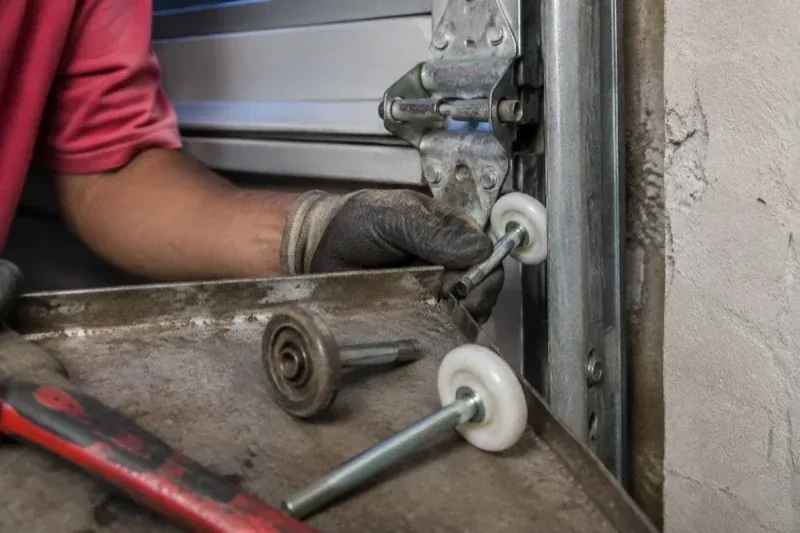
Track rarely fails on its own; something moves it. A bumper creases the vertical run, vibration works lag screws out of the jamb, slush and salt eat the bottom foot of the channel, worn rollers slowly spread the lip, and a hanger pulling from the ceiling lets the horizontal run sag. Track repair treats the cause with the symptom: the jamb is repaired if it has gone soft, rollers are renewed if they did the spreading, hangers are refixed into joists, and the threshold is checked for ice ridges. Correcting the reason is what keeps the straightened track straight for years.
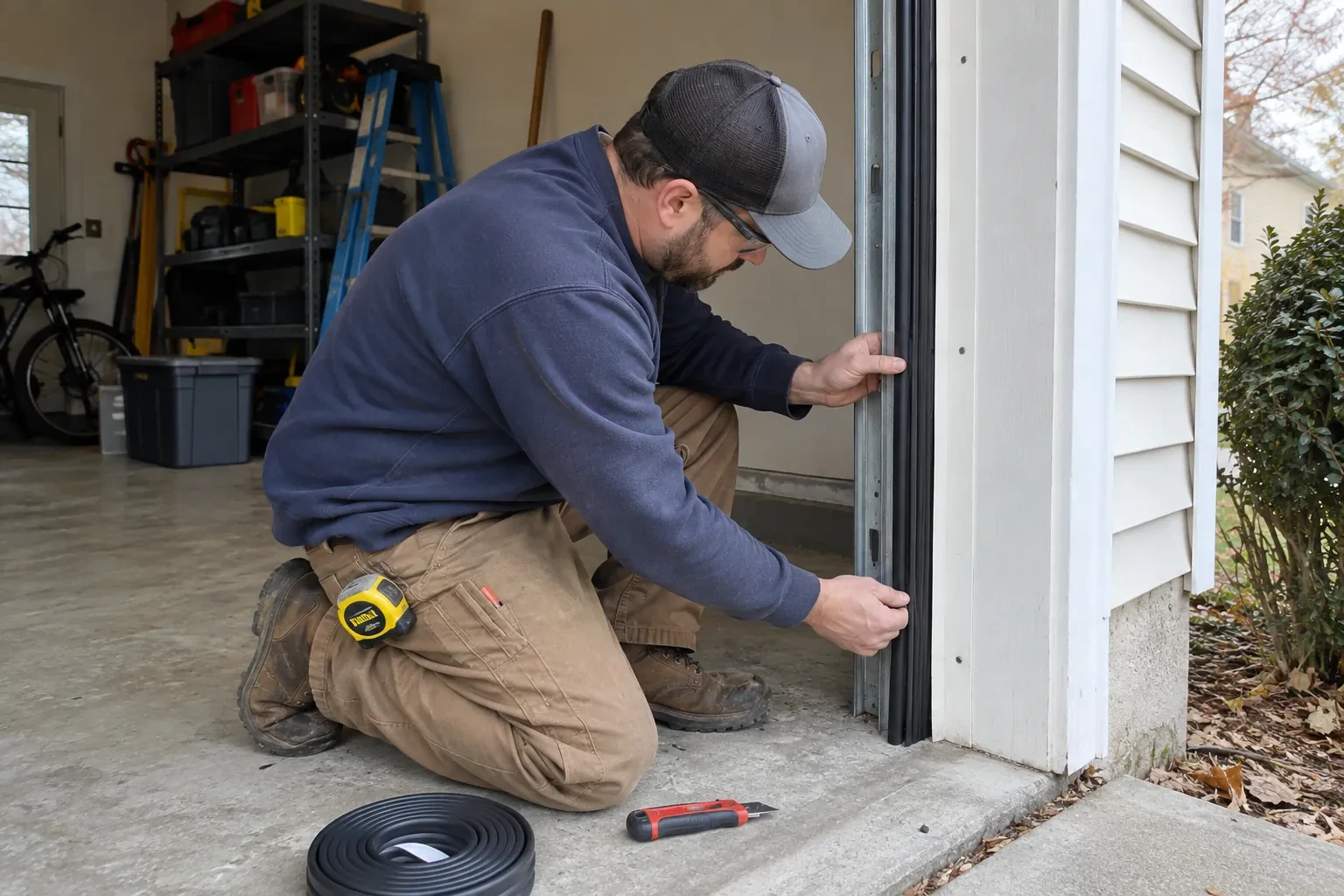
How the visit goesBacking out this morning, the mirror caught the track beside the door. Now there is a crease in the steel at about knee height, and the door stops with a bang every time a roller reaches it.
Garage Door Track Repair or Replacement
How the visit goes
The curve and the flag bracket
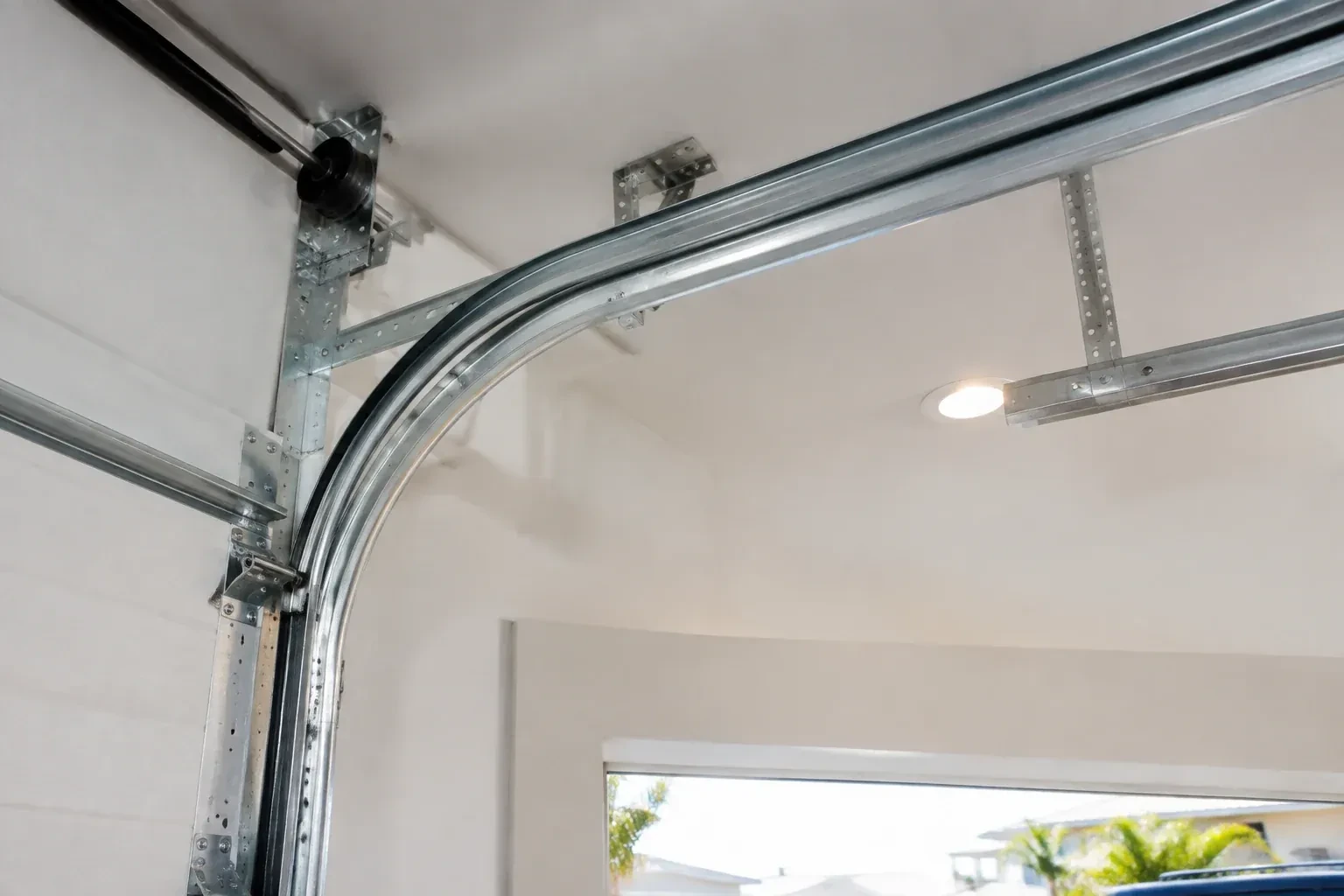
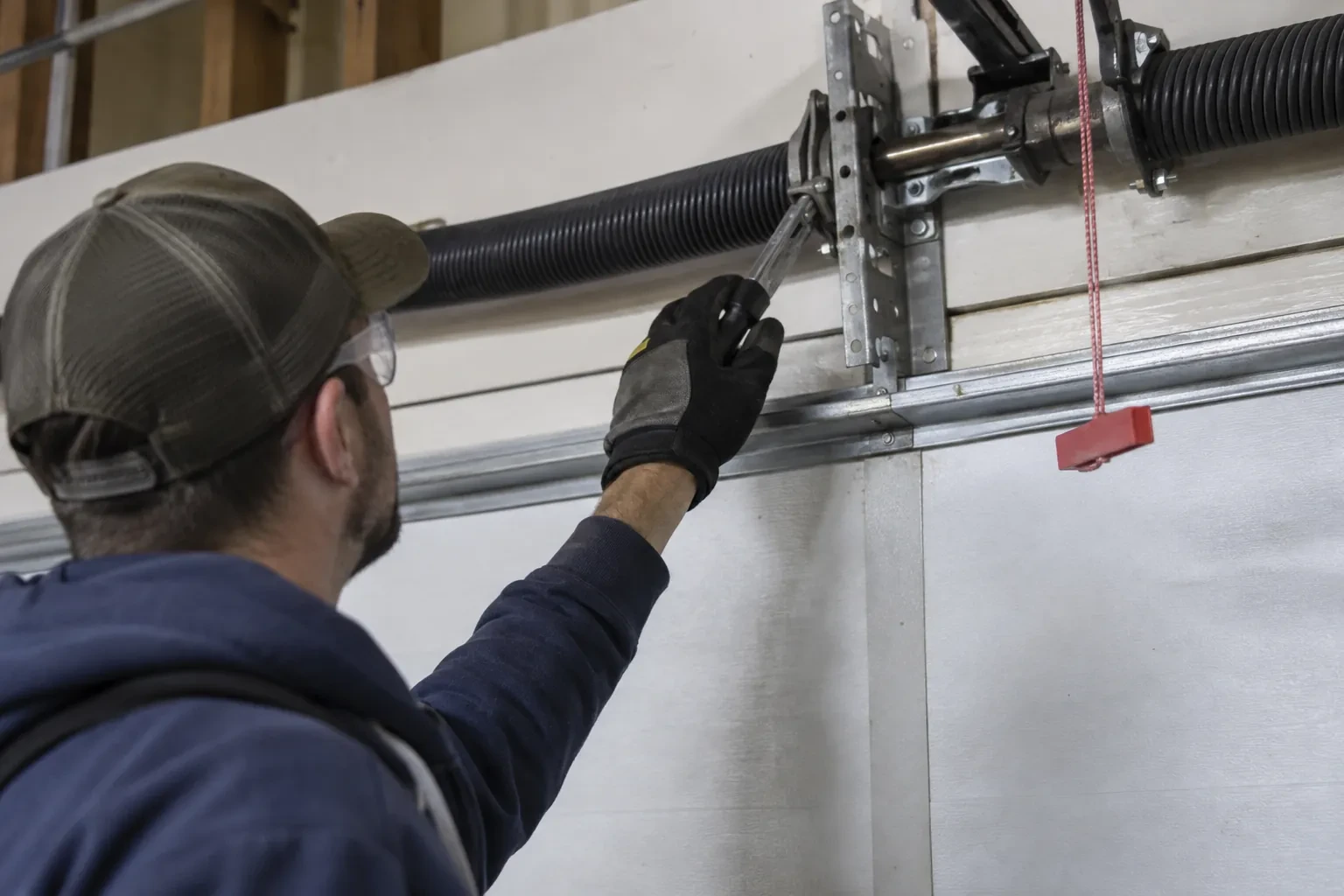
The curved piece where vertical meets horizontal takes the door's weight at the moment its direction changes, and it is the part least forgiving of a bend. The technician checks the curve for flattening, a twist or a kink, and confirms both sides share the same radius. Above it sits the flag bracket, the L-shaped angle that ties vertical track, horizontal track and, on a torsion door, the end bearing plate together. A loose or bent flag bracket shifts everything it holds, so its fasteners and squareness are checked with particular care, and the technician notes that the springs will be unloaded before that bracket is moved.
Setting the geometry
With the pieces in place, the technician sets the track to the door rather than to the wall. Each vertical run is plumbed, the gap to the door edge is matched side to side, and the top of each run is eased away from the jamb by the small amount that lets the door seal at the stop when closed and release on opening. The horizontal runs are levelled to each other and squared to the verticals, and the distance between the two tracks is checked at the floor, at the curve and at the rear so the door is neither pinched nor loose anywhere in its travel. Every bracket is then tightened in that position.
Jamb wood that will hold a screw again
If the visit included repairing the jamb, you now have sound timber behind every bracket, and the small habits that keep it that way are simple. Keep the bottom of the jamb dry: slush pushed clear, a bead of exterior caulk where the trim meets the slab, and paint or stain kept up on the exposed face. Look once a year for the tell-tale dark, soft patch at floor level and for screws that seem to have moved. A jamb that stays dry holds lag screws for decades, and with the track now fixed into good wood, the alignment set today has something solid to rest on.
Garage Door Track Repair or Replacement
In the van
Jamb lumber and construction screws
Perforated angle back hangs
Jamb brackets or continuous angle
Horizontal track with curve
Flag brackets
Garage Door Track Repair or Replacement
What affects the quote
Damage to sections and bottom hardware
When a bumper strike has also dented the bottom section or bent a bottom bracket, that repair is described and priced separately from the track so you can decide each on its own.
Bracket-mounted or continuous angle
Track on jamb brackets is adjusted bracket by bracket, while a full-height angle comes off and goes back as one piece. Each mounting style shapes the time and the fasteners quoted.
Rollers, hinges and top fixtures damaged alongside
Parts that suffered while the door was catching, such as flat-spotted rollers, split hinges or bent top fixtures, are offered as their own items so the new track is not chewed by the old damage.
What to have ready
- Is the wood beside the door soft, split or discoloured at the floor?
- Is there rust on the track or brackets near the floor?
- Is it a single or a double door, and roughly how tall?
Garage Door Track Repair or Replacement: questions
QuestionsWhy is the horizontal track sagging?
The horizontal run hangs from the ceiling on back hangs of perforated angle, and it sags when a hanger bends, its screws pull out of a joist, or it was only ever fixed into drywall. A sagging hanger droops that run out of level or its intended pitch. The fix is a straight or new hanger screwed into solid framing, with the run set to the manufacturer's specified pitch and matched to its partner; a door that drifts back toward the opening once raised is a separate, balance-related symptom.
Why is there a gap between the track and the edge of the door?
That gap is intentional. The rollers sit on stems that reach out from the hinges, and the track stands a set distance from the door so the wheels ride in the channel without the door's edge touching the track. The gap should be equal on both sides and slightly larger at the top of the vertical run, which is the taper that lets the door seal at the stop and release on opening. Unequal gaps are a sign the track has moved.
Does a new piece of track have to match the rest of the set?
It does. Profile, gauge and radius all need to agree so a roller passes from old track to new without a step, and so both sides carry the door the same way. A two-inch track cannot mix with three-inch hardware, and a 12-inch curve beside a 15-inch one leaves the door meeting the horizontal run at two different heights. The technician measures the existing track and orders to it rather than to a general size.
Related services
- Garage Door Hinge ReplacementWatching from inside as the door opens, you can see the gap between the second and third panels open up on one side as they turn the corner into the ceiling, then close again.
- Garage Door Cable ReplacementStanding inside with the door closed, you notice the cable on the right side near the floor has gone fuzzy.
- Torsion Spring ReplacementNothing broke outright, but the door has grown heavier each winter, opens more slowly and squeals as it moves.