Springs · Toronto
Garage Door Hinge Replacement
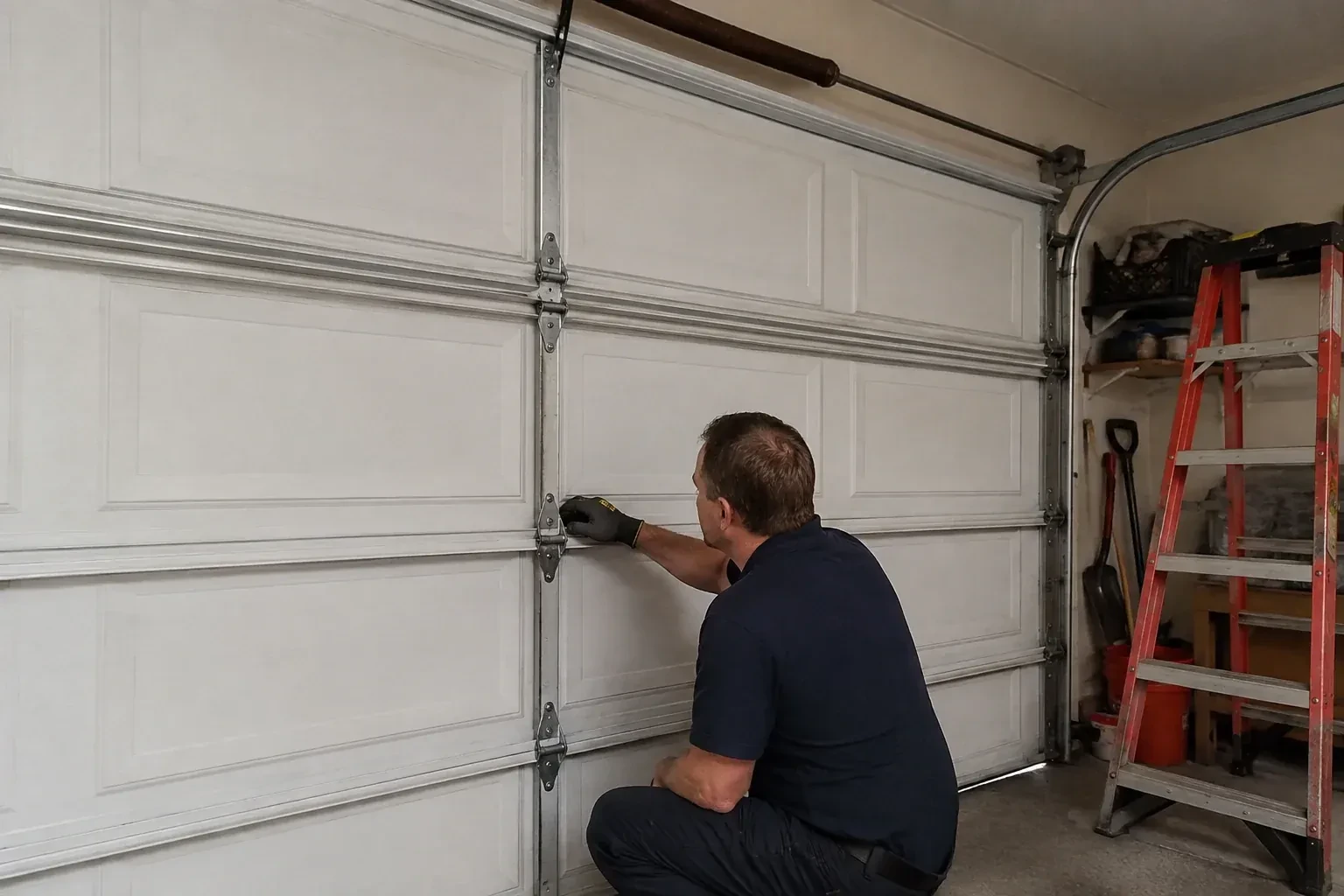
Watching from inside as the door opens, you can see the gap between the second and third panels open up on one side as they turn the corner into the ceiling, then close again.
In plain words
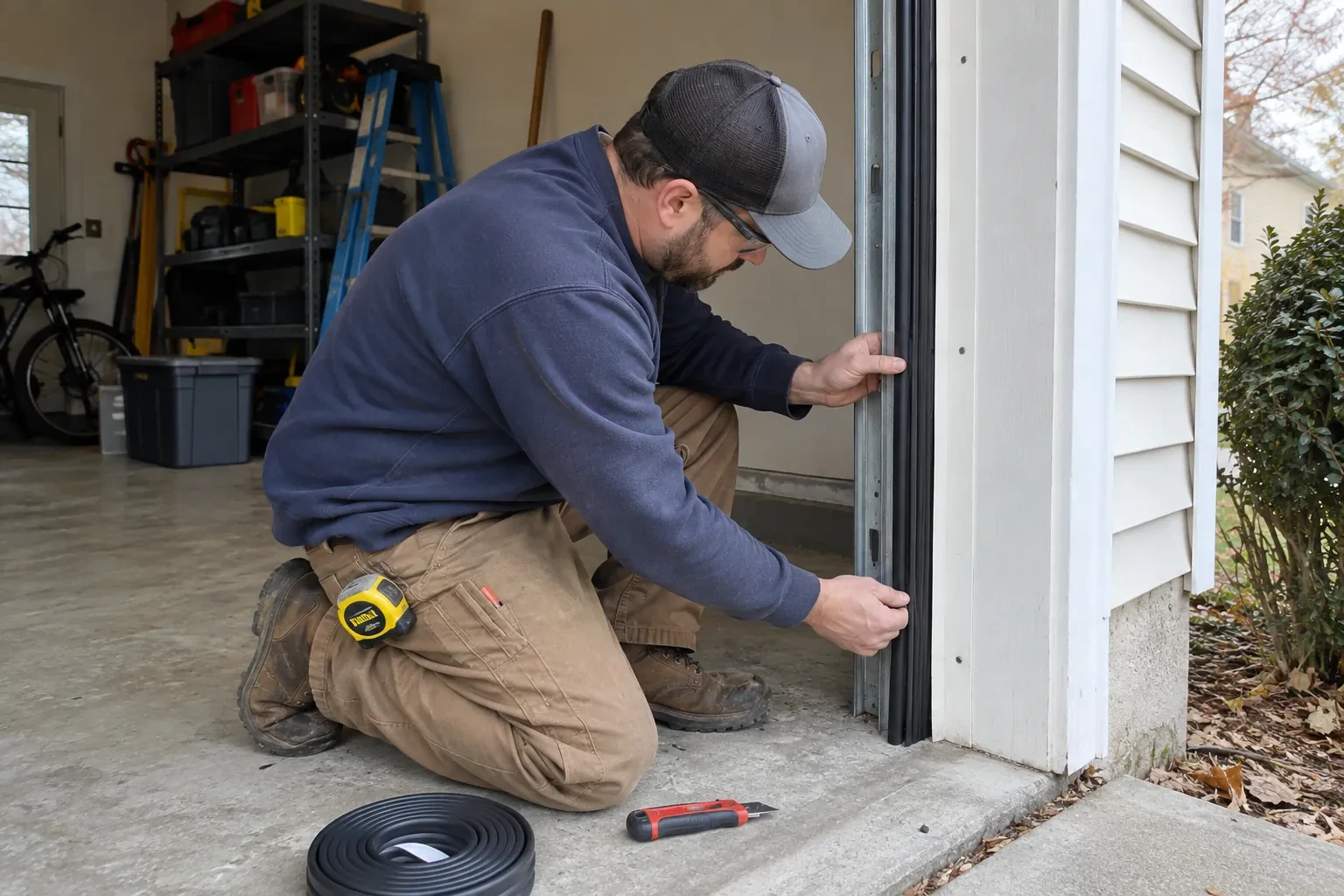
Winter puts the lowest hinges through the most. Slush and road salt land on the bottom two joints, and the salt eats into the galvanizing where the leaf meets the pin. A bottom seal frozen to the slab is the other winter classic: the opener pulls on the top panel, the door stays put, and the hinges and top fixtures take a wrench they were never built for. Hinge replacement puts new galvanized steel on the worn joints, straightens or renews anything bent in the tug, and ends with two habits, a clear threshold and a wipe of the low hardware, that keep the new set sound.
How the visit goesOn the old wood door, one hinge has pulled away from the panel, dragging a screw and a chunk of soft timber with it. The panel sags slightly at that joint and the door bumps at the curve instead of gliding.
Garage Door Hinge Replacement
How the visit goes
Reading the number on each edge hinge
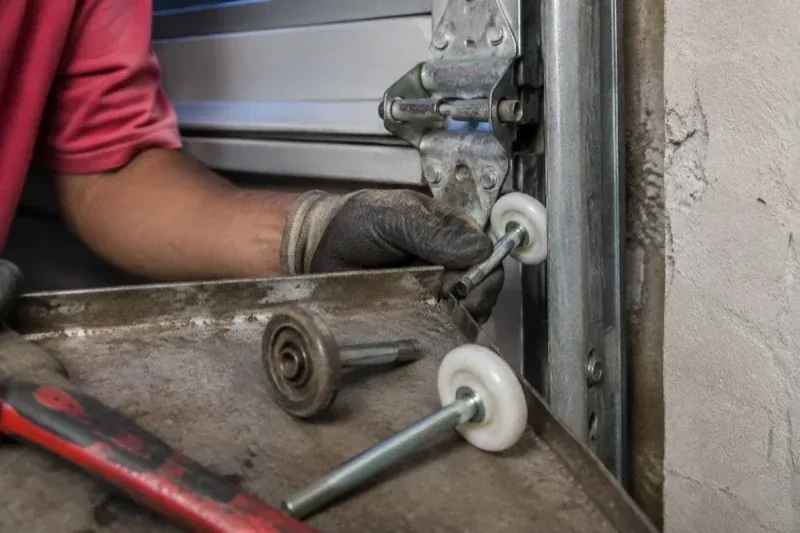
Every edge hinge carries a stamped number, and the technician reads it rather than assuming. A 1 sits at the joint above the bottom panel, a 2 at the next joint up, then 3, with 4 and 5 appearing on taller doors. The number sets how far the roller stands off the door, so the door leans into the jambs when closed and follows the track as it climbs. An earlier repair sometimes leaves a 2 where a 3 belongs, and that door binds or gaps at the curve for years without anyone knowing why. Confirming the number on each joint, and correcting any that are wrong, is part of the first look.
One hinge at a time, door closed
Hinges are changed singly, never a whole joint at once. With the door closed and the opener disconnected, the technician removes one worn hinge, fits its replacement and tightens it before moving to the next, so at every moment the joint is held by its other hinges and the panels stay aligned. Centre hinges go first when several are due, then the edge hinges. Each new hinge is set square to the joint line and snug to both panels before the screws are driven home, and the panels are checked for a flush face afterwards. This steady rhythm is what makes hinge work routine rather than eventful.
What was fitted, written down
Before leaving, the technician tells you which hinges were replaced, their numbers and gauge, whether rollers or backer plates went on, and anything corrected along the way such as a wrong-numbered hinge or a loose track bracket. Write it inside the door manual or on a card near the opener, along with the door's make and panel count. Hinge widths and hole patterns vary between manufacturers, so the next technician, or you at the parts counter, can match parts without measuring from scratch. If some hinges were left in place as sound, their condition goes on the same note so you know what to watch.
Garage Door Hinge Replacement
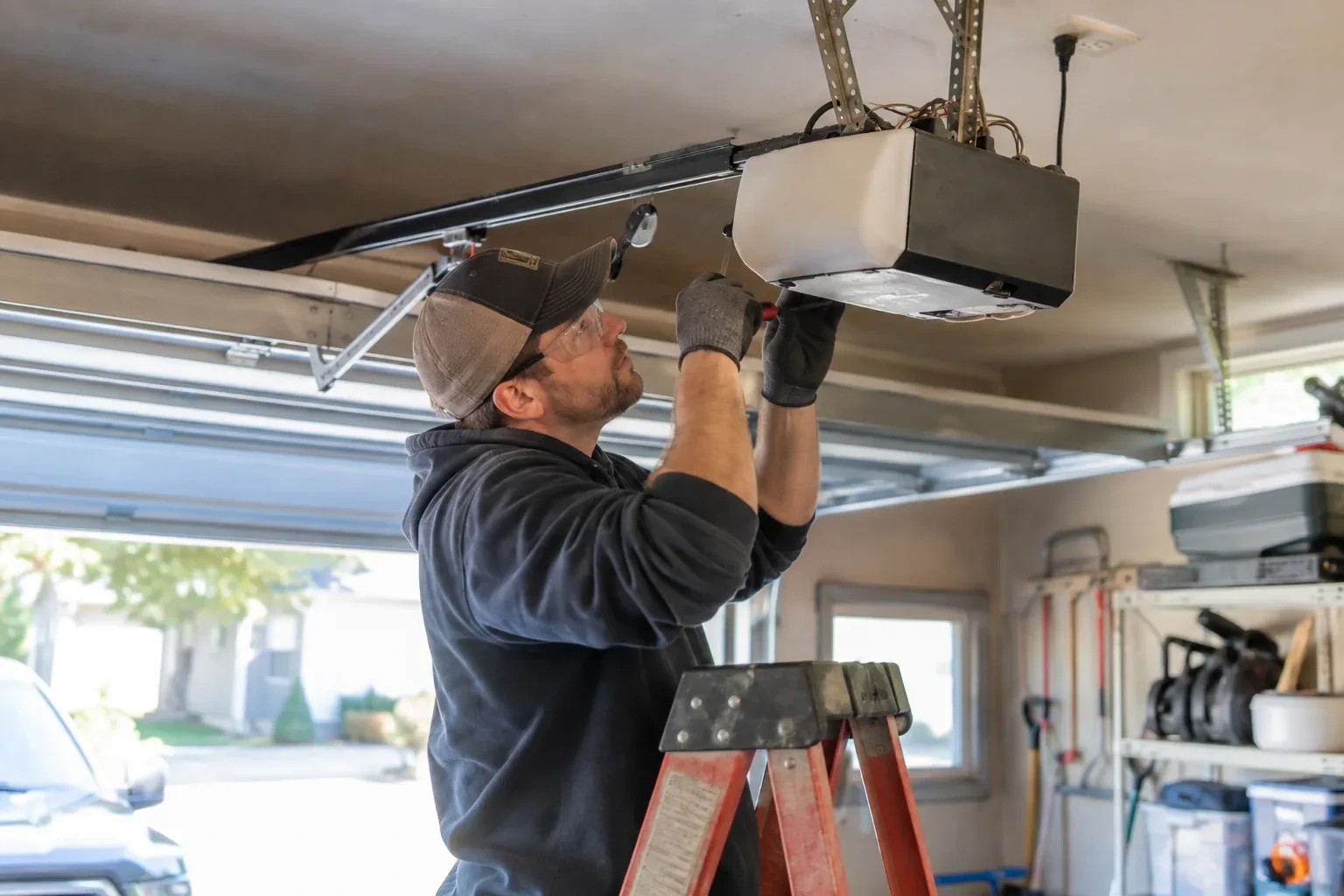
In the van
Track clamps or locking pliers
Heavy-gauge hinges for heavy doors
Socket set and impact driver
Flashlight and level
Hinge support plates
Garage Door Hinge Replacement
What affects the quote
Edge hinge or centre hinge
A centre hinge unscrews and refits in a few minutes. An edge hinge carries the roller and has to be worked out of the track, so it takes longer and is often paired with a roller.
Steel, wood or insulated door
A wood door takes different fasteners and often needs timber repaired around the holes; a heavy insulated door may need a heavier hinge. Construction shapes both the parts and the time.
Track or balance problems found
If the inspection shows a track out of line or a door out of balance behind the hinge failure, correcting it is explained and priced on its own alongside the hinge work.
What to have ready
- Has a car, bin or anything else bumped the door recently?
- Is the door closed, open or stuck partway right now?
- Did the door feel heavy, jerky or noisy before the hinge failed?
Garage Door Hinge Replacement: questions
QuestionsWhat are the hinges made of?
Stamped galvanized steel, formed into two leaves joined by a pin or a rolled tube. The zinc coating is what resists rust in a garage that sees wet cars and salt, and it is why a scratched or bent hinge starts to brown at the damaged spot. Edge hinges include a tube that holds the roller stem. Thickness is given as a gauge, most residential hinges being 14 or 18.
What happens during a hinge replacement visit?
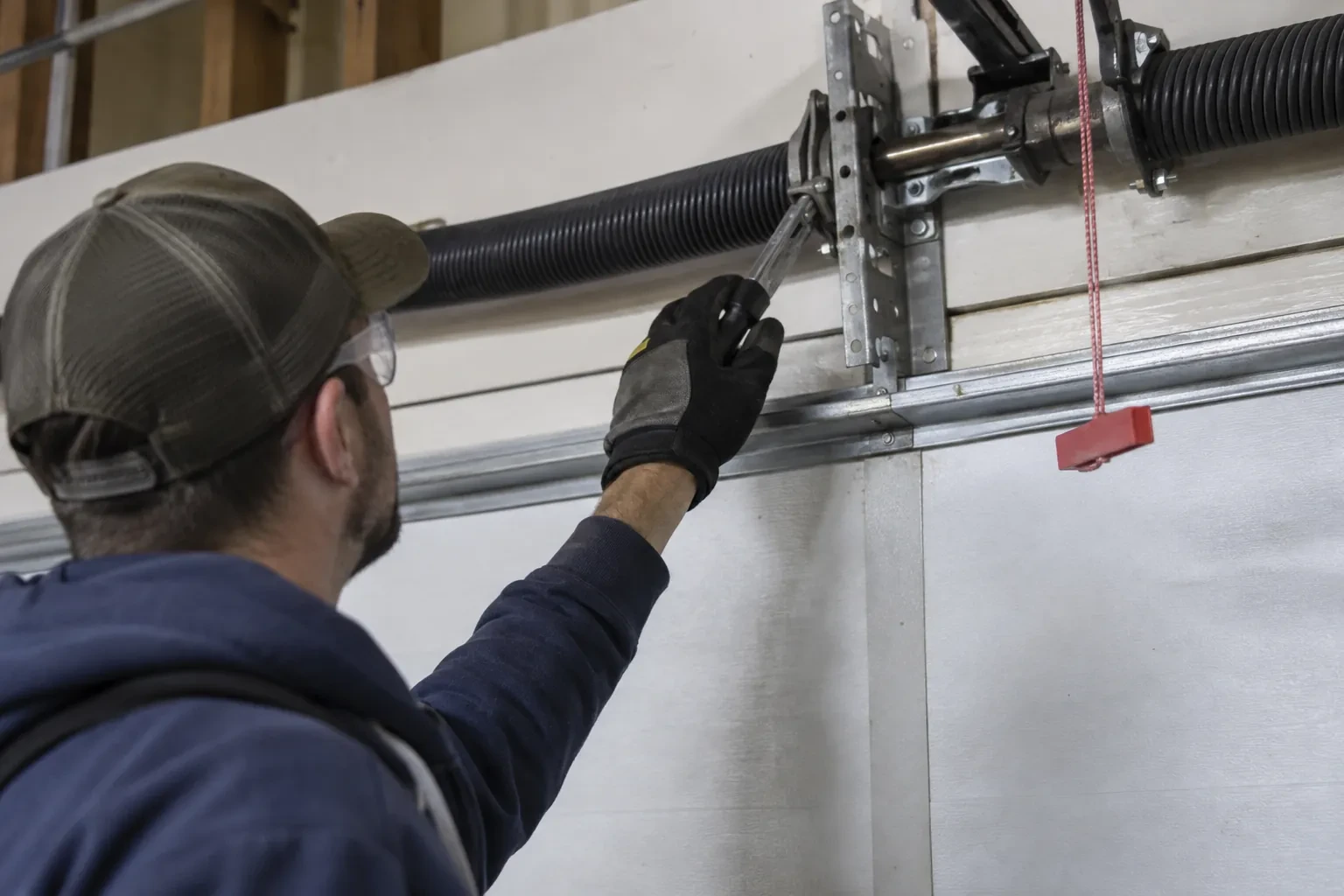
The opener is disconnected and the door left closed. The technician inspects every hinge, roller and screw hole and explains what was found. Worn hinges are then changed one at a time with parts of the same number and gauge, tired holes are re-anchored, and rollers are renewed where needed. The door is run by hand to check the panels fold cleanly and the fit against the jambs, balance is tested, and the opener is reconnected and its safety reversal tested.
Can a light bump from the car damage a hinge?
Yes, more often than people expect. The bottom two panels take the contact, and the edge hinge at that joint bends along with the stile behind it, so the panel edges rub and the roller leans. The damage sometimes only shows as a new squeak at the curve. The technician straightens or renews the stile, fits a new hinge and roller, and checks the strut and track on that side.
Related services
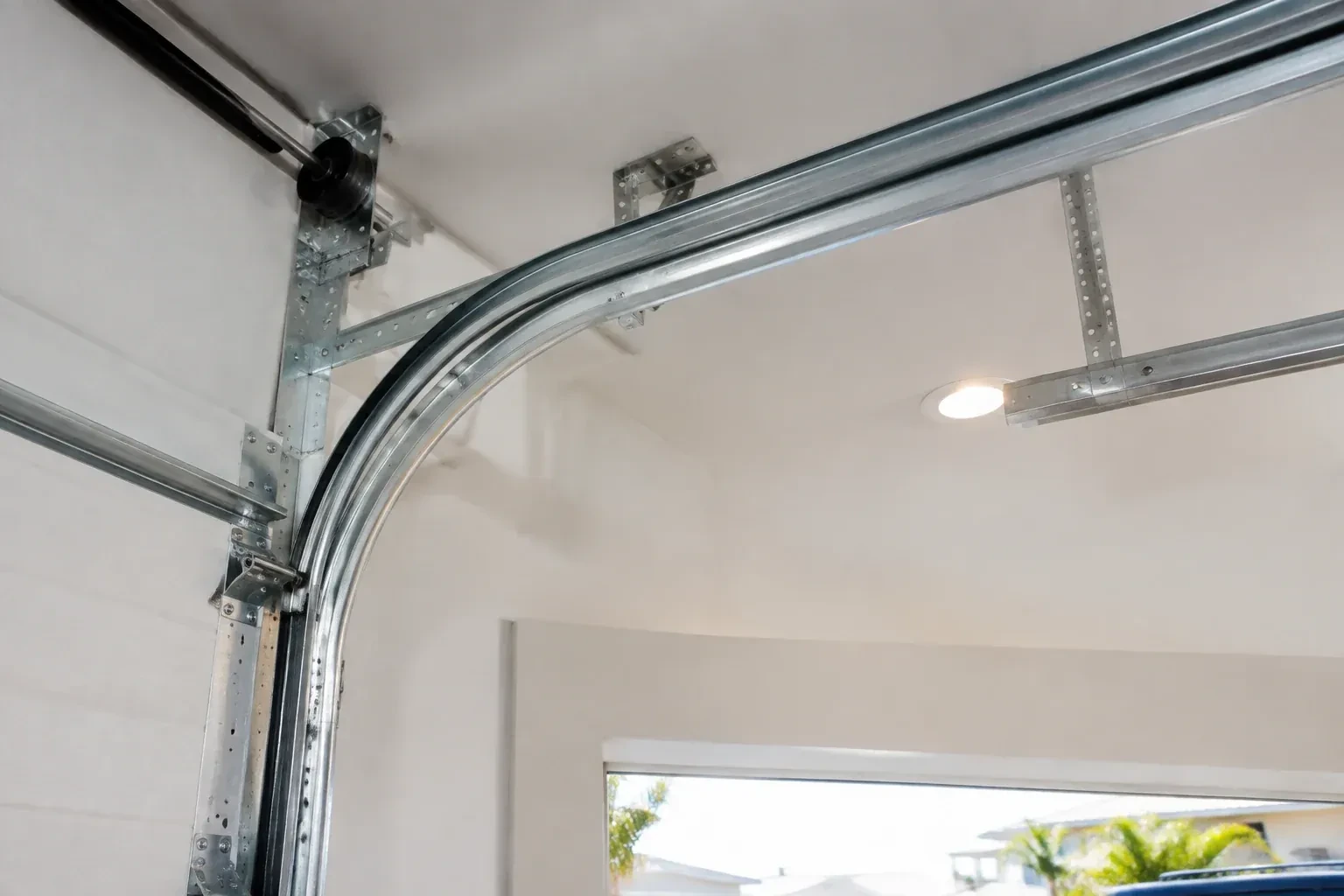
- Garage Door Track Repair or ReplacementHalfway up, the door lurches and one roller rides onto the lip of the channel.
- Garage Door Cable ReplacementStanding inside with the door closed, you notice the cable on the right side near the floor has gone fuzzy.
- Torsion Spring ReplacementNothing broke outright, but the door has grown heavier each winter, opens more slowly and squeals as it moves.