Repairs · West Hill
Garage Door Tune-Up in West Hill
Halfway up, the door shudders.
In plain words
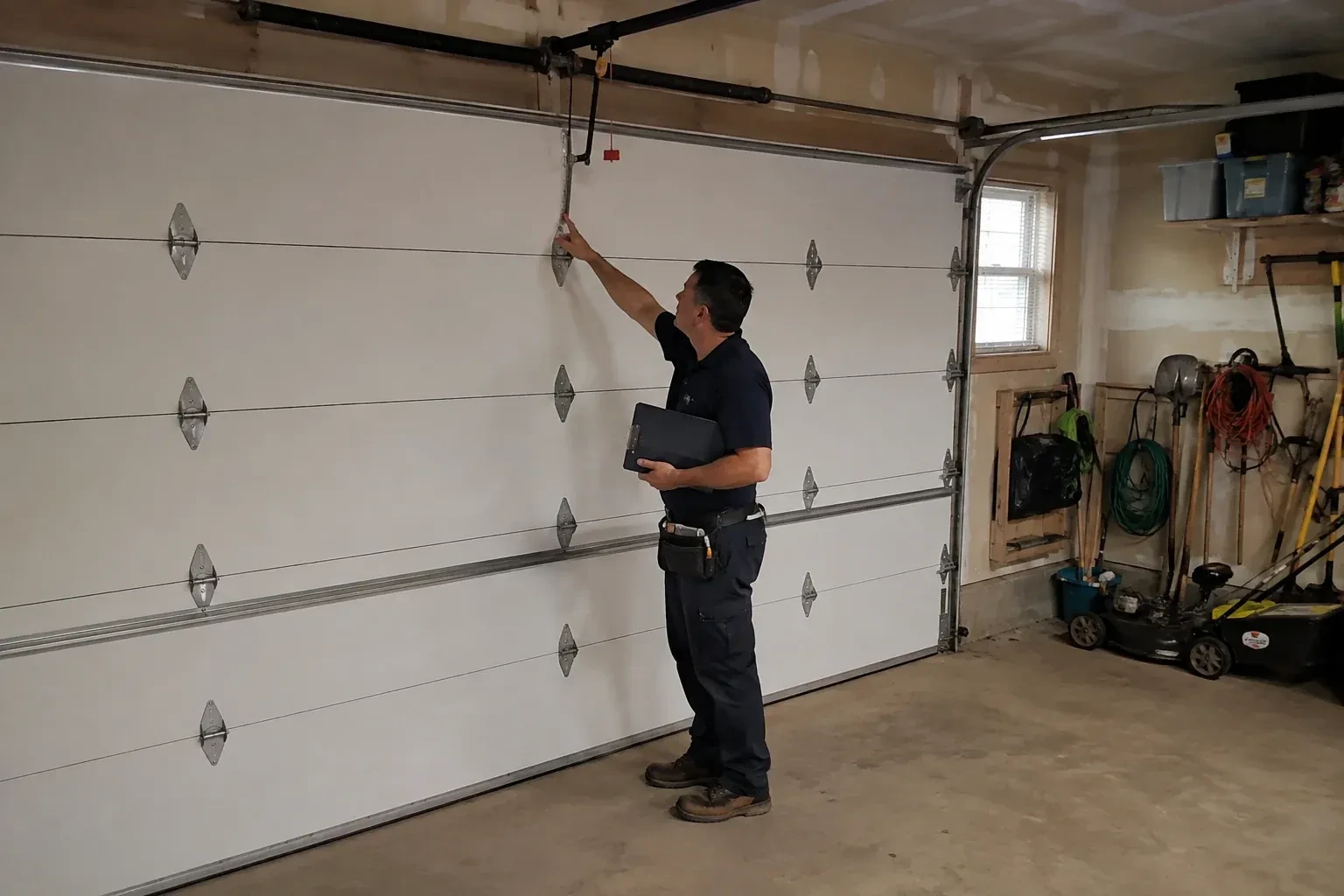
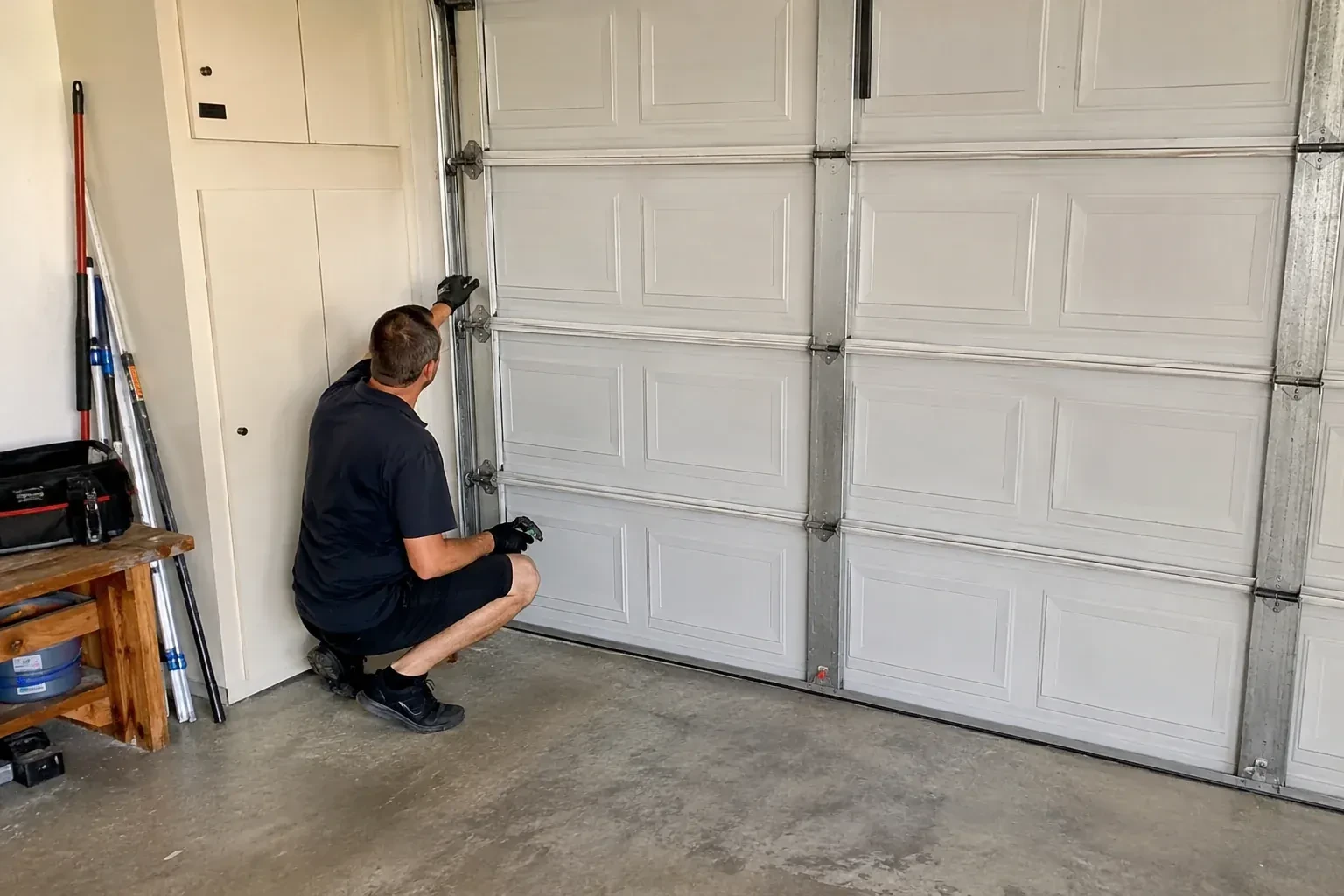
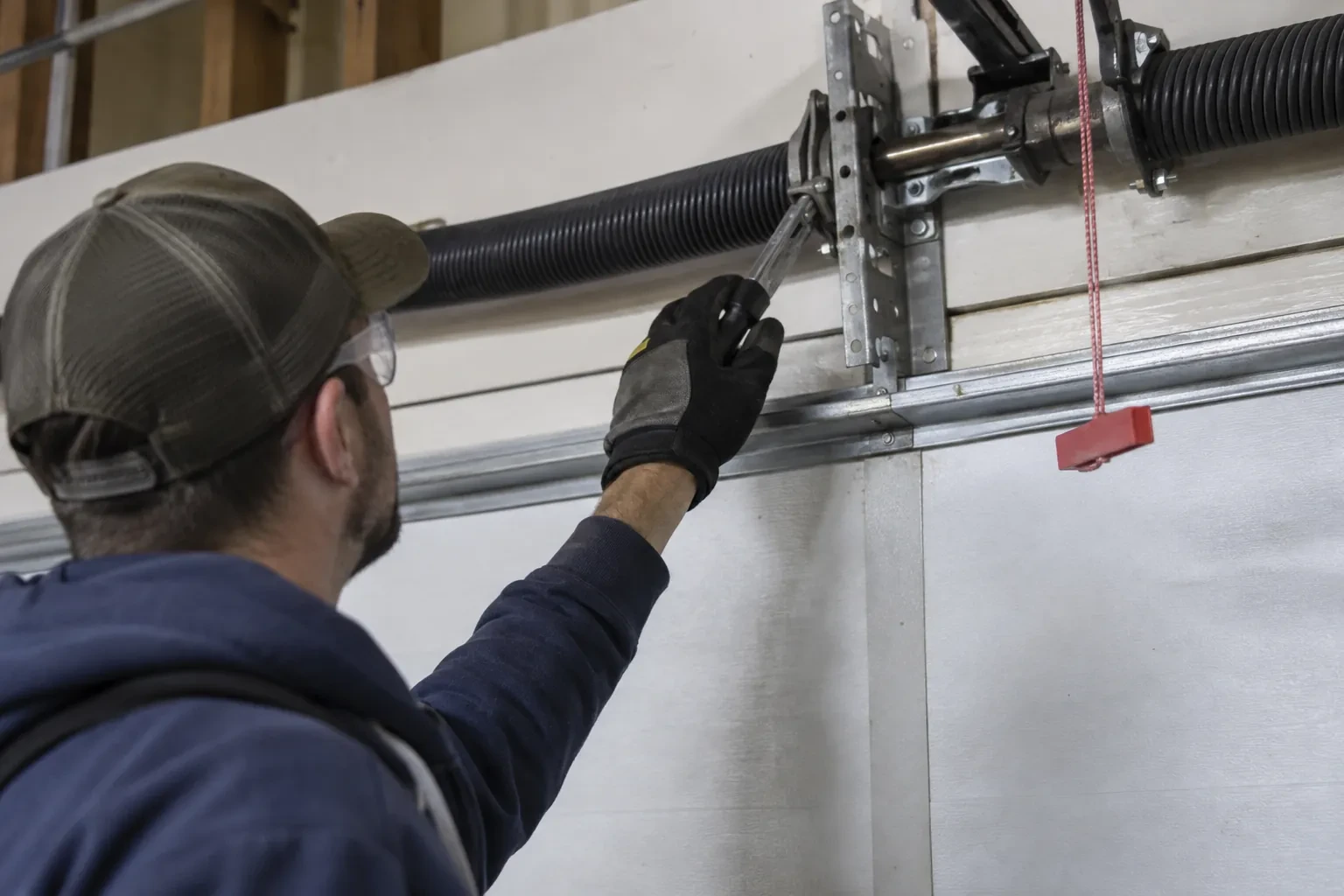
The visit follows a set order. First the technician watches a full cycle, up and down, from a safe distance, noting where the noise, shaking or hesitation lives. Then the door is closed and inspected hardware by hardware, from the bottom brackets to the torsion shaft. The manual release is pulled and the door is lifted by hand to feel the balance. Only then does the work start: fasteners, lubrication, opener adjustments and sensor alignment. A second cycle and the reversal tests close the visit, and the difference between the first run and the last is the measure of the tune-up.
How the visit goesYou moved in a few months ago and have no idea when the garage door was last looked at. The previous owners left the remotes on the counter and no paperwork, and the door works, but it works loudly and unevenly.
Garage Door Tune-Up
How the visit goes
Watching one full cycle first
Before a wrench comes out, the technician stands clear of the opening and runs the door all the way up and all the way down. They are listening and watching at the same time: where the squeal starts, whether the sections shake at a particular height, whether the door hesitates at the curve of the track, how it lands on the floor, and whether the opener labours or hums. Each observation is tied to a spot on the door or a point in the travel. That map guides the hands-on inspection that follows and gives a fair comparison at the end, when the same cycle is run again after the work.
Seals and the threshold
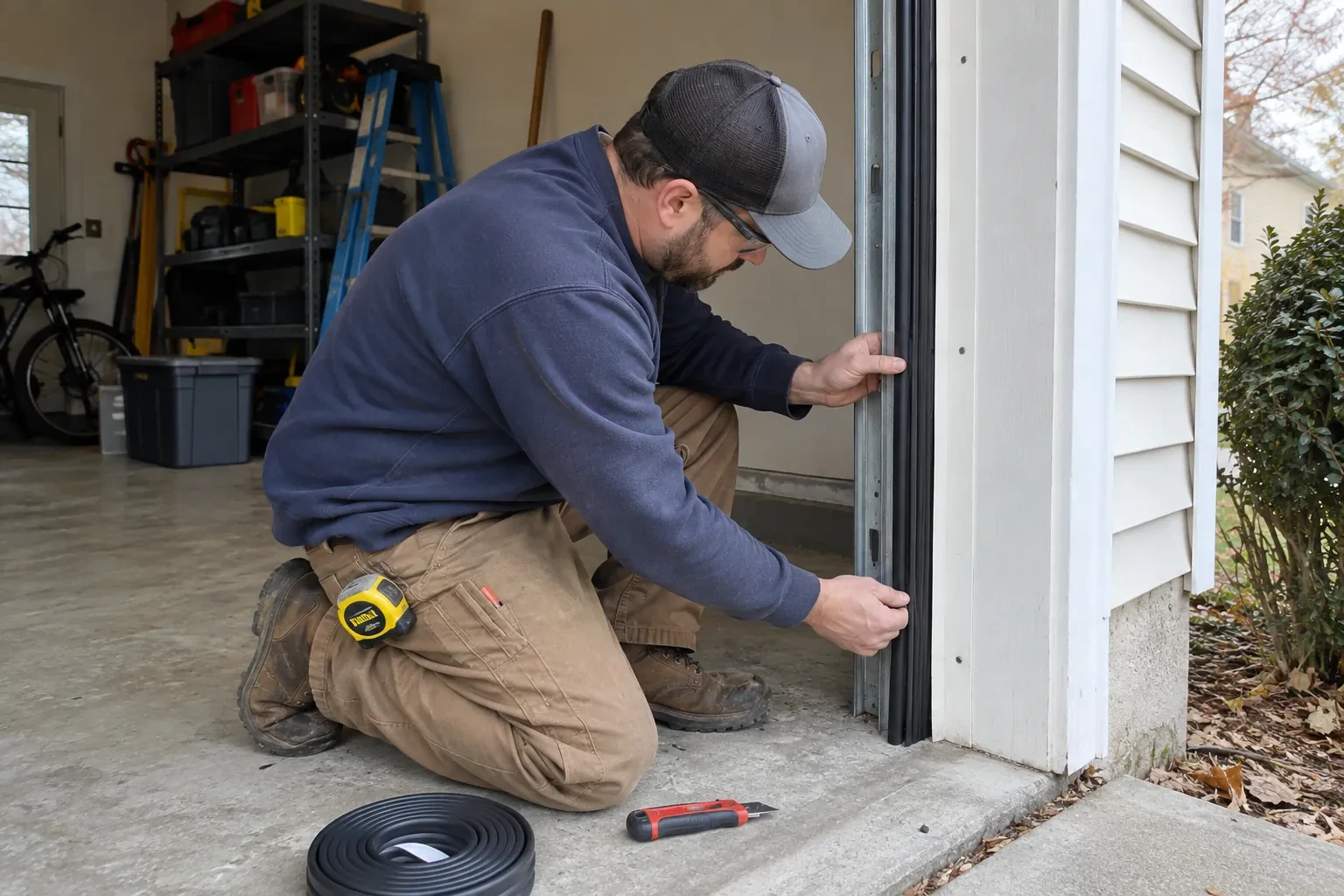
Rubber and vinyl get a silicone spray, never a petroleum product, which attacks the material. A bottom seal that is torn or has flattened can be replaced in the same visit if stock is on hand: the old length is drawn out of the retainer, the retainer is cleaned, and the new astragal is fed in and trimmed to width. Jamb and header weatherstrip that has gone hard or split is renewed so the door closes against a flexible edge and stops rattling in wind. Where the threshold holds water, the technician points out the low spot and suggests keeping it clear of ice, since a seal frozen to the slab is the usual winter casualty.
When to book the next one
How soon the door wants another visit depends on how hard it works. A door that cycles a few times a day, in an attached garage that sees salt, snow and meltwater every winter, does well with a tune-up once a year, usually in the fall before the cold arrives. A lightly used door in a detached garage can often go longer, with the monthly reversal tests and a little lubricant from you in between. The written record is your guide: if it lists parts to watch, the next visit checks those first; if everything was healthy, the interval can stretch. The technician will suggest a timing that fits your door rather than a blanket schedule.
Garage Door Tune-Up
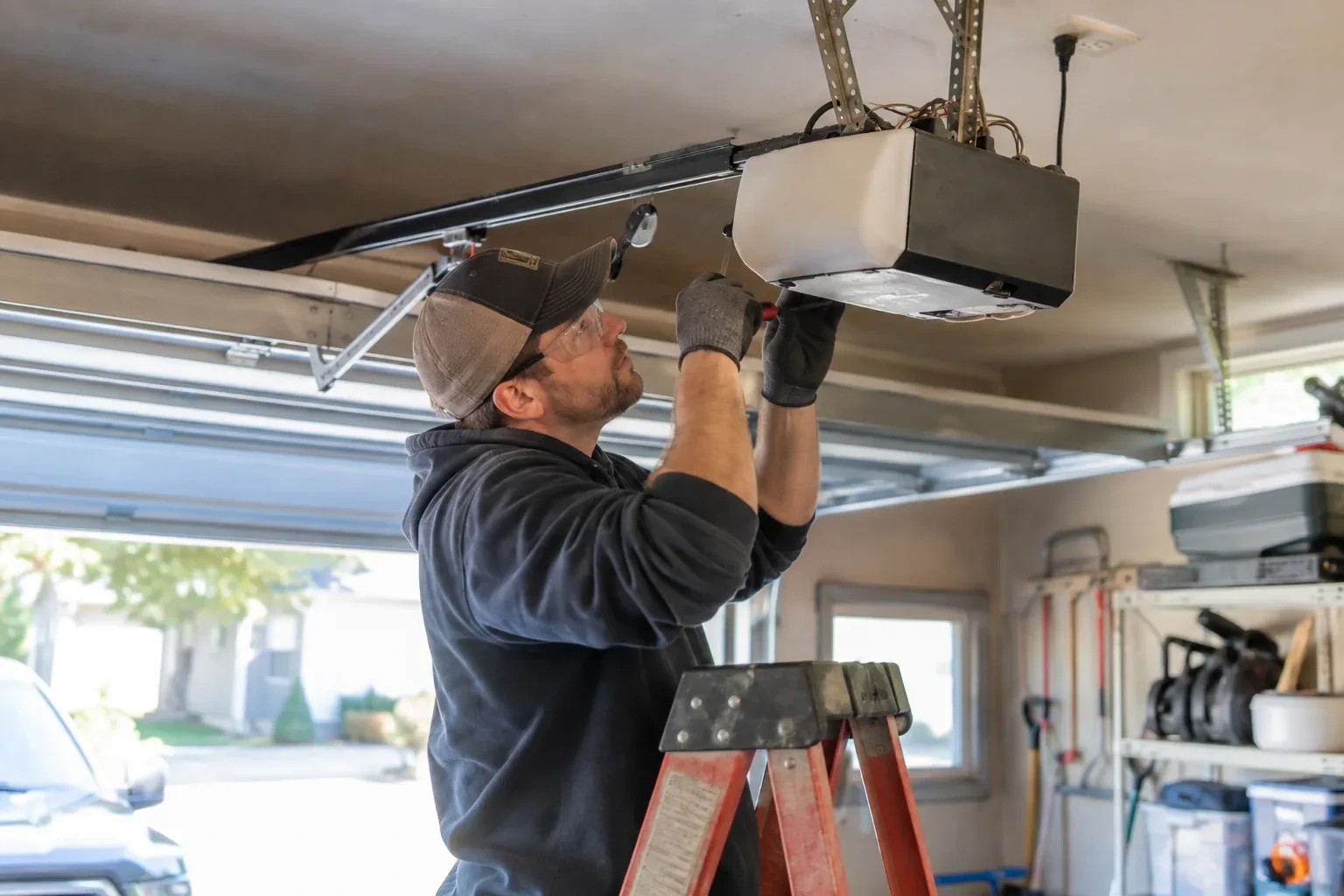
In the van
Photo-eye brackets and wire
Jamb and header weatherstrip
Socket set and drivers
Replacement hinges
Locking pliers or C-clamps
Garage Door Tune-Up
What affects the quote
Bottom seal and weatherstrip
Treating existing seals is part of the tune-up; replacing a torn bottom seal or renewing hardened jamb weatherstrip is additional material and time, quoted by the length involved.
Door construction and weight
A heavy wood or insulated steel door works its hardware harder than a light aluminum one, and the balance check and fastener work take a little longer on the heavier door.
Age of the door and opener
Older hardware may need fasteners in sizes no longer standard, and an opener without photo-eyes prompts a conversation about entrapment protection that is quoted separately from the tune-up.
What to have ready
- Where in the door's travel does the problem happen?
- Do both sensor lights near the floor glow steady, or does one blink?
- What brand is the opener, and is it a chain, belt, screw or wall-mounted unit?
Garage Door Tune-Up: questions
QuestionsHow long does a tune-up take?
For a single or double residential door with an opener, allow roughly an hour to two hours on site. The inspection and the two observed cycles take a fixed amount of time; the rest depends on how many fasteners have loosened, whether the sensors need realigning and whether you approve a small part replacement, such as a worn roller, during the same visit. Spring or cable work, if found necessary, is scheduled as its own job.
My door closes, then reopens on its own. Is that a tune-up job?
Often, yes. A door that reverses before reaching the floor usually reacts to one of three things: photo-eyes misaligned or dirty, a down travel limit set so the door meets the floor before the opener expects it, or a force setting so low that stiff hinges, debris or a roller out of true read as an obstruction, since a clean, dry track is what the door is meant to run on. A tune-up clears all three by aligning the sensors, resetting the limits and freeing up the door's movement.
What is the balance test and why does it matter so much?
With the door closed, the opener is disconnected using the red release handle and the door is lifted by hand. A balanced door rises with modest effort, stays fully open and holds still about a metre off the floor. The springs are meant to carry nearly all the weight so the opener only guides the door. A heavy or sinking door means the opener is lifting weight it was not built to lift, wearing its gear and making the reversal system less reliable.
Related services
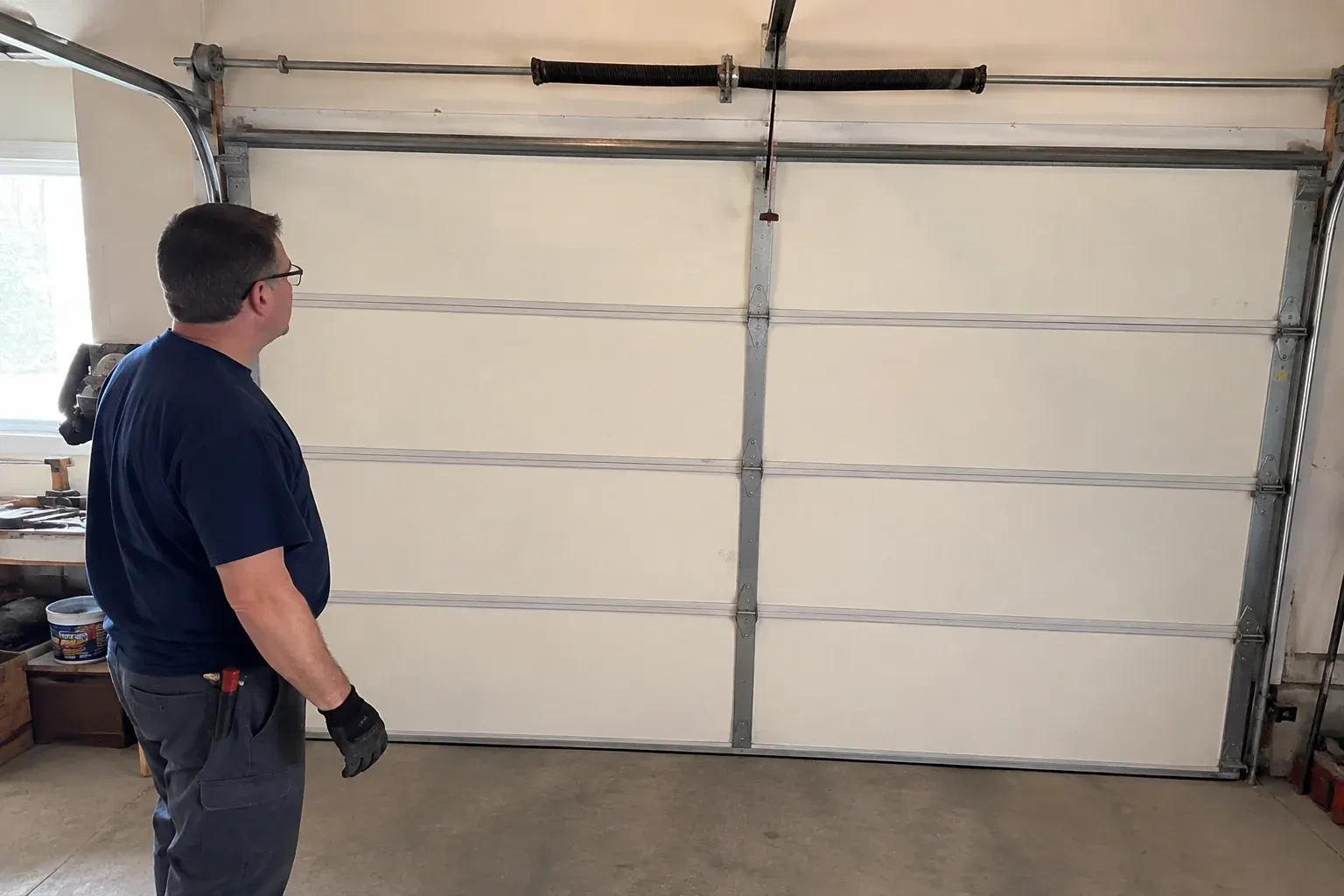
- Off-Track Garage Door ResetYou tapped the door with the bumper while backing in, barely a nudge, and now the bottom corner has swung inward.
- Garage Door Panel ReplacementFrom outside, the horizontal groove between two sections now steps sideways by a centimetre.
- Garage Door Bottom Seal ReplacementThe gap under the door is a finger wide at one end and nothing at the other.