Openers · West Hill
Belt-Drive Opener Repair in West Hill
The door used to glide up with a soft hum.
In plain words
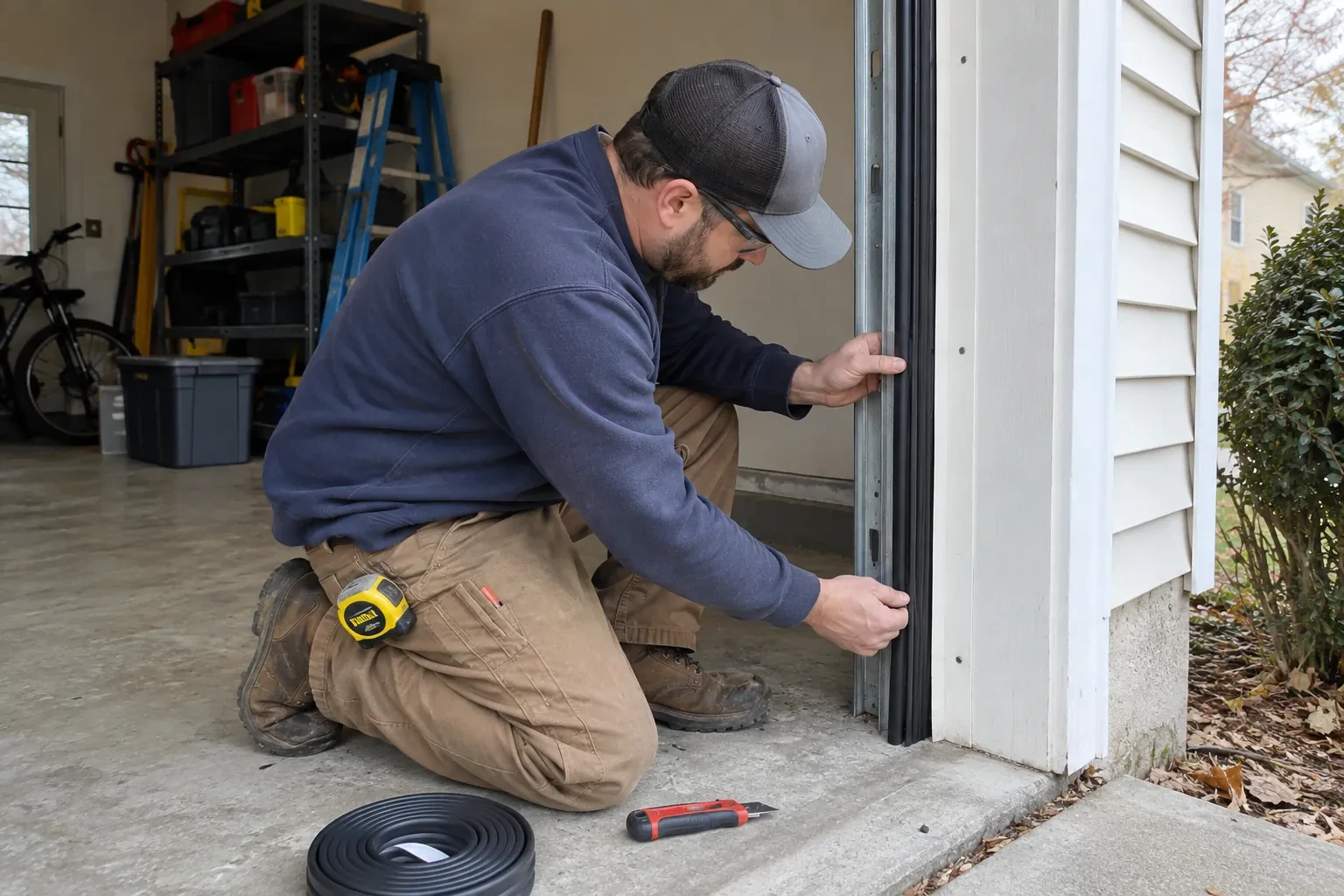
Winter is a good season to have a belt drive looked at. Rubber stiffens in a cold detached garage, so a belt tensioned on a warm day can run tight and noisy in January, and a bottom seal frozen to the slab makes the operator reverse before the door has moved. Belt-drive opener repair in cold weather sets tension to the maker's specified measurement, frees a trolley release that has stiffened, frees a door frozen to the floor before the opener moves it, and puts a cold-rated lubricant on the door hardware. The belt stays dry; the hinges, rollers and springs get the care.
How the visit goesSomeone tightened the belt last month to stop the sag. Now the opener sounds like a chain drive, the motor labours on the way up, and the whole rail vibrates under the ceiling.
Belt-Drive Opener Repair
How the visit goes
Sprocket, pulley and the shavings that give them away
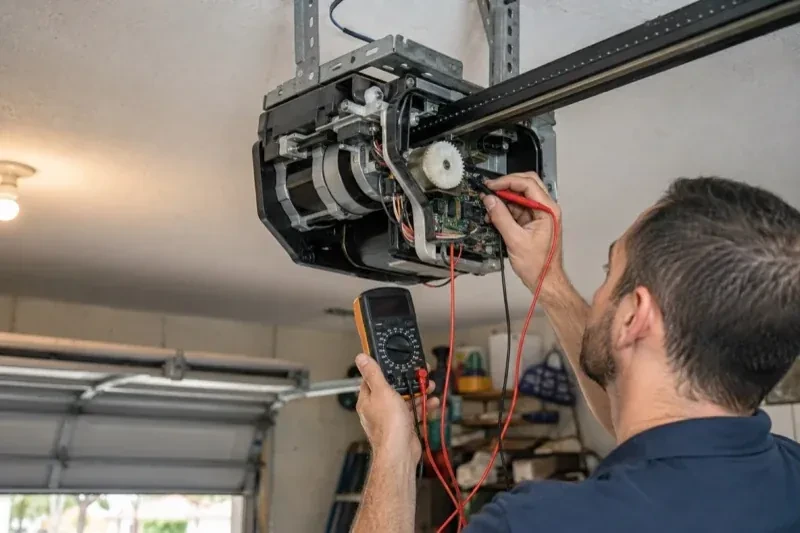
The belt runs over two wheels: a drive sprocket on top of the motor head and an idler pulley at the far end of the rail. The technician looks at the sprocket's teeth for hooking and wear, feels for wobble on its shaft, and checks the housing below it for the plastic shavings that mean the drive gear inside is stripping. At the front, the idler pulley is spun by hand for roughness or a dry bearing and sighted along the rail to see whether it is letting the belt track off to one side. A worn sprocket chews a new belt within months, so this check decides whether the gear-and-sprocket kit belongs in the repair.
Re-tensioning a belt that has stretched
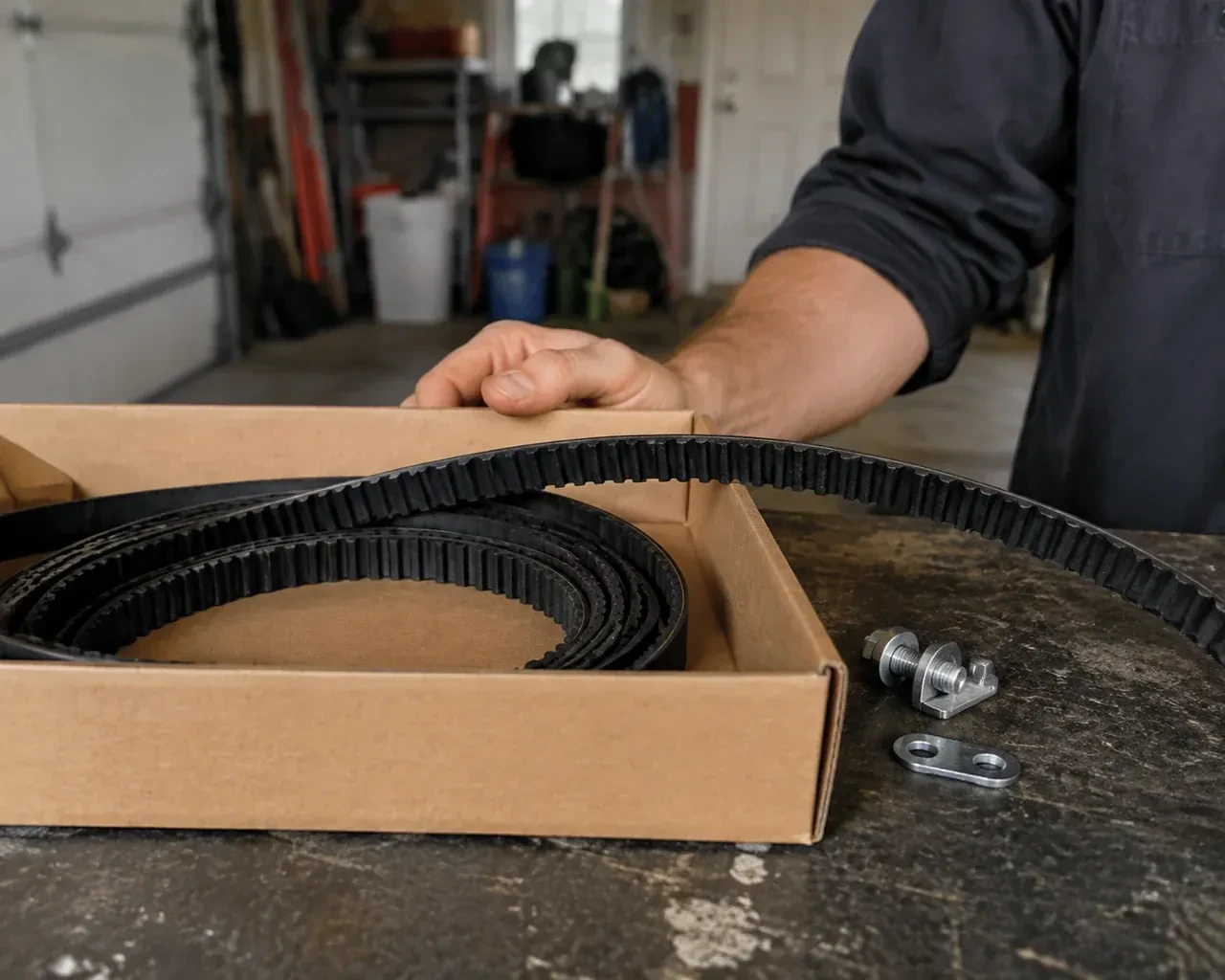
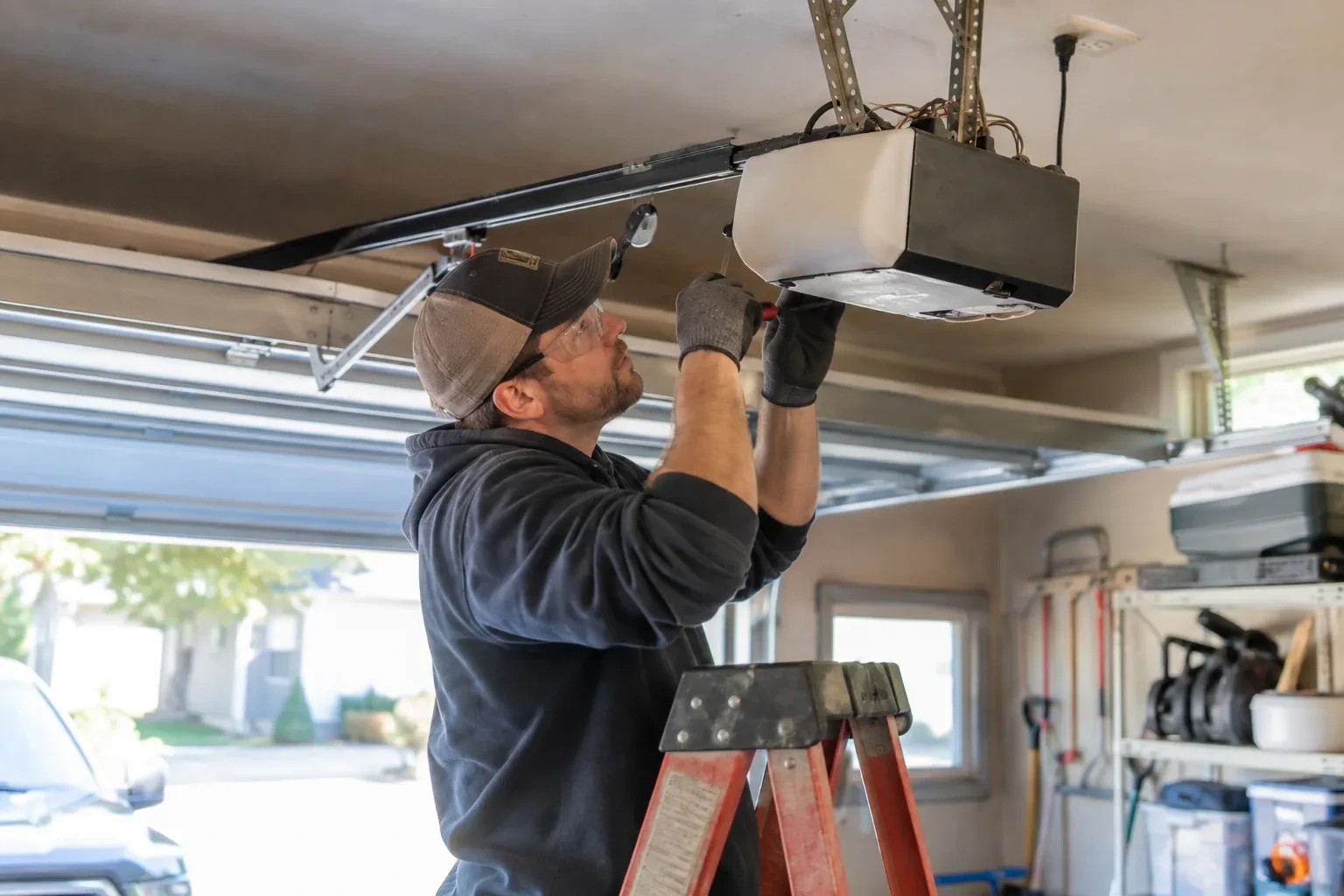
With the operator unplugged and the trolley released from the door, the technician turns the square nut on the inner trolley a little at a time, drawing the belt up until the tension spring reaches the length the maker specifies. Each turn lifts the belt slightly. They press the belt at mid-span to feel for the small give that means it is neither slack nor strained, then reconnect the trolley and run the door by motor, listening at the sprocket for the rattle that says the belt is still loose or has gone too tight. A belt that will not reach its spring length with the adjuster at its limit has stretched too far and is replaced instead.
A door that is balanced under a belt that is right
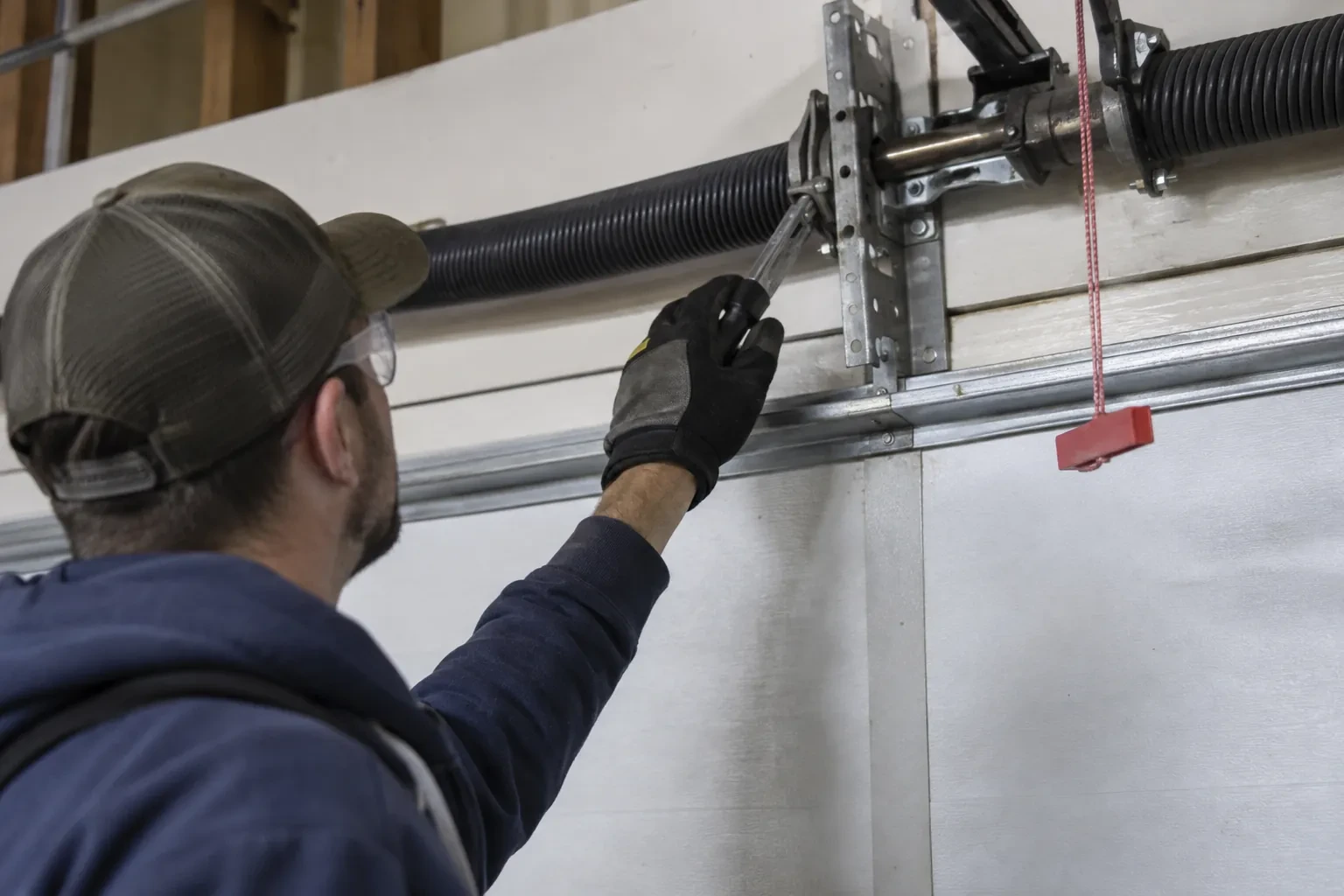
Because the door was tested by hand before the belt was touched, you leave with the springs and the drive in agreement. Once a season, with the door closed, unplug the operator, pull the release and lift the door to about a metre: it should stay there. If it drifts down or creeps up, the springs have moved and the belt will soon be working harder than it should, so book a spring adjustment before the belt shows it. A door that hesitates at one point in its travel with the operator disconnected is telling you about a roller or a hinge rather than the belt, and that too is a small visit.
Belt-Drive Opener Repair
In the van
Idler pulley and bearing
2x4 offcut for the reversal test
Door arm and clevis pins
Garage-door lubricant for hinges and rollers
Rail hanger straps and fasteners
Belt-Drive Opener Repair
What affects the quote
Door work found during the balance test
If the door is heavy in the hands when lifted with the operator released, the springs, cables or rollers behind that are priced as their own job, separate from the belt.
Door size and weight
A wide double door or a heavy insulated one asks more of the belt and trolley, and the inspection may point to a suitably rated opener or a top-section strut for that door, alongside the belt matched to the rail and sprocket.
Idler pulley
A squealing or wandering pulley at the header end of the rail is a separate part and a few extra minutes with the belt slack, quoted only when the inspection finds it.
What to have ready
- Are there plastic shavings or grease on top of the motor housing?
- Does the motor run while the door stays still, or does the door stop partway?
- Is anything hung from the ceiling or rail, such as a bicycle hook or storage rack?
Belt-Drive Opener Repair: questions
QuestionsWill my remotes and keypad still work afterwards?
Yes. Belt, trolley and pulley work happens on the rail and leaves the operator's memory untouched. Replacing the gear at the motor head means opening the head unit, and on some models that is a good moment to confirm every remote, the keypad and any in-car buttons afterwards. The technician tests each before leaving and re-teaches any that need it.
What is the difference between belt-drive repair and opener replacement?
Repair keeps the operator you have and renews the piece of the drive that has failed: the belt, its tension, the trolley, the idler pulley or the gear and sprocket at the motor head. It suits a unit with a sound motor and board, photo eyes near the floor and rolling-code remotes. Replacement is the answer when the operator predates those features or when its board or motor has failed and is no longer made.
Why is the door tested by hand before the belt is touched?
Because the belt guides the door; the springs carry it. A door that lifts with moderate effort and stays put a metre off the floor is balanced, and a belt on that door lasts. A door that drops or drifts is loading the belt, trolley and sprocket far beyond their design, so a new belt would wear the same way. Spring work comes first in that case.
Related services
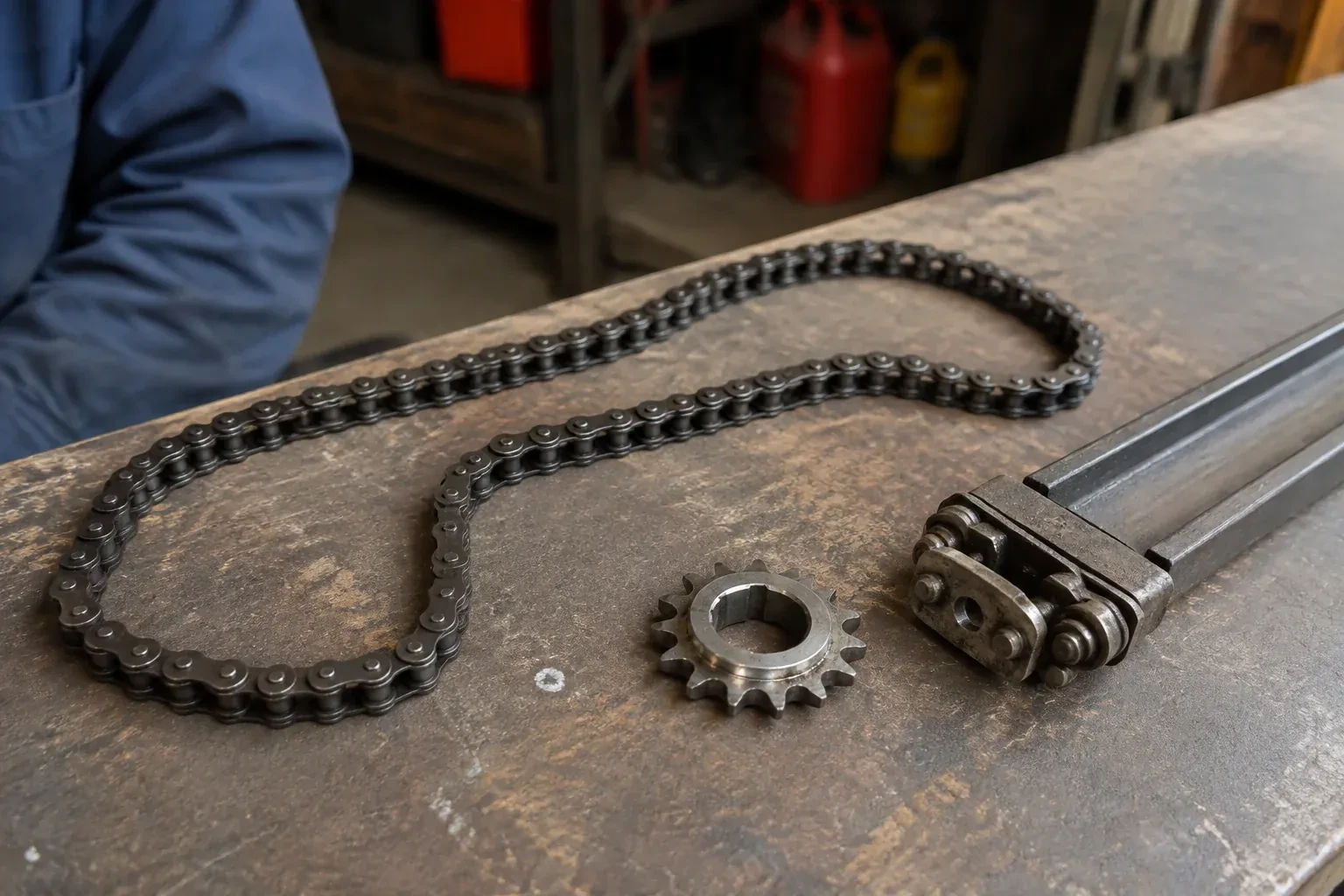
- Chain-Drive Opener RepairPress the button and the opener hums for a second, then quits.
- Garage Door Opener ReplacementDuring the ice storm the power was off for two days.
- Photo-Eye Sensor Alignment or ReplacementSince shelving went up along the garage wall, the door will not close and both sensor lights are dead.