New Doors · Toronto
Commercial Sectional Door Repair
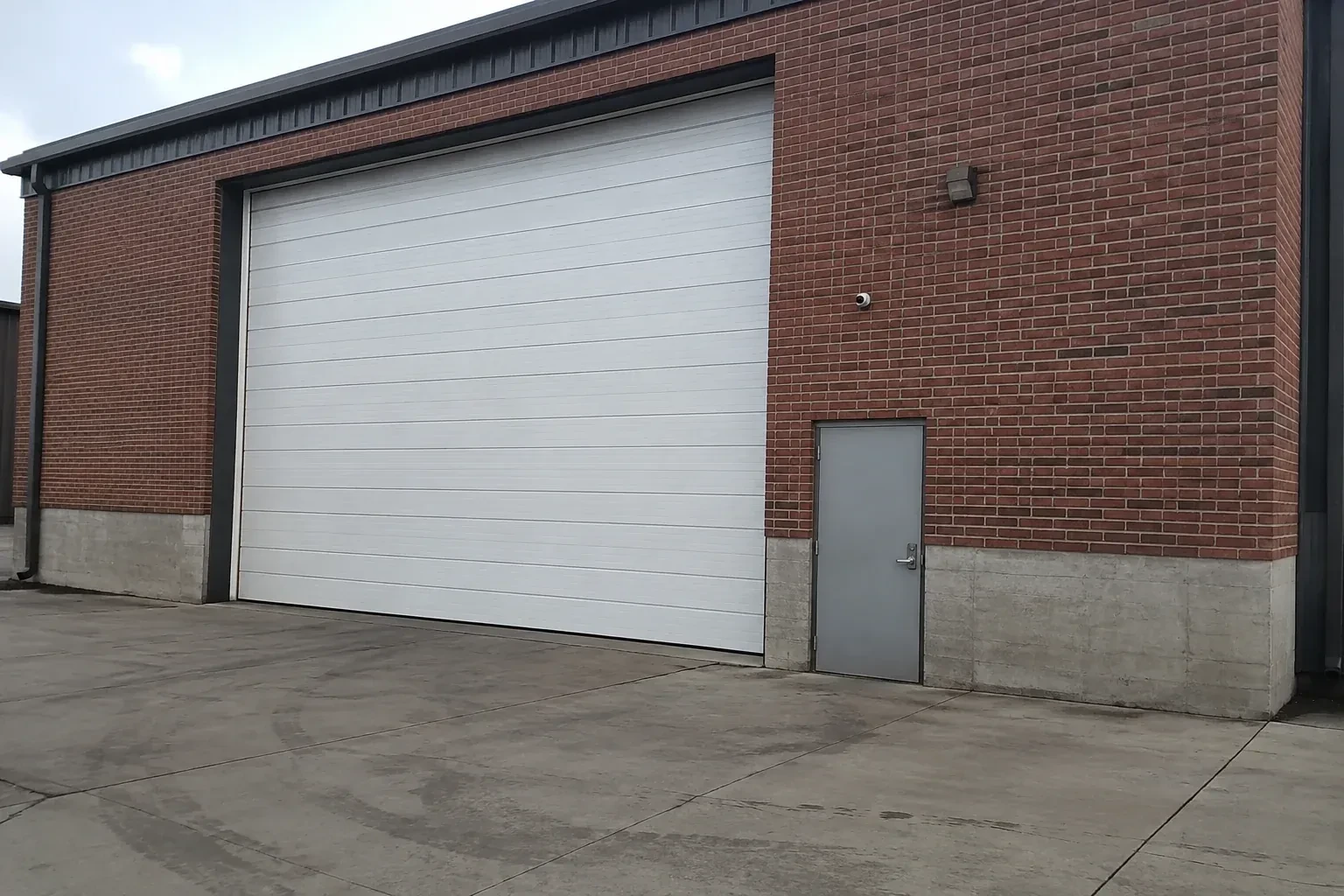
One busy service-bay door has become louder than the matching doors beside it.
In plain words
Impact repair is more than flattening a dented panel. The damaged section may have transferred force into an end stile, hinge, roller carrier, vertical track or jamb attachment. The repair therefore follows the load path from the contact point into the supporting hardware. A replacement section or reinforcement is matched to the door construction, track spacing is restored, and every affected connection is tightened or renewed. Final cycling confirms that the repaired door follows the curve cleanly and seats evenly at the opening.
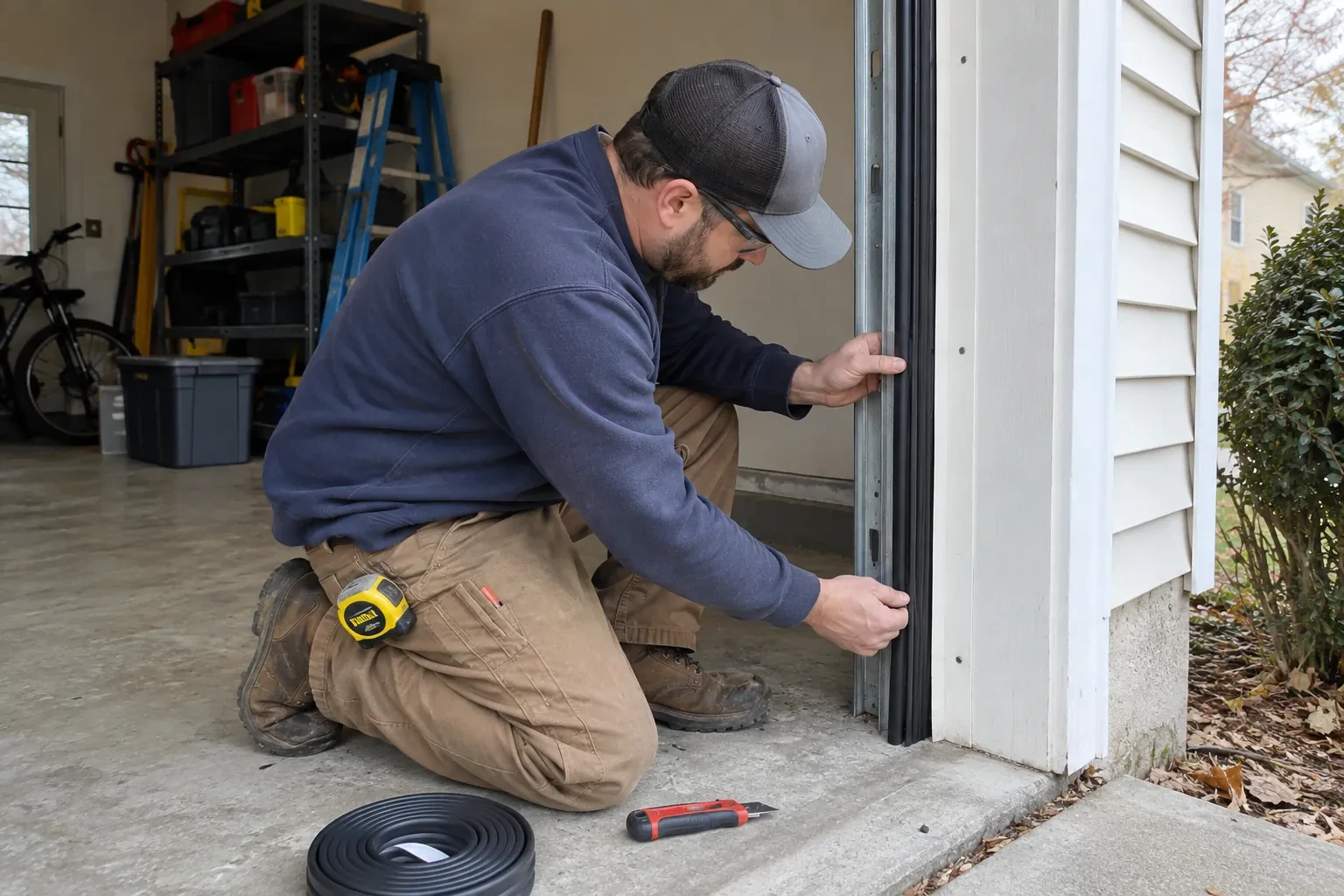
How the visit goesThe door reaches the floor, then reverses before staying closed. The threshold is clear, but a sensing edge is distorted and one photoelectric sensor has moved out of line with its partner.
Commercial Sectional Door Repair
How the visit goes
Reading an uneven door
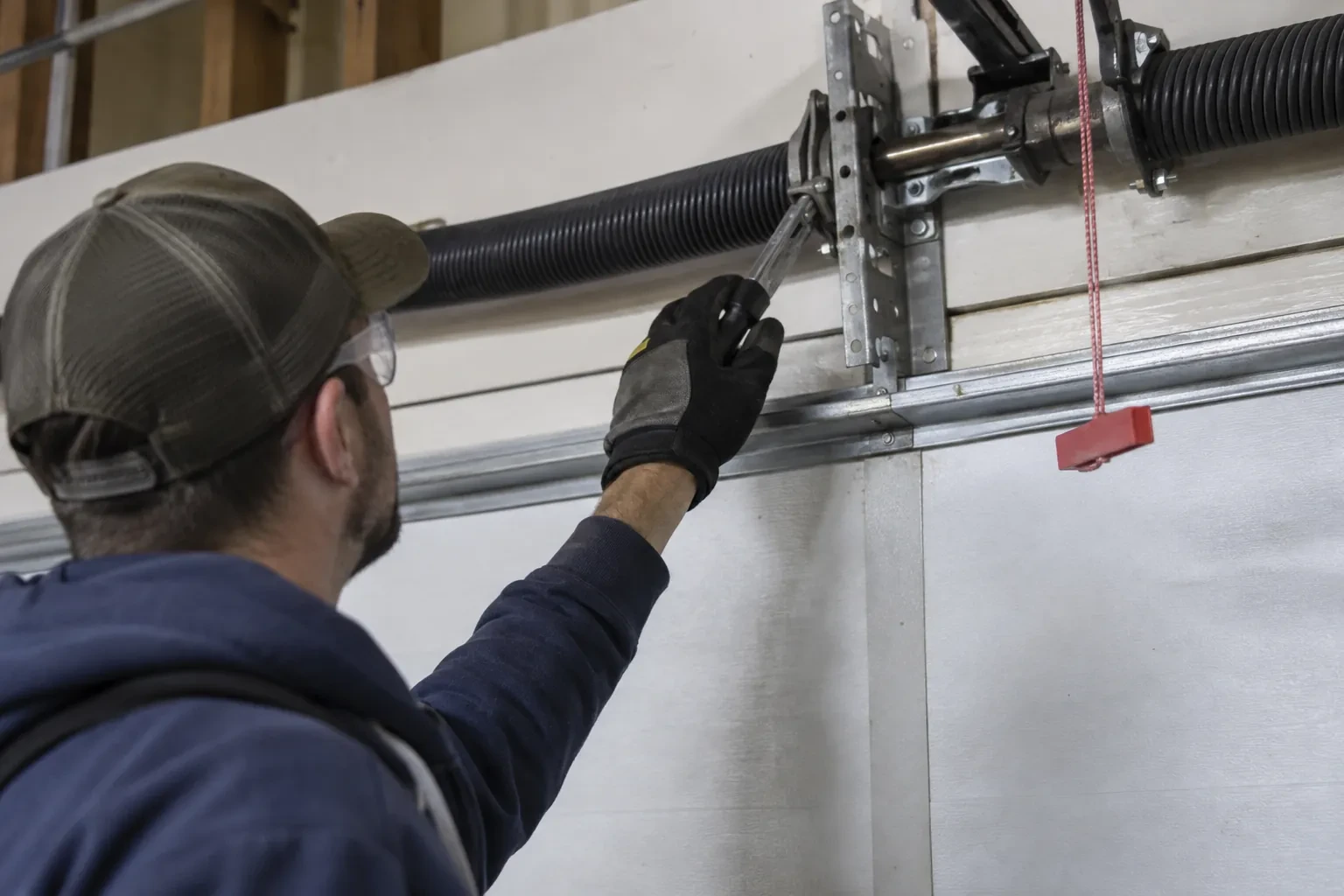
A crooked bottom edge leads to a side-by-side comparison. Cable condition and length, drum grooves, shaft position, bearing movement and bottom fixtures are viewed together. The technician notes whether one cable is slack, crossed or frayed and whether a roller has left its normal track position. Measurements at the tracks show if the guides remain parallel and plumb. The door is then secured so its weight cannot deepen the imbalance during inspection. These findings reveal whether the repair belongs in the lifting system, track alignment or impact-damaged hardware.
Replacing an impact-damaged section
The affected section is supported while hinges, rollers and connected hardware are transferred or renewed. The replacement is matched for thickness, construction, profile and required reinforcement so it fits the neighbouring sections and carries the same hardware pattern. Bent end stiles or struts are addressed as part of the section assembly. Rollers are returned to the correct hinge positions, section joints are aligned and fasteners are set securely. Track clearance is then checked through the curve so the new panel travels without rubbing or opening gaps.
Quieter hardware with a care routine
New rollers, hinges or bearings reduce play at the points that previously knocked or vibrated. Ongoing care means using the lubricant and interval stated for the installed door, applying it to moving pivots and bearings rather than coating the track. Tracks stay clean so rollers can travel on a firm surface without collecting grit. A simple note in the facility log describing the former sound and repaired location gives staff a reference. If a distinct noise returns at the same travel point, that observation makes follow-up assessment more focused.
Commercial Sectional Door Repair
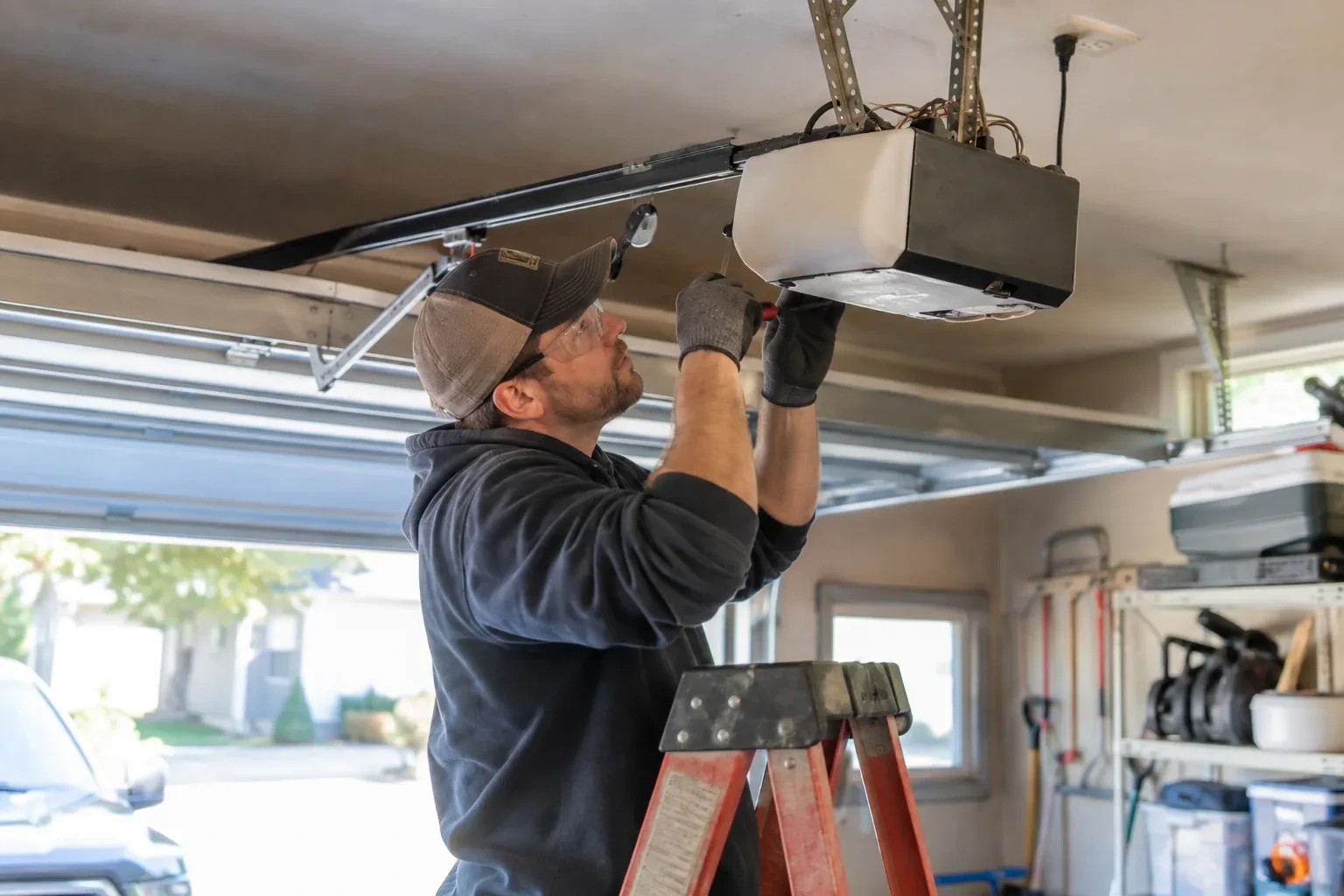
In the van
Track brackets and back hangs
Bottom fixtures
Commercial door sections
Photoelectric sensors and sensing edges
Shafts and bearings
Commercial Sectional Door Repair
What affects the quote
Number of affected openings
A single bay with one defined fault differs from a facility request covering several numbered doors, separate symptoms and individual operational tests.
Weather-seal work
Bottom rubber alone is different from a bent retainer, uneven landing, damaged perimeter seal or drainage issue that also needs correction at the opening.
Corrosion and seized fasteners
Moisture and salt can affect cables, brackets, retainers, rollers and connections, broadening the repair when hardware cannot be removed or reused cleanly.
What to have ready
- Which numbered bay or opening needs repair?
- Do you have the model, serial number and service record?
- Does the door rise level on both sides?
Commercial Sectional Door Repair: questions
QuestionsWhy is the door lifting higher on one side?
Uneven travel commonly points to a lift-cable or drum issue, though a displaced roller, bent track or damaged bottom fixture can create a similar angle. The door is supported first, then both lifting sides are compared for cable condition, drum seating and hardware position. Correcting the cause and restoring equal tension brings the bottom edge back to level movement.
Does a torn bottom seal always mean a seal-only repair?
Not always. The rubber may simply be worn, but a bent retainer, uneven floor, crooked door or impact-damaged bottom section can produce the same gap. The technician checks how the door lands before replacing material. Correcting level or retainer shape first allows the new seal to contact evenly without being stretched to compensate for another fault.
Can one damaged section be replaced on its own?
Often it can, provided a compatible section is available and the surrounding panels, end stiles and hardware remain serviceable. Matching involves more than width and height: thickness, profile, insulation, joint shape, reinforcement and hinge pattern all matter. The technician also checks whether the impact shifted track or mounting points before deciding that a single-section repair is the right scope.
Related services
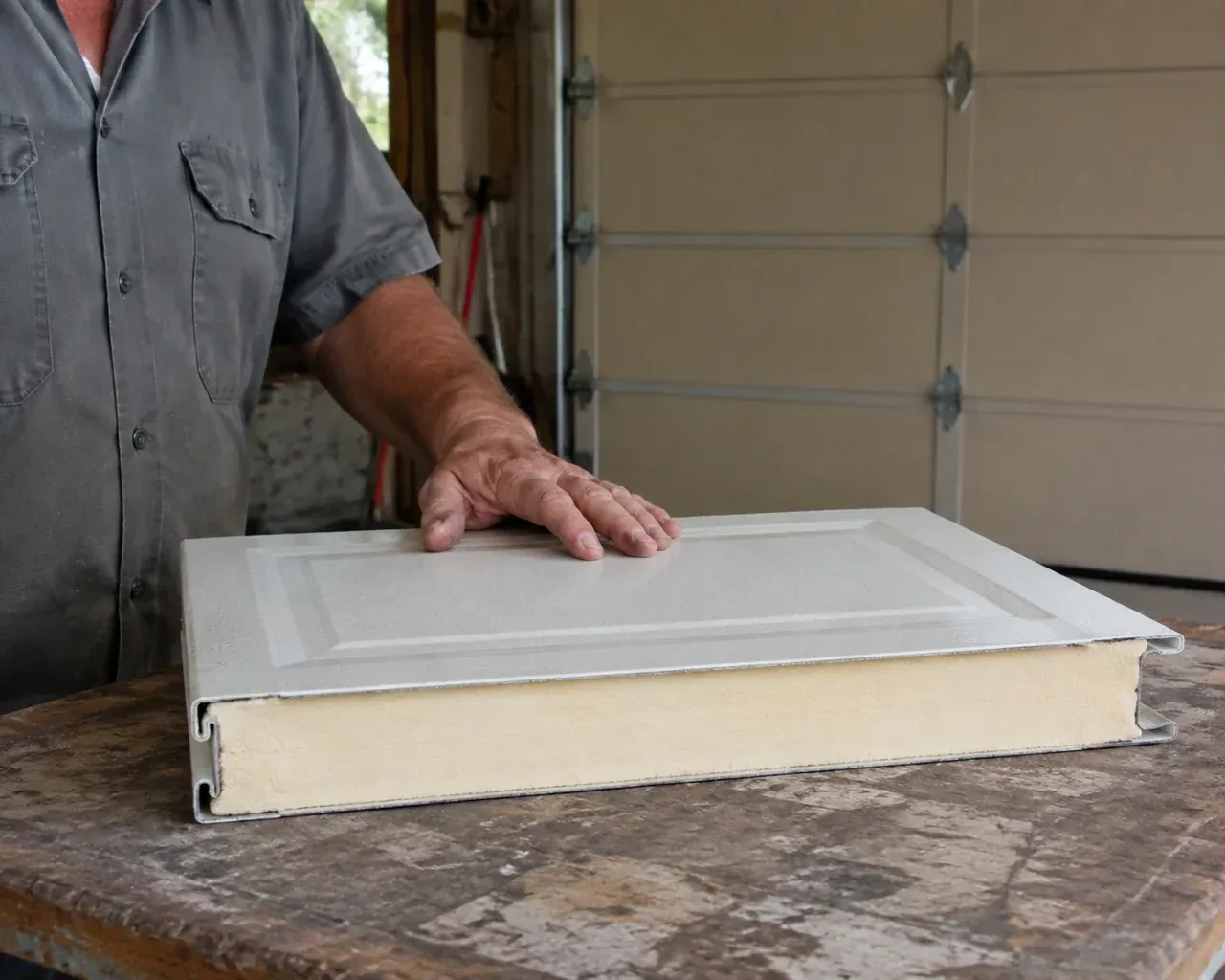
- Insulated Steel Garage Door InstallationThe room above your attached garage stays chilly while the steel door below feels cold to the touch.
- Wind-Rated Garage Door ReplacementNew windows would improve the door's appearance, but they also change the section layout and reinforcement pattern.
- Carriage-House Garage Door InstallationYour garage door works, yet its broad plain panels feel disconnected from the brick, gables and entry details around them.