Springs · Toronto
Garage Door Balance Adjustment
The door has grown heavy so gradually you stopped noticing, until a visitor tried to lift it and could not.
In plain words
What you get back is a door that lifts with light, even effort and a written note of how it was set. It holds still at knee height, at waist height and fully open, closes onto the floor gently along its whole length, and rises without twisting. The opener sounds relaxed because it is steering rather than lifting, and it reverses cleanly when the safety tests are run. The technician tells you how many turns the springs carry, whether any parts are nearing the end of their life, and how to repeat the hand test yourself each season so you notice any drift early.
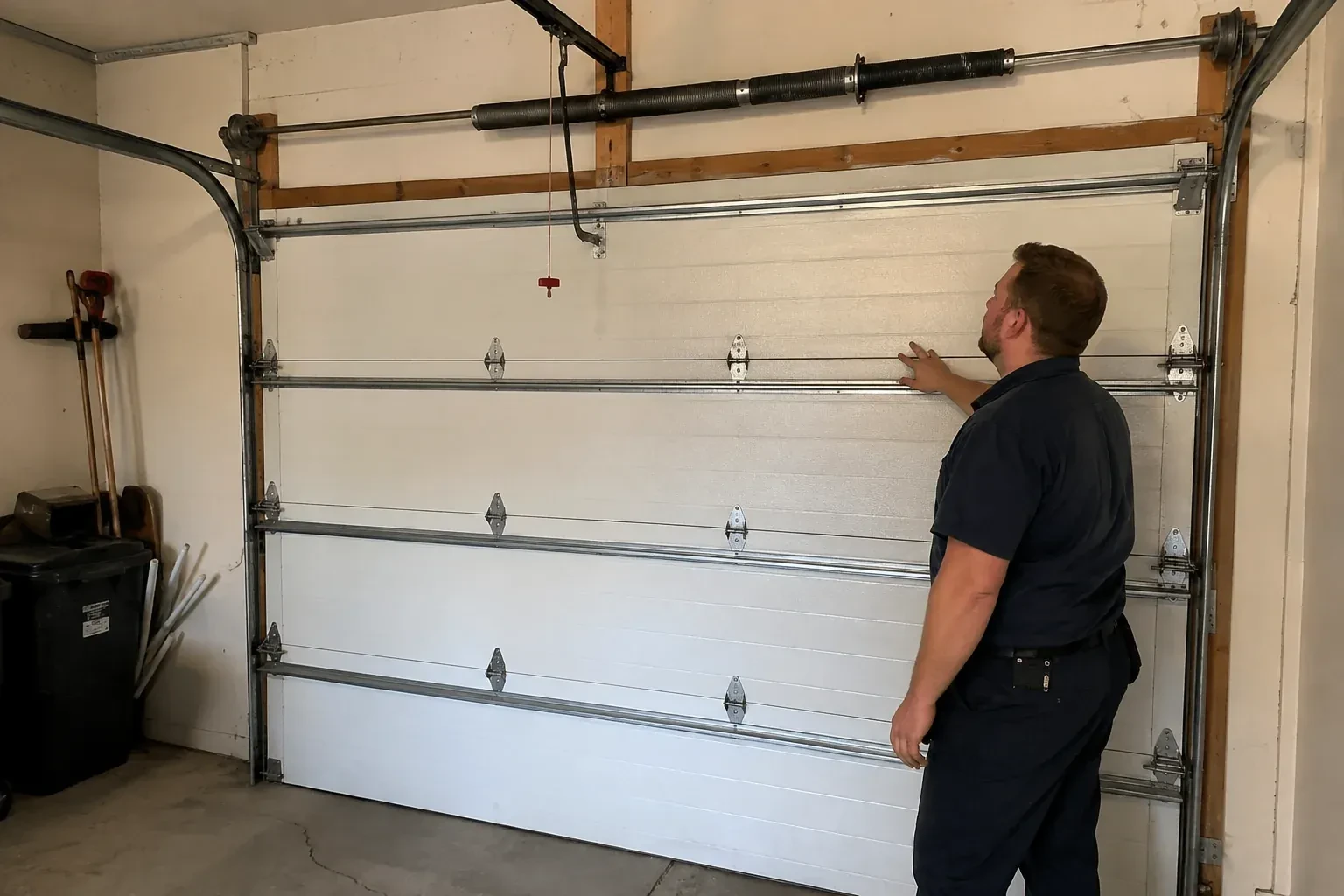
How the visit goesReleased from the opener, the door will not hold anywhere. Lift it to hip height, take your hands away, and it sinks back to the concrete, gathering speed on the way down. Two years ago it used to hover exactly where you left it.
Garage Door Balance Adjustment
How the visit goes
Talking through what you have noticed
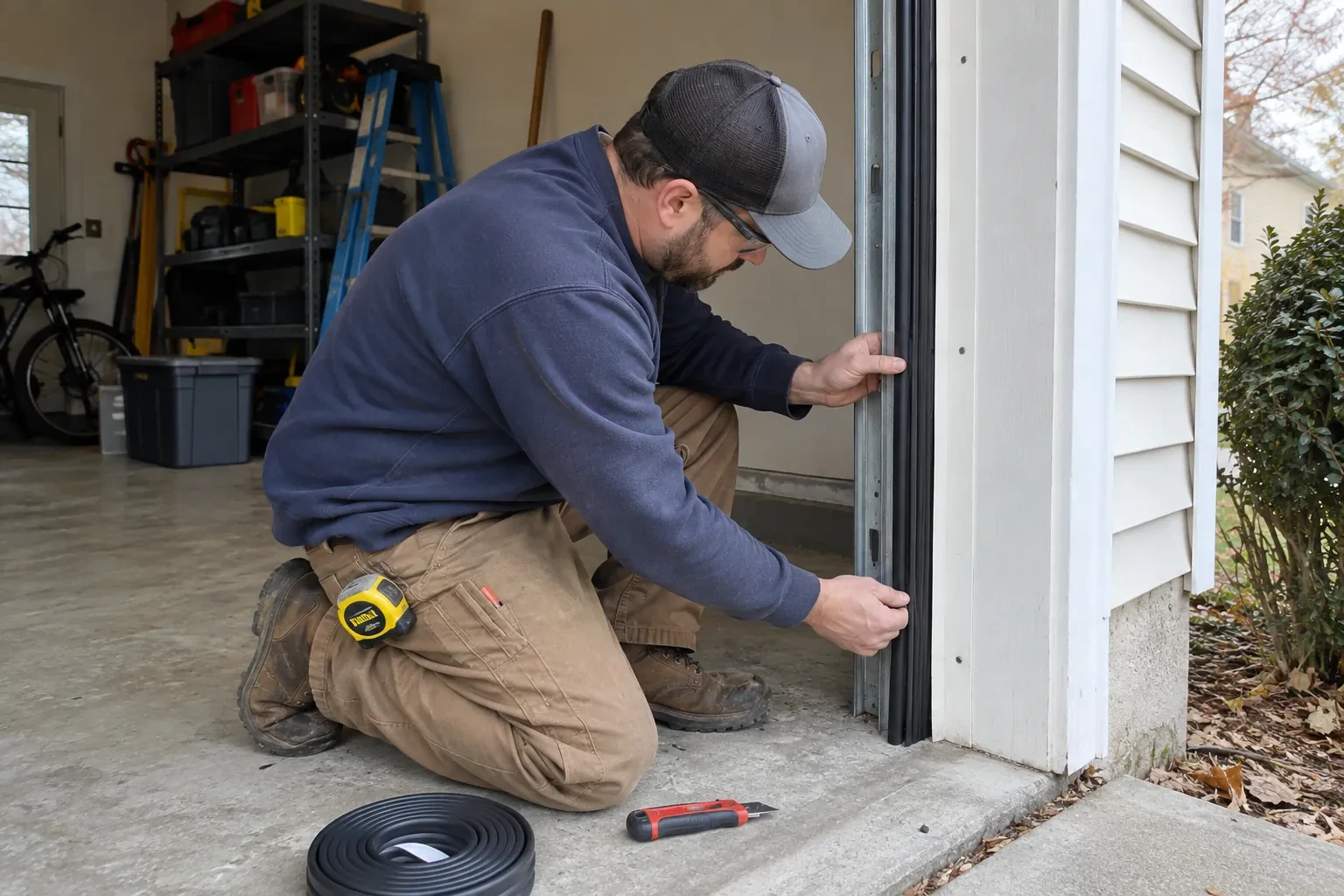
Your own observations complete the picture, because you have watched this door every day and the technician has watched it for ten minutes. When did the heaviness start, gradually or all at once? Is it worse on frosty mornings and easier by afternoon? Has anyone worked on the springs, changed the opener or added panels? Does it reverse at a particular point, and did that begin after the last power cut or a bump from the car? Each answer narrows the cause, and together they decide whether the day's work is a straightforward tension adjustment, a cable reset, some friction to remove, or a conversation about springs that have done their years.
Adjusting extension springs at the hook
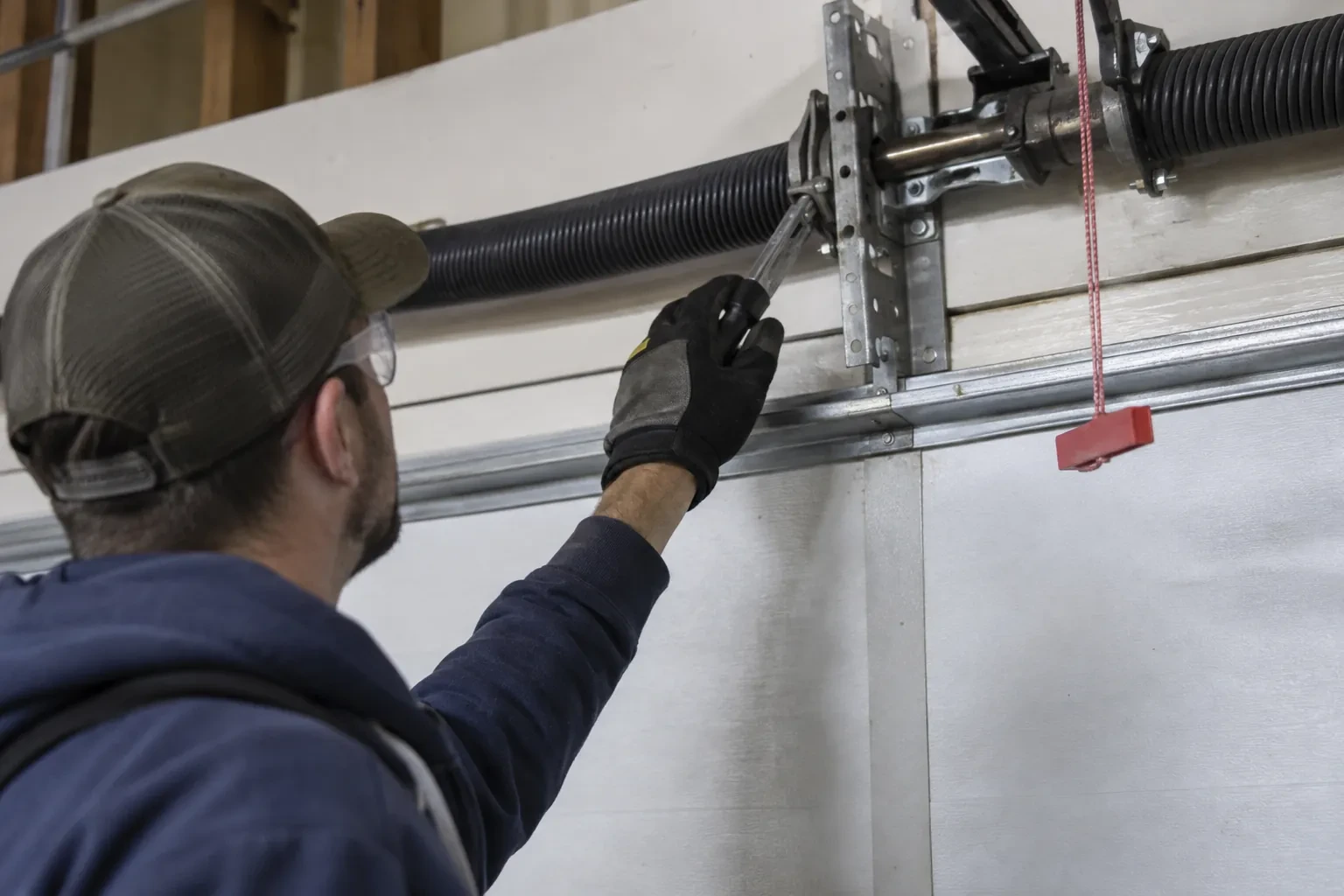
On an extension system the door is opened fully and clamped so each spring hangs slack, and the tension is changed by moving the S-hook or the cable clip to a different hole in the track hanger, or by shortening the cable at the clip. A hole further back stretches the spring more when the door closes and adds lift; a hole further forward reduces it. Both sides are moved the same amount so the door stays level, and the pulleys and containment cables are checked as the hooks are reset. The clamps come off and the door is tested by hand at several heights, then adjusted again if needed.
Keeping the opener honest
A balanced door lets the opener's safety settings stay at sensible values, and it is worth keeping them there. If the door ever starts to reverse for no reason or struggles to lift, resist the temptation to turn the force up on the motor; that hides a door that has grown heavy again and takes the entrapment protection out of its proper range. Instead, release the door and try the hand test. If it no longer holds, the springs want attention, and a balance adjustment puts the weight back on them so the opener can remain at the gentle settings it was left with.
Garage Door Balance Adjustment
In the van
Replacement hinges
Track clamps or locking pliers
Winding bars
Lift cables
Garage-door lubricant
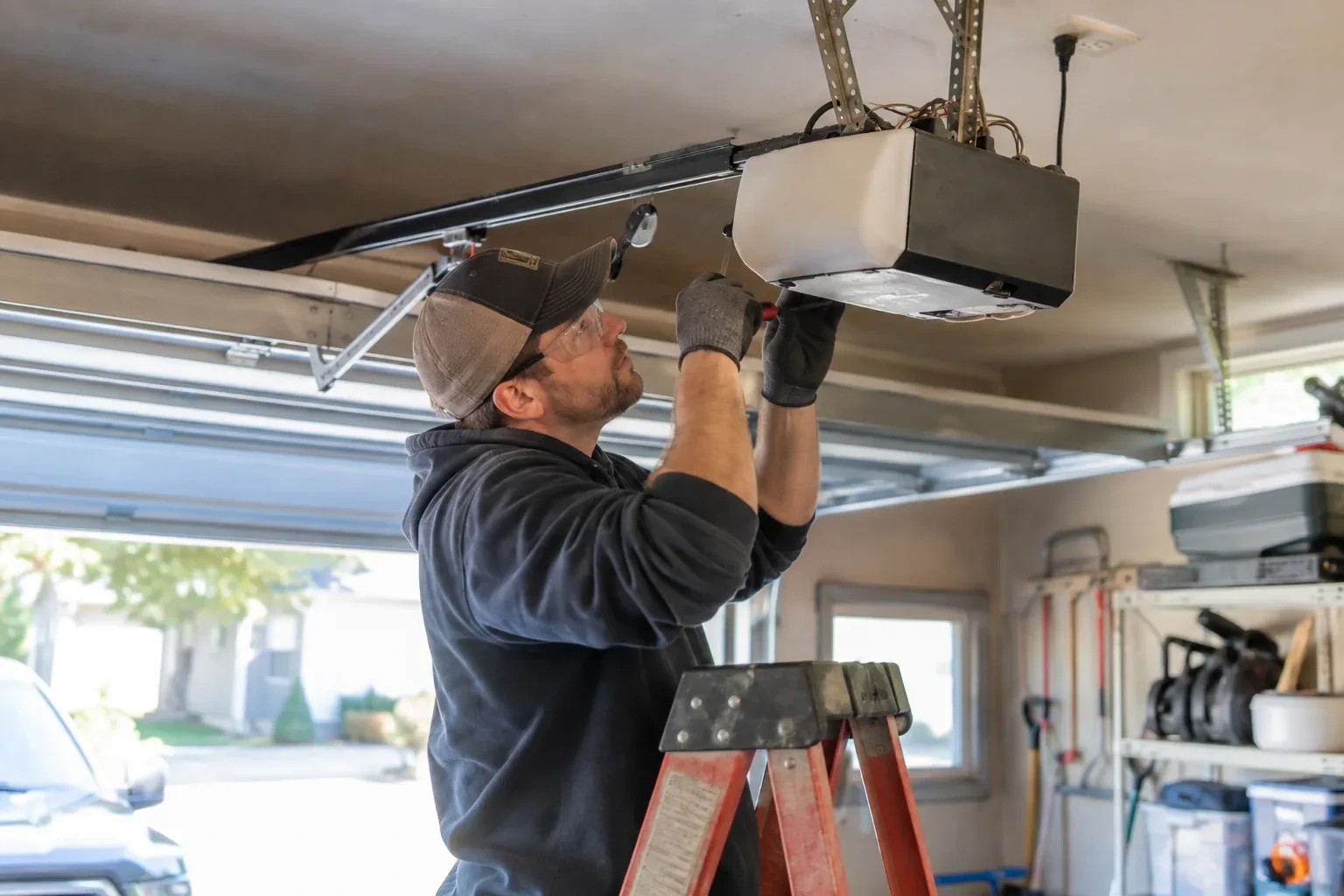
Garage Door Balance Adjustment
What affects the quote
Torsion or extension springs
Winding a torsion spring with bars and moving an extension spring's hook are different procedures with different setup, and the type of counterbalance on your door is the first thing that shapes the quote.
Opener adjustment and tests
Resetting travel limits and force settings on the opener and running the reversal tests is a short step that follows every balance job and is named in the quote when needed.
Rollers, hinges and friction repairs
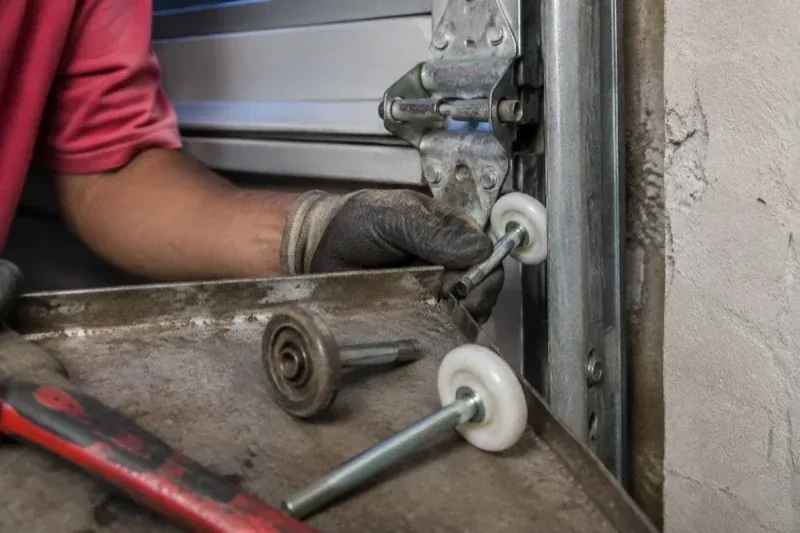
Seized rollers or worn hinges that made the door heavy are pointed out and offered as optional items, since replacing them while the technician is at the door is efficient.
What to have ready
- Does the opener strain, stall, or reverse before reaching the floor?
- Does the door behave differently in cold weather?
- Has anything been added to the door, such as insulation, windows or a new section?
Garage Door Balance Adjustment: questions
QuestionsWill I need new springs, or just an adjustment?
The inspection decides, and looks past appearance alone. A spring can look sound, with tight, evenly spaced coils, no rust pitting and no gap, and still be the wrong specification for the door or nearing the end of its service life. The technician checks the spring's specification against the door's weight and history: a spring that checks out is wound and left in service, while one that is undersized, stretched, corroded or close to its cycle life is better replaced. Either path ends in a balanced door.
Can a door with a broken spring be balanced?
A broken spring is replaced rather than adjusted; there is nothing left to wind. On a two-spring door the technician normally replaces both, since the survivor has the same age and cycle count, and then balances the door on the new pair. Until the visit, leave the door closed and avoid running the opener, which is not designed to lift the door's full weight on its own.
What is the difference between balancing a torsion door and an extension-spring door?
A torsion door has springs on a shaft above the opening, and tension is changed by winding the springs with steel bars, a quarter turn at a time. An extension door has springs along the tracks, and tension is changed by moving the hook or cable clip to a different position with the door open and clamped. The hand test that proves the result is the same for both.
Related services
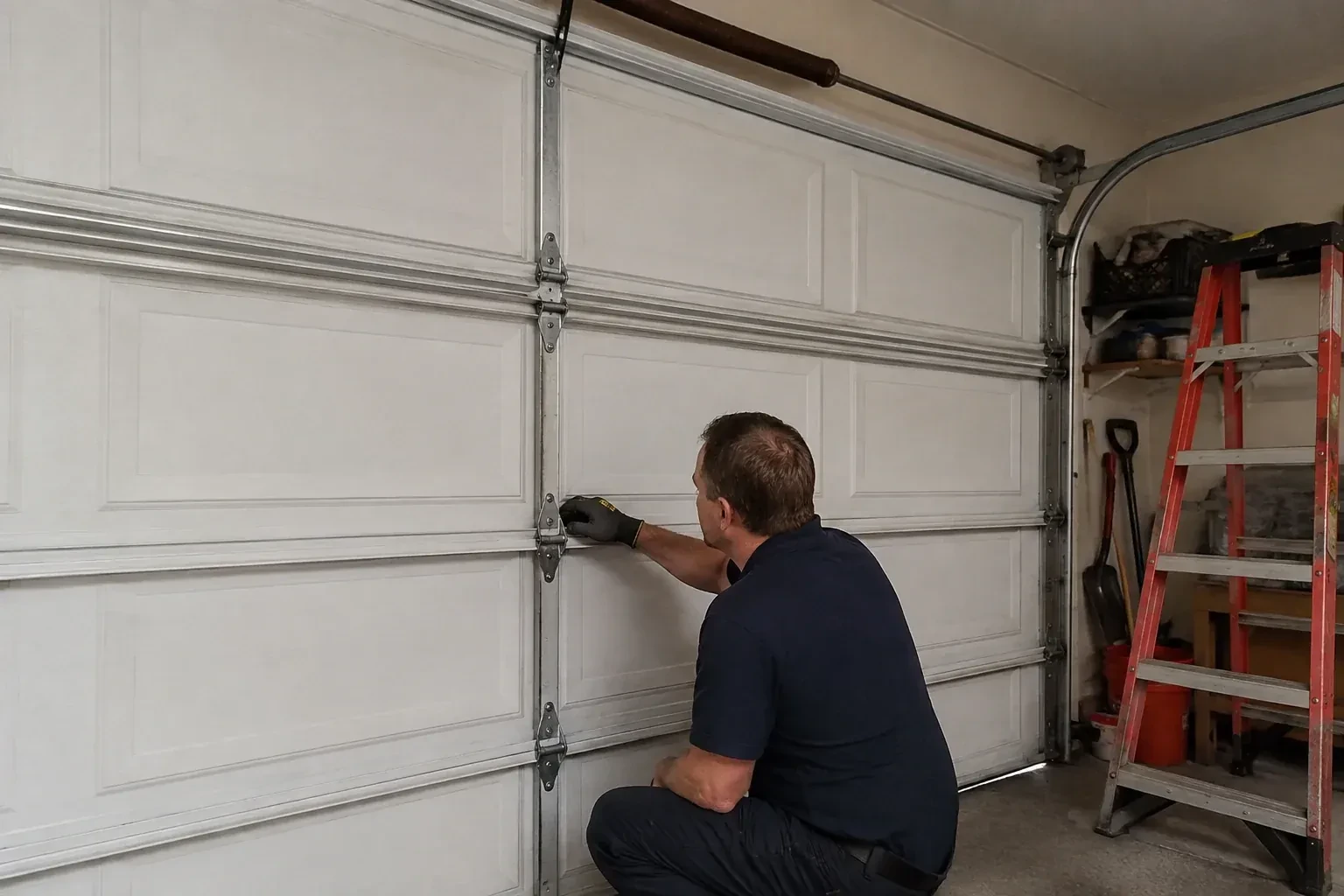
- Garage Door Hinge ReplacementWatching from inside as the door opens, you can see the gap between the second and third panels open up on one side as they turn the corner into the ceiling, then close again.
- Garage Door Track Repair or ReplacementHalfway up, the door lurches and one roller rides onto the lip of the channel.
- Garage Door Cable ReplacementStanding inside with the door closed, you notice the cable on the right side near the floor has gone fuzzy.