Openers · West Hill
Chain-Drive Opener Repair in West Hill
Press the button and the opener hums for a second, then quits.
In plain words
Cold is hard on a chain drive, and a detached or unheated garage shows it first. Grease on the rail and inside the gearbox thickens, a chain with surface rust stiffens link by link, and the operator strains against a door whose bottom seal may also be frozen to the slab. The result is a door that groans, stalls or reverses on the coldest mornings and works by afternoon. The repair frees or replaces a rusted chain, cleans and regreases the rail and gears, and sets force so the operator moves the door in the cold without being pushed past its safety limit.
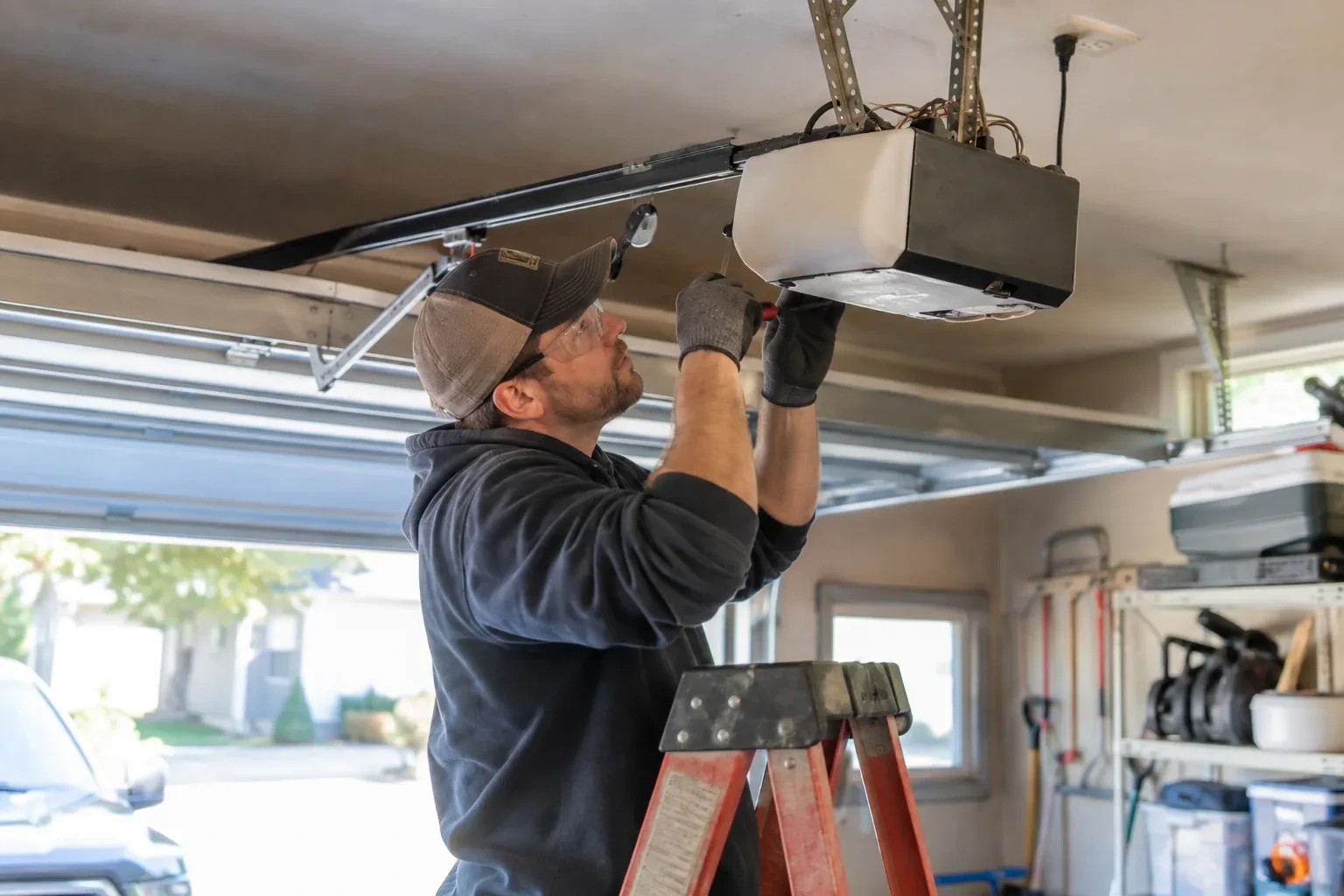
How the visit goesThe rail shakes when the door runs. The steel straps holding it to the ceiling have worked loose, the chain rattles the length of the garage, and a bolt has already dropped onto the hood of the car.
Chain-Drive Opener Repair
How the visit goes
Reading the chain itself
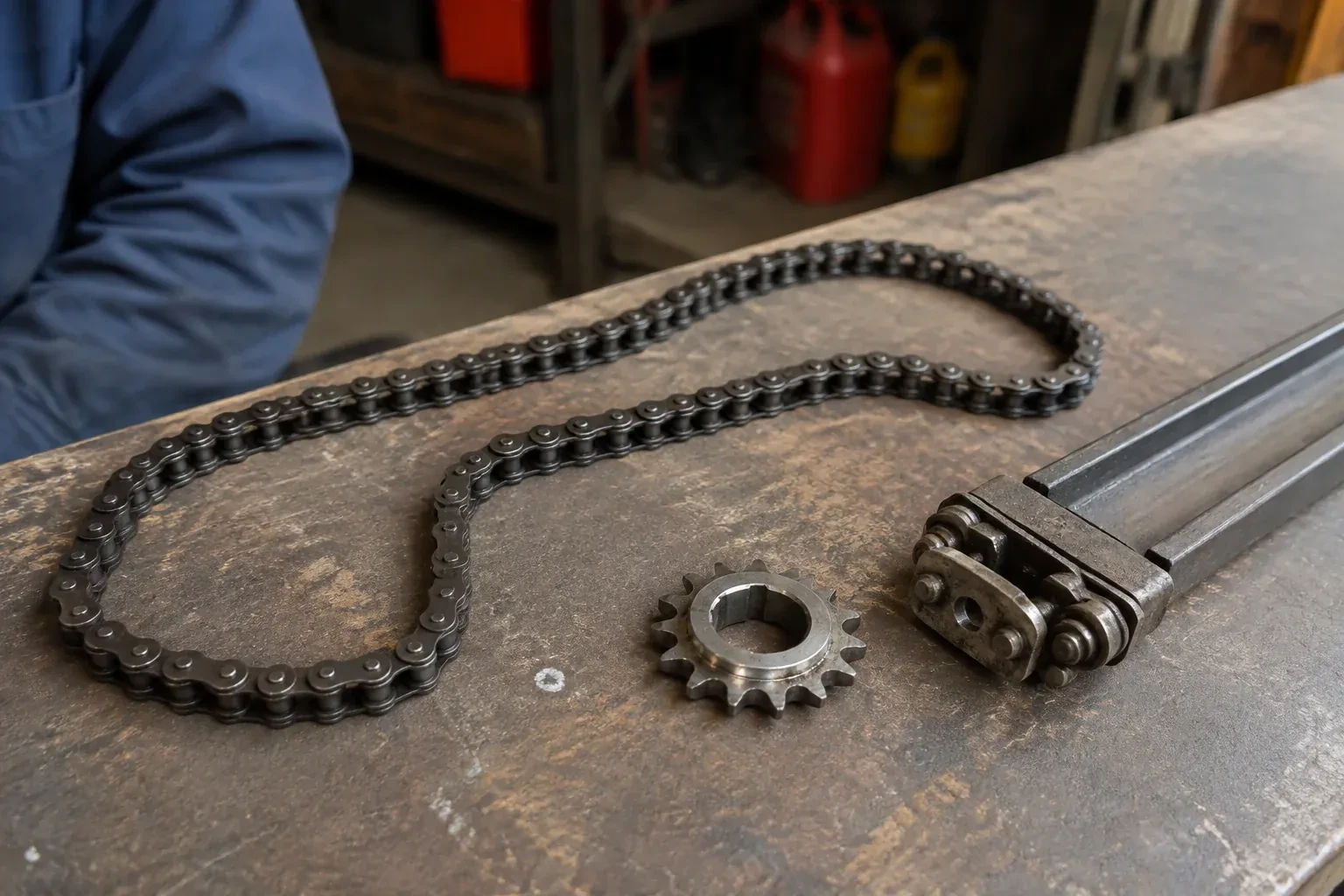
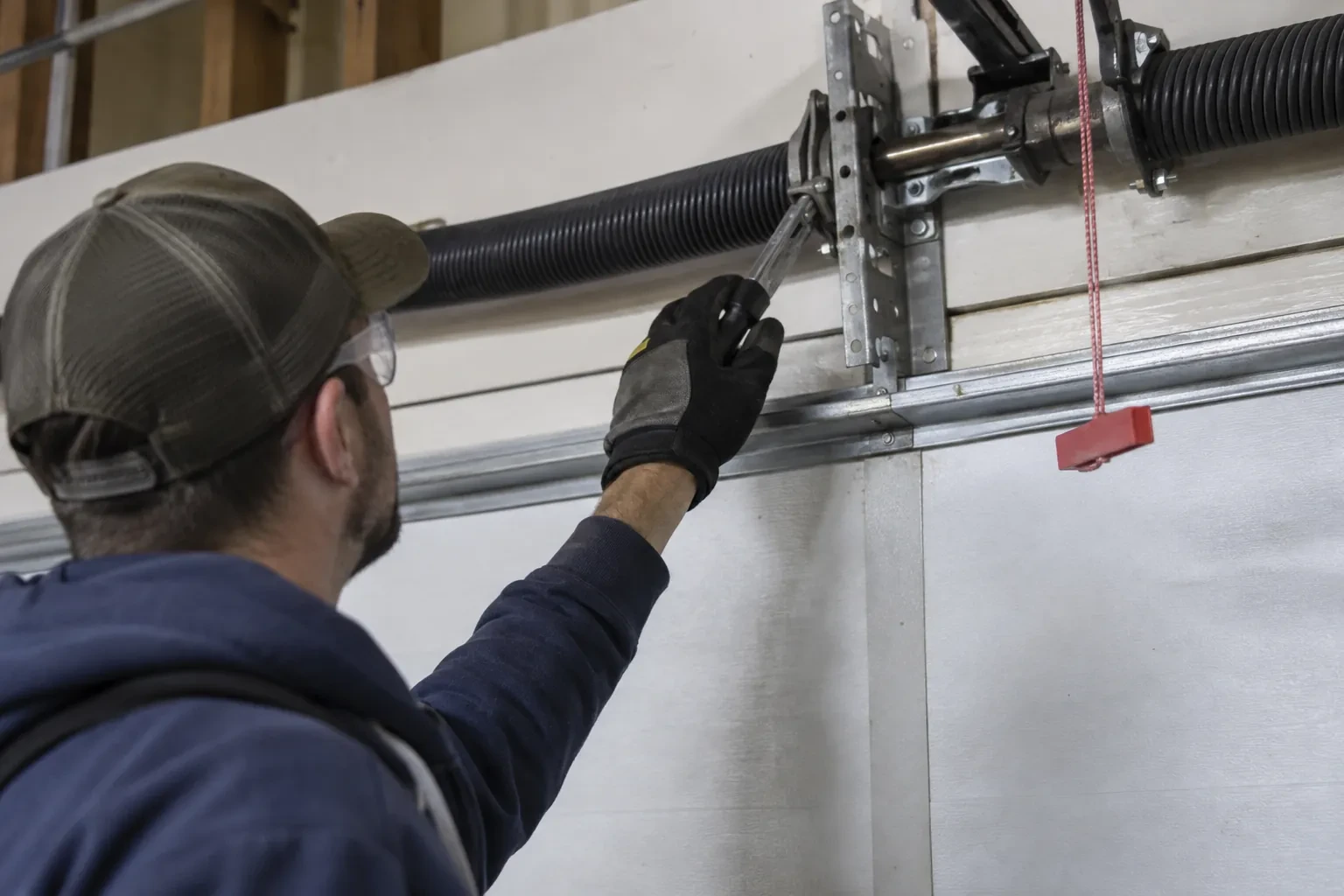
A chain tells its age. The technician runs it through their fingers with the door disconnected, feeling for stiff or seized links, surface rust that has crept into the rollers, and a master link that has spread. Stretch shows as sag: with the door closed, the chain is measured at the middle of the rail against the maker's figure for that make and rail shape, since the correct height is not the same across models. A chain that sits well below that figure after years of use has lengthened and may need replacing rather than tensioning, because taking up too much slack at the trolley leaves the run over the sprocket uneven.
Freeing the trolley and renewing the carriage
A trolley lodged against the stop bolt is released rather than forced. The door is disconnected at the red handle, the outer tensioner nut is backed off several turns to slacken the chain, and the operator is run so the trolley travels away from the stop under its own drive. The limit is then pulled back so the trolley stops short of the bolt in future. Where the inner or outer trolley shows wear, a cracked latch or a bent release lever, the worn piece is replaced with the model's part and the release is checked to pick the door arm up on the first pass. The chain is re-tensioned to specification afterwards.
How the chain ages from here
A new or freshly tensioned chain settles over its first weeks of use, so a small change in sag is expected and was allowed for. Over years, though, a chain lengthens a little at a time. Glance at it now and then with the door open: if it has dropped visibly below where it sat after the repair, or has started to tap the rail, it is due for tensioning. Do the same after any winter when the garage has been especially cold. Surface rust on a chain in an unheated garage is worth mentioning at the next service before it stiffens the links.
Chain-Drive Opener Repair
In the van
Drive gear and worm gear kit
Cold-rated garage door lubricant
Chain tensioner nuts and shaft
Trolley release lever
Inner and outer trolley
Chain-Drive Opener Repair
What affects the quote
A detached or unheated garage
Cold-rated lubricant, a chain replaced rather than freed, and force set for low temperatures are choices made for a garage that sees winter, and they show in the parts and the time.
The gear kit for your model
Drive gear, worm gear and sprocket shaft assemblies are made to fit a particular head, and the kit for an older or less common unit is a different item from the one for a current model.
Electrical parts inside the head
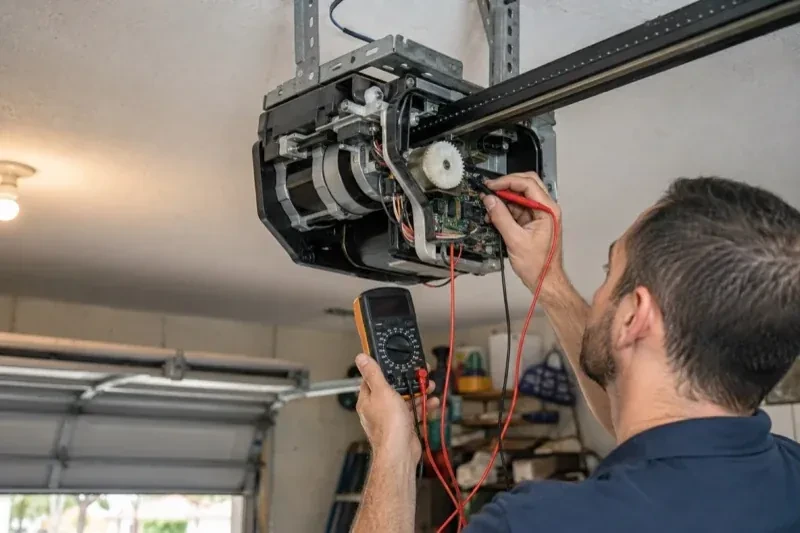
A swollen capacitor, a failed RPM sensor or a damaged board found during the inspection are quoted separately from the mechanical drive, since each is a distinct component for that model.
What to have ready
- Does the motor run when you press the button, and does the door move at all?
- Have you noticed pale plastic shavings on or under the motor housing?
- What make and model is on the opener's label, and roughly how old is it?
Chain-Drive Opener Repair: questions
QuestionsCan a sagging chain be tightened, or does it have to be replaced?
Most sagging chains are tensioned, not replaced. The technician takes up the slack at the trolley nuts to the rail's figure and locks it. Replacement is the answer when the chain has stretched so far that tensioning leaves it uneven over the sprocket, when links are seized with rust, or when the sprocket teeth are worn to hooks and would chew a new chain. In that case chain and sprocket are renewed together.
Will the safety reversal be tested as part of the repair?
Always, and after every adjustment, because changing tension, limits or force changes how the operator senses an obstruction. The door is closed onto a 38 mm block on the floor and must return to open on contact, then closed again while the low sensor beam is interrupted and must reverse the same way. If either test fails the settings are revisited until both pass, and you are shown the tests so you can repeat them monthly.
What is the trolley, and why would it get stuck?
The trolley is the carriage that rides along the rail, pulled by the chain, with the door arm hooked to it. It gets stuck when the travel limits creep and it is driven onto the stop bolt at the head end or the stop tab at the door end, where the motor hums but nothing moves. The technician slackens the chain, runs the trolley off the stop under power, and pulls the limit back so it stops short in future.