Repairs · Toronto
Garage Door Perimeter Weatherstrip
After a windy night there is a fine ridge of snow on the garage floor along one side of the door, and another across the top step.
In plain words
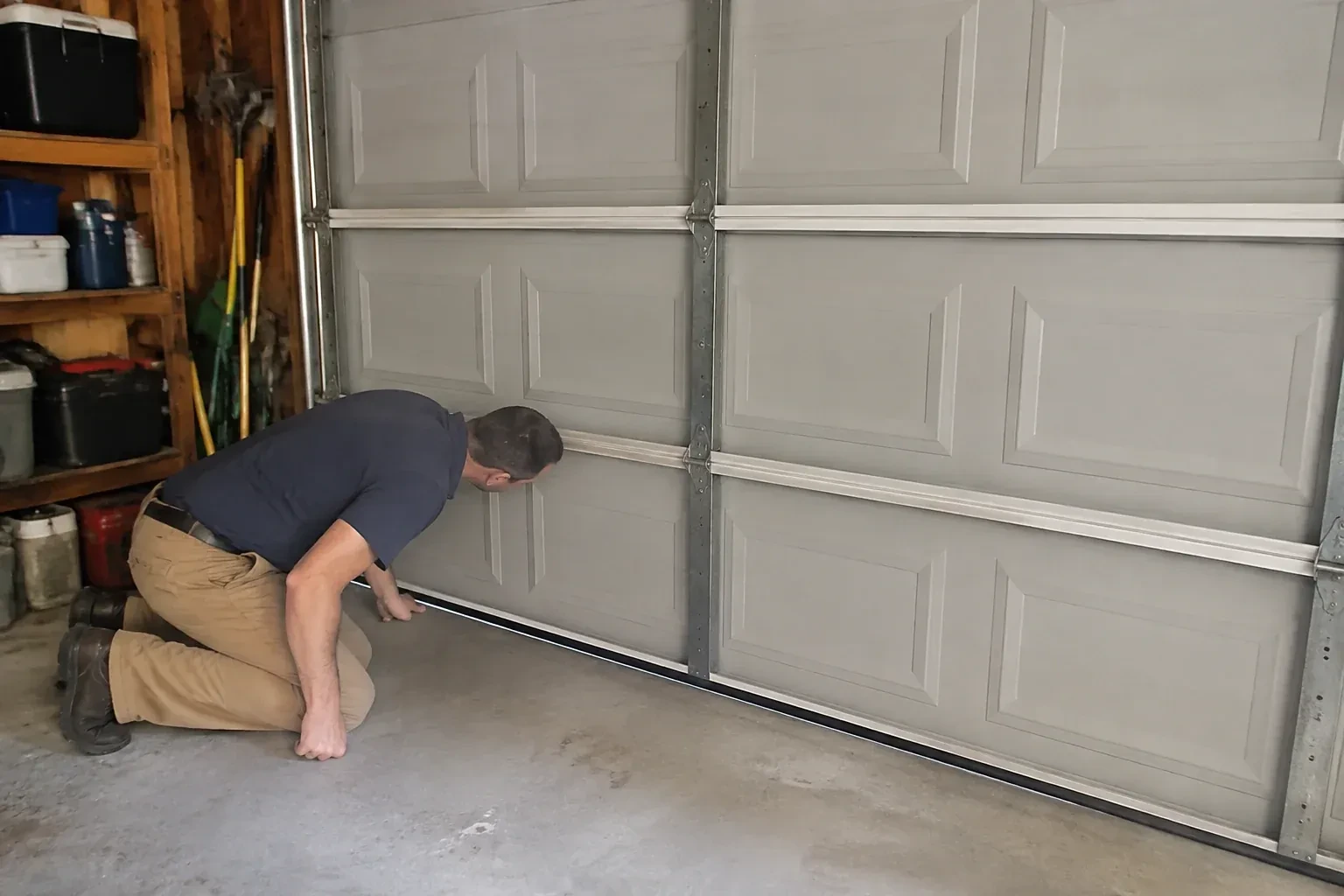
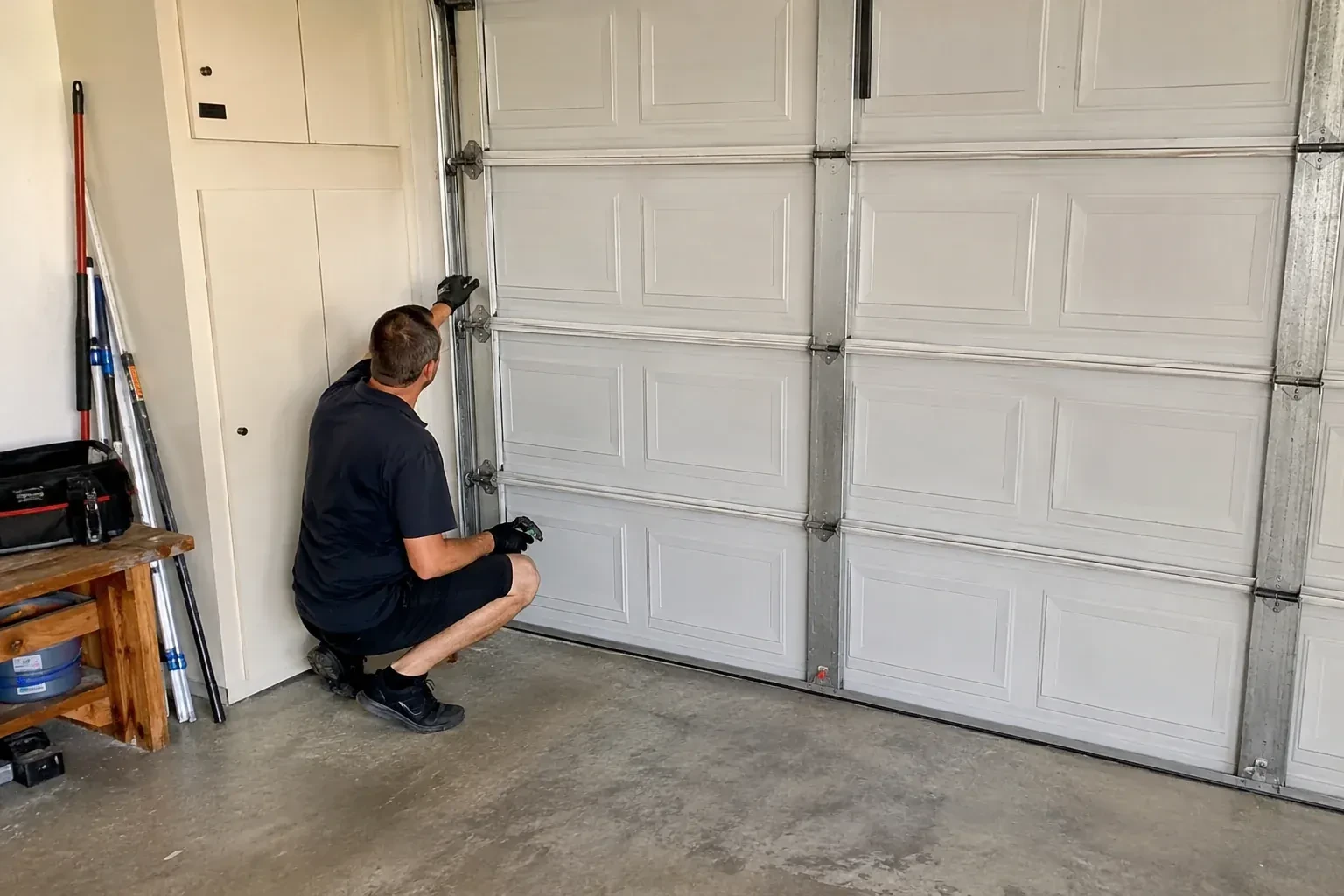
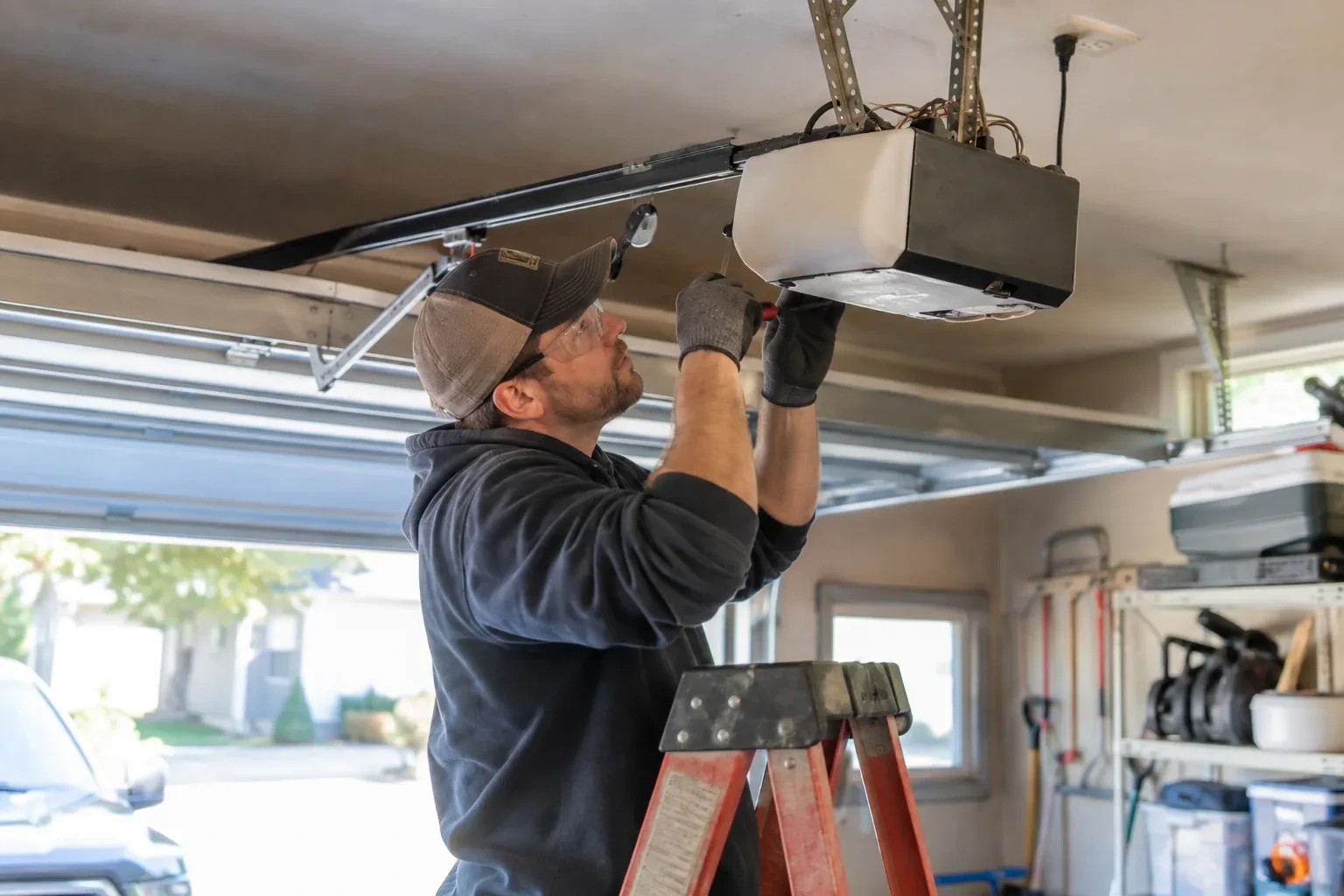
A perimeter seal is only as good as the door it meets, so a technician looks at the door before the seal. If one side shows daylight and the other is tight, the strip may be fine and the door may have drifted: worn rollers, a track bracket that has moved, a top section that bows away from the header. Setting that right first means the new fin can be positioned with the same light contact on every side. Where the door is already square, the seal is fitted straight to it. Either way the result is a door that closes against a continuous line of contact.
How the visit goesEvery time the door closes there is a rubbing squeal along one side, and the flexible fin has folded under itself and torn. Someone painted the trim last summer and painted the seal with it; now it is stiff as a board.
Garage Door Perimeter Weatherstrip
How the visit goes
What kind of seal is there now
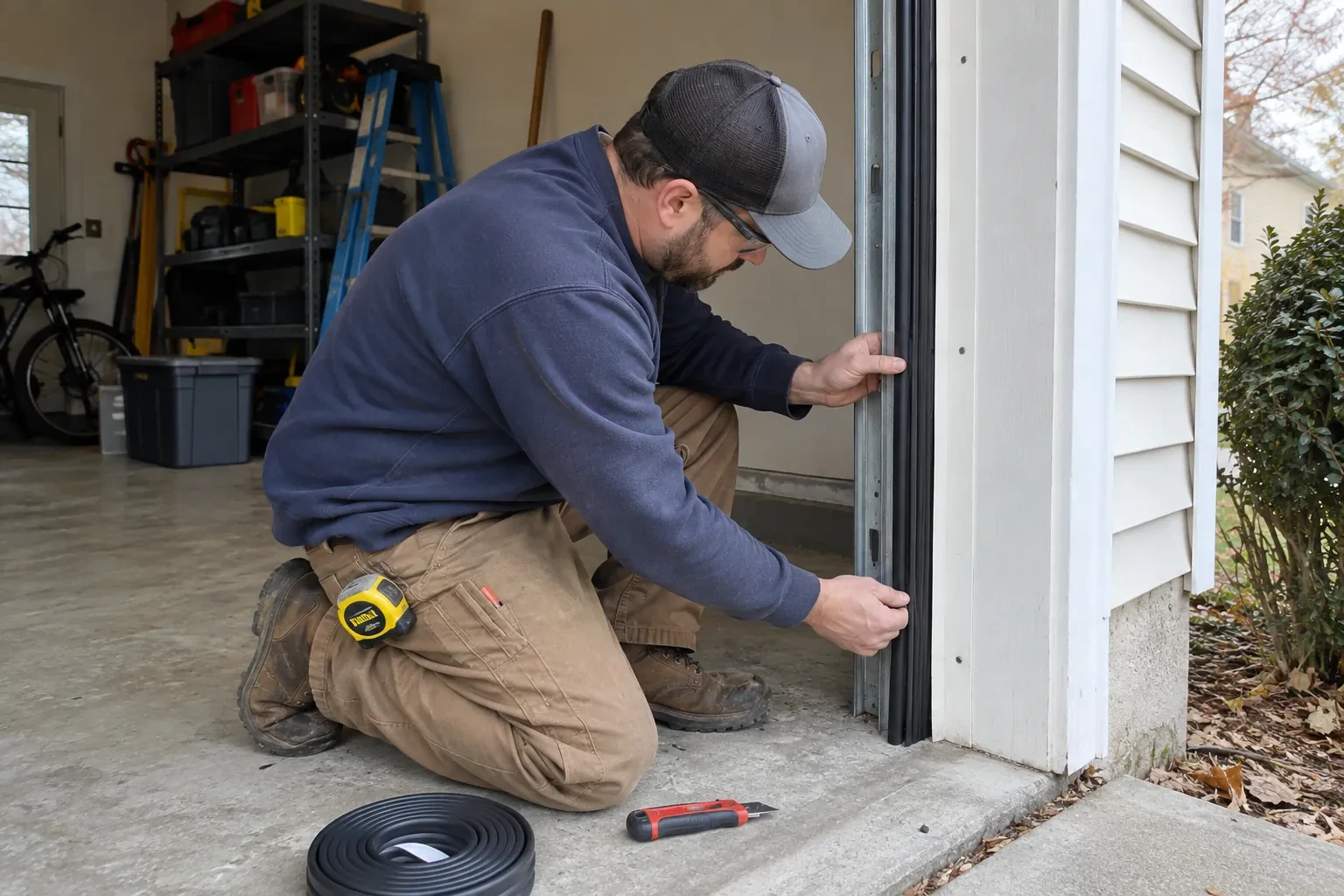
Openings carry different seals depending on their age and who last worked on them. Many older garages have a painted wood stop with a flexible vinyl fin nailed to its face. Newer installations often have a one-piece vinyl stop with the fin moulded in. Some commercial and premium doors use an aluminum retainer with a slide-in rubber insert, or a brush seal. The technician identifies which is present, whether the rigid part is sound enough to keep, and what the fastening was, because that decides whether a new fin goes onto the existing stop or the whole stop is replaced.
Making the jamb sound
Where probing found soft wood, it is dealt with before the seal. Rot at the base of the jamb is cut back to solid material and a matching piece of lumber or PVC trim is spliced in, fixed and primed. Minor soft spots are hardened with an epoxy consolidant and filled. Fasteners that will hold the new stop are then going into wood that grips them, which is what keeps the strip tight through years of the door pressing on it. Where the jamb is clad, the technician finds the solid framing behind the cladding and fastens through to it rather than into the thin skin.
A continuous line of contact
The change is visible the moment the lights go off: no bright edge down either side, no glow along the top. From outside, the new stop or fin sits flush and matches the trim. When the door closes, the fin bends gently against it along its whole length and springs clear as it lifts, without a squeal or a drag. Snow that used to drift in along one side is largely kept out, and the garage stays quieter on a windy night. If a jamb was repaired, the fresh wood or PVC at the base is primed and painted so it reads as part of the frame rather than a patch.
Garage Door Perimeter Weatherstrip
In the van
Epoxy consolidant and exterior primer
Aluminum retainer and rubber insert
Tape measure, level and square
Jamb repair lumber or PVC trim
Flexible vinyl fin seal
Garage Door Perimeter Weatherstrip
What affects the quote
Condition of the jambs
Soft or rotten wood at the base of a jamb is cut out and spliced with new lumber or PVC trim before the seal goes on, and that repair is quoted as its own item.
Number of doors
Two or three doors on the same property share the set-up time and are quoted together, usually at less per opening than a single door on its own.
Alignment work on the door
Where the door sits out of square and a track bracket or the door itself needs small correction before the seal can meet it evenly, that adjustment is named separately.
What to have ready
- Is your garage attached to the house, and is it heated?
- Is it a single or double door, and roughly how wide and tall?
- Is the bottom seal on the door also worn?
Garage Door Perimeter Weatherstrip: questions
QuestionsHow long does perimeter weatherstrip usually last?
It depends on sun, cold and how the door meets it. One manufacturer's guide suggests replacing seals every two to three years, while a well-set fin kept free of paint and wiped with silicone before winter often goes considerably longer. Rather than a calendar, watch the fin: when it stiffens, cracks or shrinks back from the door, it has done its work.
How can I tell the side and top seal needs replacing?
Close the door, turn off the garage lights and look along the edges for daylight. Then press the fin with a thumb: it should be soft and spring back. Hardness, cracks, pieces missing, a strip hanging loose, snow or leaves inside along the edge, or a fin that has folded under and torn are all signs. A rubbing squeal as the door moves is another.
What should I do before the technician arrives?
Move the car out of the garage or well back from the door, and clear anything stored against the jambs inside and any bins, planters or snow piled against them outside. Leave the door closed so the gaps can be seen as they are. If you have noticed where the daylight, drafts or snow come in, or where the mice appear, be ready to point it out.
Related services
- Garage Door Tune-UpHalfway up, the door shudders.
- Off-Track Garage Door ResetYou tapped the door with the bumper while backing in, barely a nudge, and now the bottom corner has swung inward.
- Garage Door Panel ReplacementFrom outside, the horizontal groove between two sections now steps sideways by a centimetre.