Openers · Toronto
Garage Door Remote and Keypad Programming
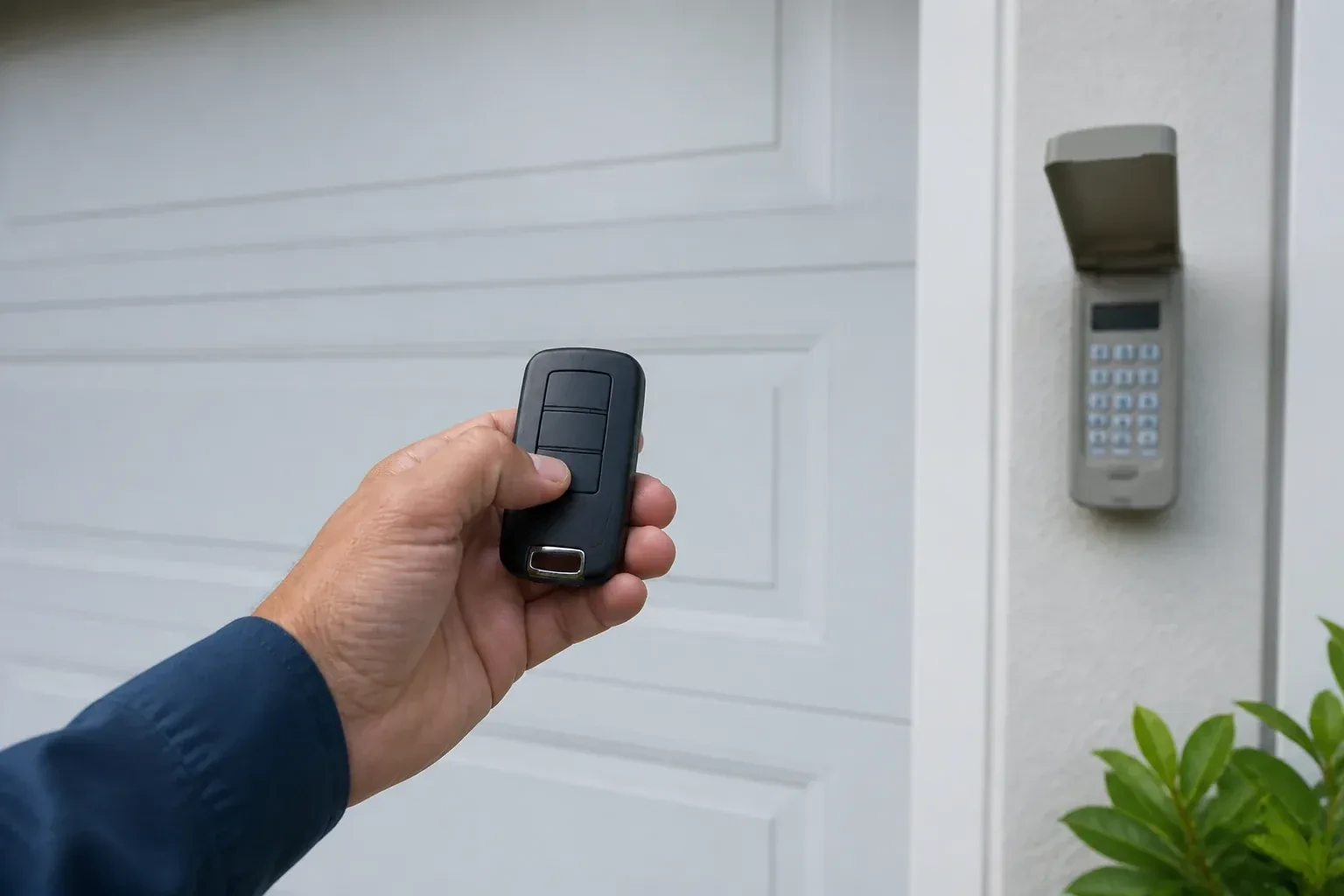
The remote opens the door only when you are almost underneath it.
In plain words
Built-in garage buttons in a car's mirror or overhead console are remotes like any other, often with one extra step. On many rolling-code openers the car first learns the signal from a working handheld remote held close to it, then the opener learns the car: the technician presses the learn button and, in the window that follows, presses the vehicle button until the door moves. A fresh battery in the handheld remote makes the first step reliable, though some vehicle systems follow a different sequence with no handheld remote, so the instructions are confirmed first. An older system sometimes needs a small bridge module.
How the visit goesThe outdoor keypad worked all summer. Now that the mornings are below freezing it lights up faintly, takes the code, and the door does nothing. Back inside, the remote works on the first press.
Garage Door Remote and Keypad Programming
How the visit goes
Range, bulbs and the antenna
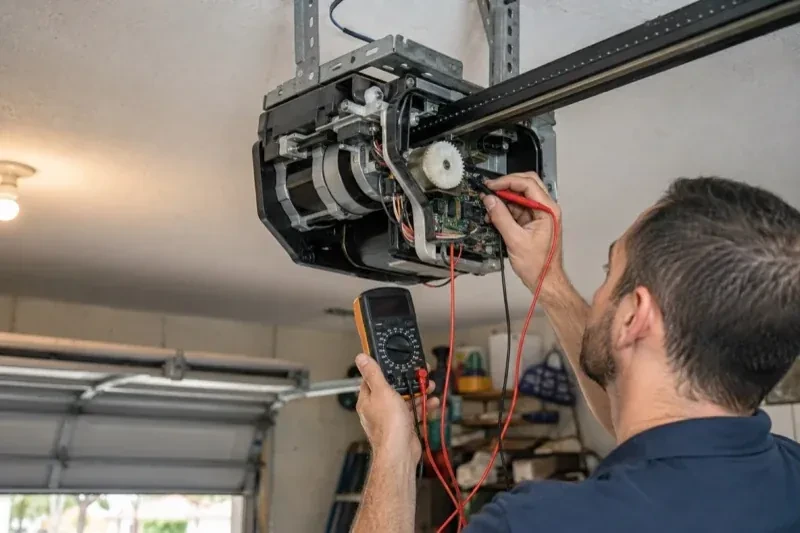
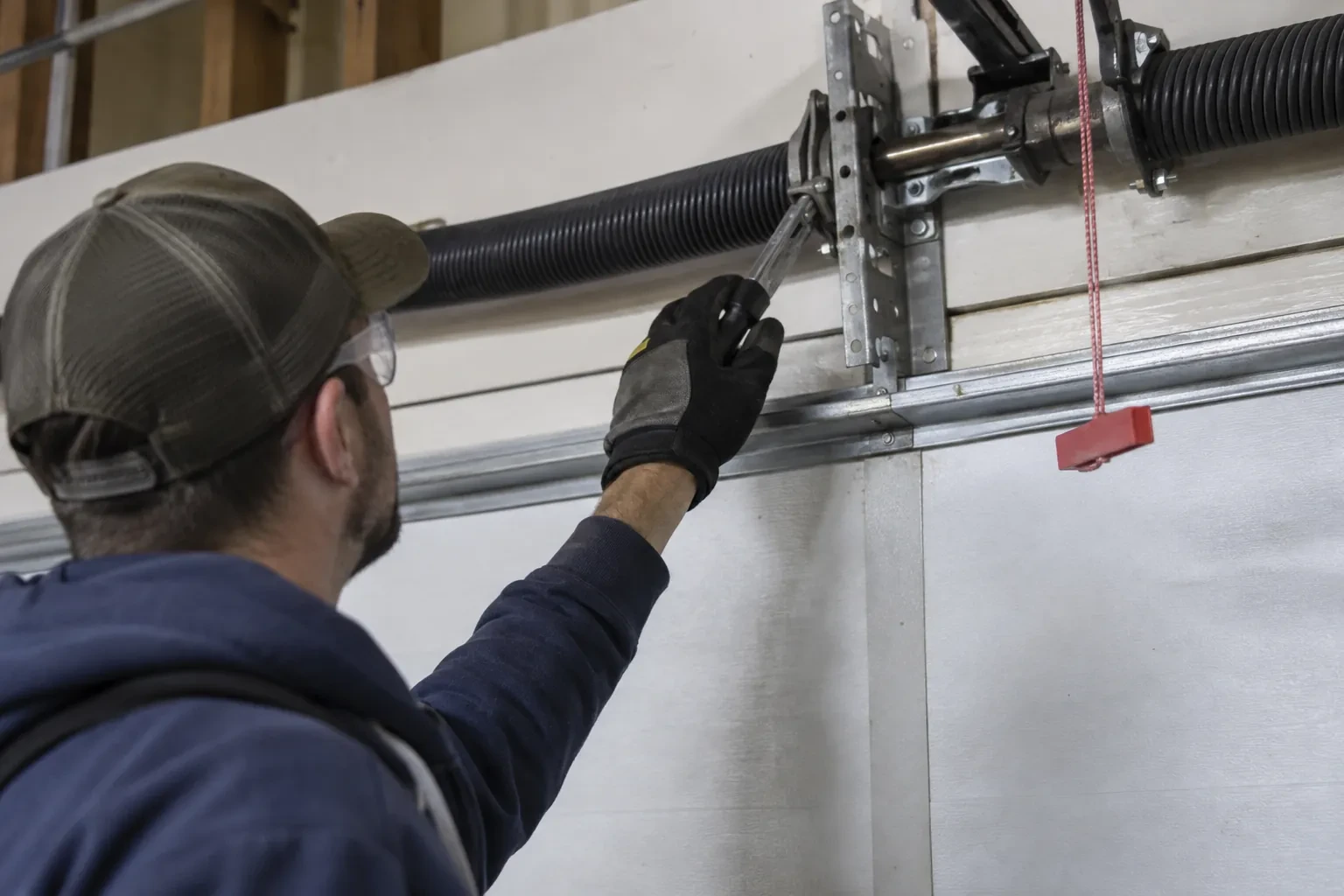
When remotes work only from directly beneath the opener, the technician checks the radio environment. LED bulbs, especially ones screwed into the head unit's own sockets, can emit noise that swamps the receiver, and swapping in a different bulb often restores range on the spot. The antenna wire should hang straight down from the head unit, not be coiled up or tucked behind the cover. Nearby electronics, a new metal shelving unit or a car parked with its own transmitter can also matter. A range test with a fresh remote at set distances puts numbers on the problem before any part is blamed.
Releasing lock mode and other simple resets
Some remotes are dead because the opener has been told to ignore them. The wall control's lock or vacation feature does exactly that, and shows itself as an indicator that blinks continuously and an opener light that flashes twice when a remote is pressed. The technician holds the lock button until the blinking stops and every remote comes back at once. A single remote with a stuck button, a bent battery clip or corroded contacts is opened and repaired or replaced. These are quiet fixes, but they are done deliberately and tested, because a household that thinks it has a programming problem often has a switch problem.
Adding a control yourself next time
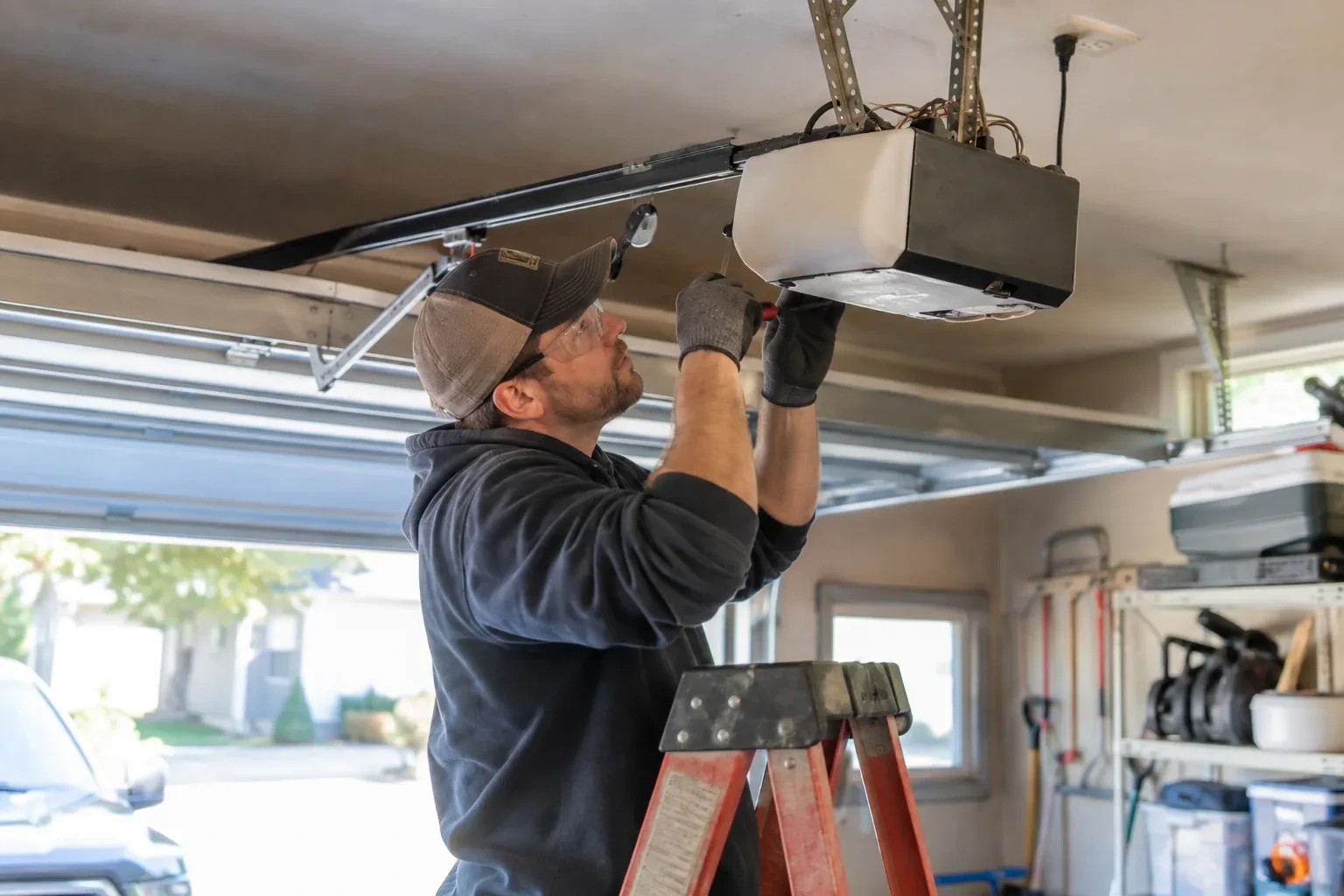
Because you watched the pairing, you know where the learn button lives under the light cover, what a short press does and, just as importantly, your opener's own erase sequence. Confusing the two is the cause of many surprise lockouts. You have the compatibility details for your opener written down, so the next remote you buy is the right generation, and you know that unplugging the opener during a long absence does not erase anything. Most households can add a remote themselves after seeing it once.
Garage Door Remote and Keypad Programming
In the van
Add-on rolling-code receiver kit
Universal multi-generation remote
Replacement remote (one, two or three buttons)
Wireless outdoor keypad
In-vehicle compatibility bridge module
Garage Door Remote and Keypad Programming
What affects the quote
Clearing and rebuilding the memory
Erasing all stored controls after a move or a loss, then reprogramming every remaining device and vehicle, takes longer than adding one remote, and the quote says so.
Receiver or logic board fault found
If a known-good remote also fails, the receiver or board is the cause; its diagnosis and replacement are quoted separately from programming.
Connected features
Linking or unlinking a phone app, or checking that a previous owner's account is removed, is quoted as its own step alongside the remotes and keypad.
What to have ready
- Roughly how old is the opener, and can you read its model label?
- Have the bulbs in the opener been changed to LEDs recently?
- Do you own the home, rent it, or is the garage shared with other units?
Garage Door Remote and Keypad Programming: questions
QuestionsDo I need to be home for the programming visit?
Yes, for two reasons. The technician confirms that the person authorising changes to the door's access is the owner, a tenant with permission or the building manager, and you choose the keypad code yourself so it is never known to anyone else. You also test each control in your own hand before the visit ends. Have every remote and vehicle you want programmed available, since a car parked elsewhere cannot be trained.
My opener has tiny switches inside the remote. Can I still get remotes for it?
Those are fixed-code openers from before rolling code, and their original remotes are often discontinued. Rather than hunt for old stock, an add-on rolling-code receiver is fitted: it wires to the wall-button terminals, plugs into the ceiling outlet and brings new remotes and a keypad with it. The opener must already have photo eyes at the floor; if it has none, a new opener is the sound recommendation.
The wall button works but none of the remotes do. Is that a programming job?
Sometimes, but the technician rules out two things first. Lock mode on the wall control tells the opener to ignore every remote, and gives itself away by a steadily blinking wall indicator and two flashes of the opener light whenever a remote is pressed; holding the lock button releases it. A memory cleared by a long press on the learn button is the other cause, and that one is a programming job.