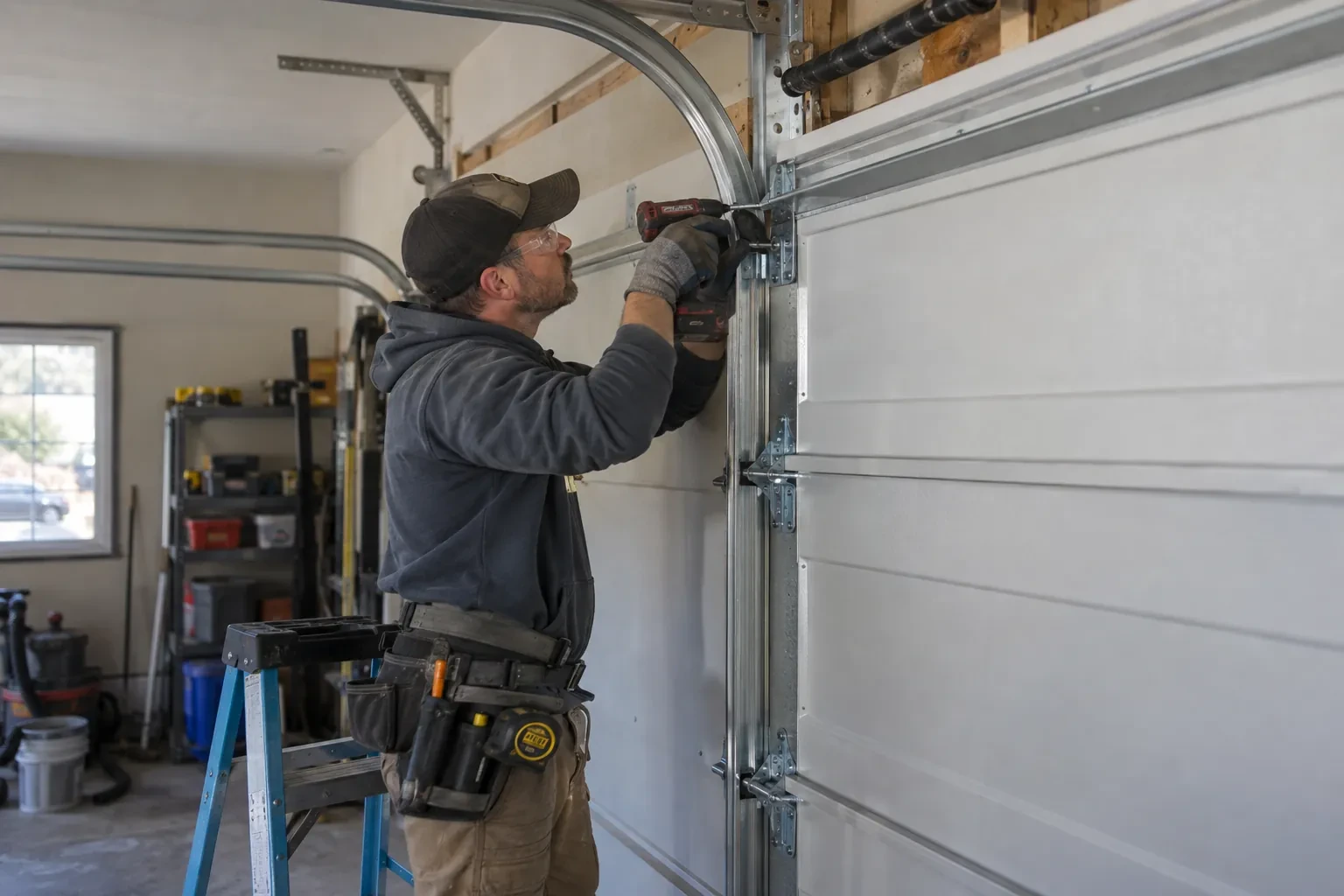
Garage Doors
Reading for homeowners
Understanding the why behind a repair makes the fix easier to trust. Our advice pages explain how each part works, what happens when it wears, and how the repair restores it.
Ask us anything
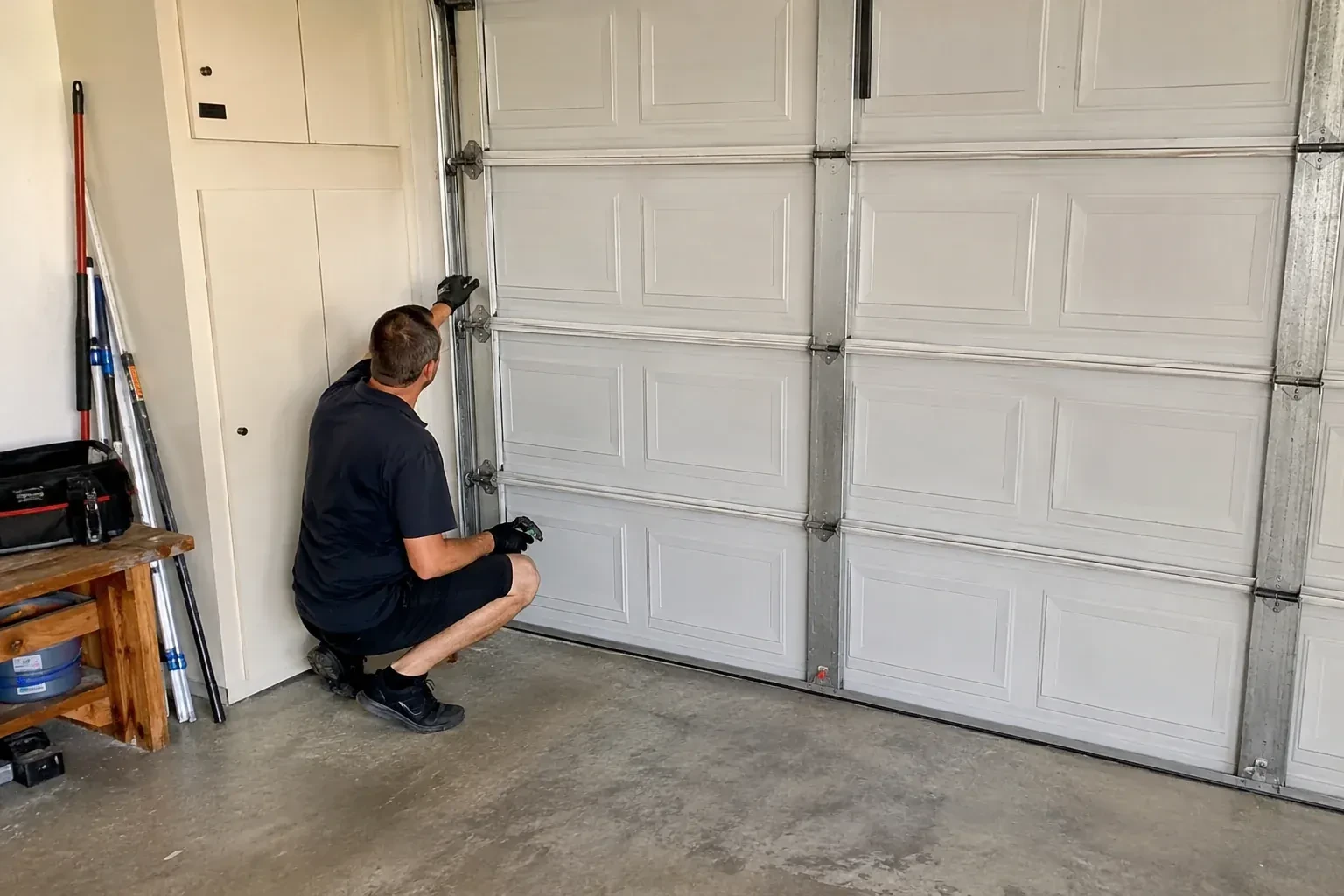
Why does my door reverse on the way down for no reason?
Most often it is the photo eyes. A sensor knocked slightly out of line, a lens with a film of road grime, a loose wire, or low afternoon sun shining straight into one eye will each break the beam as far as the opener is concerned. The next candidates are a down-force setting that has drifted, a binding roller or a door that has gone out of balance. The inspection checks each in turn.
How long does a tune-up take?
For a single or double residential door with an opener, allow roughly an hour to two hours on site. The inspection and the two observed cycles take a fixed amount of time; the rest depends on how many fasteners have loosened, whether the sensors need realigning and whether you approve a small part replacement, such as a worn roller, during the same visit. Spring or cable work, if found necessary, is scheduled as its own job.
I only tapped the door with the bumper. Why is it off its track?
A sectional door is strong in the direction it travels and surprisingly easy to push sideways at a single roller. A light nudge on the bottom section can flex the track lip enough for the roller to slip out, after which the section twists and the rollers above follow. The good news is that this kind of event usually leaves the cables and springs alone, so the reset is often rollers, a re-formed track lip and a hinge check.
What happens if my door's design has been discontinued?
It happens with older doors, since embossing patterns, joint profiles and colours change over the years. The technician looks for the nearest current section from the same manufacturer and describes how it would differ in look and fit. Sometimes the difference is minor and acceptable; sometimes the joint no longer mates. In that case the options are a section from a compatible series, or replacing the door as a whole, and both are explained before anything is ordered.
Why is the gap much bigger at one corner?
Two causes are common. The door may be hanging out of level because a lift cable has stretched, a drum has crept on its shaft or spring tension is uneven, which drops one corner. Or the slab may have settled or heaved at that end so the floor falls away. The technician checks both before choosing a seal, since a level door and the right seal height together close a wedge-shaped gap.
How long does perimeter weatherstrip usually last?
It depends on sun, cold and how the door meets it. One manufacturer's guide suggests replacing seals every two to three years, while a well-set fin kept free of paint and wiped with silicone before winter often goes considerably longer. Rather than a calendar, watch the fin: when it stiffens, cracks or shrinks back from the door, it has done its work.
My key will not turn in the cold. What is happening?
Meltwater has run down the door face into the keyway during a thaw and frozen overnight, or cold has stiffened old lubricant inside the cylinder. Lock de-icer or gentle warmth frees it; hot water is avoided because it refreezes and can crack cold metal. Afterwards the cylinder is dried and given a dry graphite or PTFE lubricant that sheds moisture instead of trapping it.
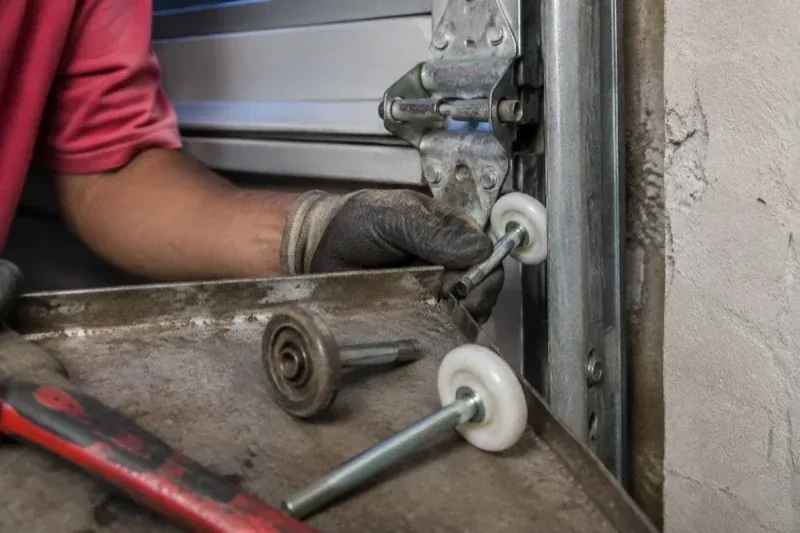
How do worn rollers affect the opener?
An opener is built to guide a balanced door, and every wheel that binds, wobbles or grinds adds resistance it has to overcome across the whole travel. It works harder, runs hotter, and may trip its force limit or reverse partway through a cycle. After roller replacement the technician confirms the door holds its own weight with the opener released, then checks the opener's force setting and its reversal on a test block, since a door that moves freely often needs those settings reduced.
What are the hinges made of?
Stamped galvanized steel, formed into two leaves joined by a pin or a rolled tube. The zinc coating is what resists rust in a garage that sees wet cars and salt, and it is why a scratched or bent hinge starts to brown at the damaged spot. Edge hinges include a tube that holds the roller stem. Thickness is given as a gauge, most residential hinges being 14 or 18.
Why is the horizontal track sagging?
The horizontal run hangs from the ceiling on back hangs of perforated angle, and it sags when a hanger bends, its screws pull out of a joist, or it was only ever fixed into drywall. A sagging hanger droops that run out of level or its intended pitch. The fix is a straight or new hanger screwed into solid framing, with the run set to the manufacturer's specified pitch and matched to its partner; a door that drifts back toward the opening once raised is a separate, balance-related symptom.
Why is the door sitting crooked in the opening?
Each corner of the door is held by its own cable. When one cable stretches, slips its drum or breaks, that corner loses its lift and drops while the other stays up, so the door tips and usually wedges against the track. Setting both cables to the same length and tension is part of every cable replacement, and it is what brings the door back level.
What about a garage with very little space above the door?
Low-headroom garages use a different arrangement: the spring assembly may be mounted at the rear of the horizontal tracks, or special low-headroom drums and track bring the door up with less clearance. Replacement follows the same principles, but the drums, cable routing and turn count differ. The technician identifies the system on arrival and brings hardware that suits it, so the door balances correctly in the space available.
Should I try to open the door by hand before the technician arrives?
No need, and it is easier on the door if you leave it. With a spring broken or slack, the door is unbalanced and heavy, and lifting it can let it drop or twist a section in the track. If the door is stuck partway, leave it there and keep people and the car away from the opening. The technician brings clamps and props, and the door is secured before it is moved at all.
Will I need new springs, or just an adjustment?
The inspection decides, and looks past appearance alone. A spring can look sound, with tight, evenly spaced coils, no rust pitting and no gap, and still be the wrong specification for the door or nearing the end of its service life. The technician checks the spring's specification against the door's weight and history: a spring that checks out is wound and left in service, while one that is undersized, stretched, corroded or close to its cycle life is better replaced. Either path ends in a balanced door.
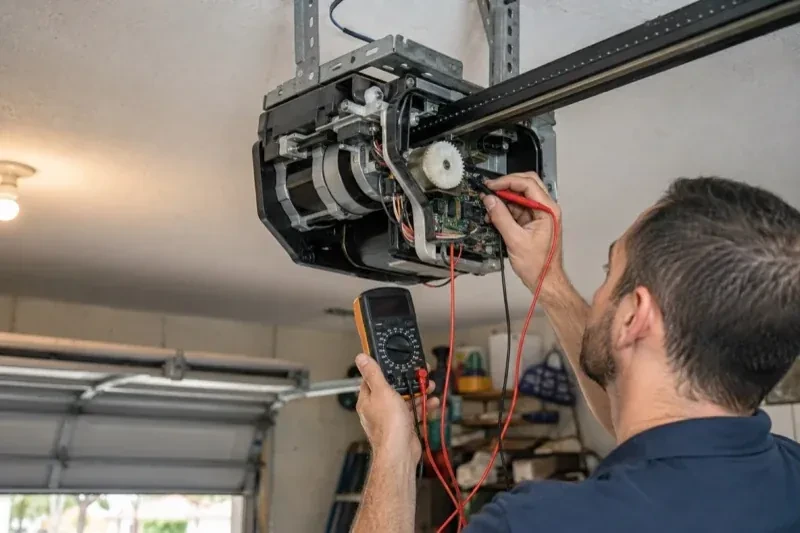
Why will the door close only while I hold the wall button?
That is a built-in behaviour, not a new fault. When the sensor circuit reports a problem, most openers refuse to close from a remote but allow a constant-pressure close from the wall control, because someone standing there can see the doorway. It is a strong signal that the photo eyes or their wiring need attention, and once the sensor issue is corrected the door closes normally from every control again.
Can a sagging chain be tightened, or does it have to be replaced?
Most sagging chains are tensioned, not replaced. The technician takes up the slack at the trolley nuts to the rail's figure and locks it. Replacement is the answer when the chain has stretched so far that tensioning leaves it uneven over the sprocket, when links are seized with rust, or when the sprocket teeth are worn to hooks and would chew a new chain. In that case chain and sprocket are renewed together.
Will my remotes and keypad still work afterwards?
Yes. Belt, trolley and pulley work happens on the rail and leaves the operator's memory untouched. Replacing the gear at the motor head means opening the head unit, and on some models that is a good moment to confirm every remote, the keypad and any in-car buttons afterwards. The technician tests each before leaving and re-teaches any that need it.
How many remotes and keypads can be added?
Capacity depends on the model: current operators hold anywhere from about eight to forty remote codes, so most households can pair every driver, a keypad, in-car buttons and a phone with room to spare. Remotes are added by holding the learn button on the head unit and pressing the remote; the console guide shows the steps and the technician leaves them written down. If a remote is lost later, clearing the memory and re-teaching the others takes only a few minutes.
Is it all right to keep using the door until the visit?
Use the door in a way that keeps you in control. If the opener closes only while the wall button is held, do that only while you can see the whole doorway and nobody is near it. Otherwise close the door first if you can, then move it by hand with the manual release, and get help if it feels heavy or binds. Keep children and pets clear during any test. A door that reverses is being cautious on your behalf.
Do I need to be home for the programming visit?
Yes, for two reasons. The technician confirms that the person authorising changes to the door's access is the owner, a tenant with permission or the building manager, and you choose the keypad code yourself so it is never known to anyone else. You also test each control in your own hand before the visit ends. Have every remote and vehicle you want programmed available, since a car parked elsewhere cannot be trained.
What batteries does the sensor take, and how long do they last in a cold garage?
Most sensors take a coin cell or a pair of small cylindrical cells, specified by the maker. In a heated garage a battery commonly lasts a year or two; in an unheated one, expect less, and choose a lithium cell over alkaline because it holds its voltage in the cold. The app warns you as the battery runs down, and replacing it takes a moment and a fresh cell.
Should I test the release regularly?
Once a month is the industry rhythm for the door and opener, and the release fits into it. With the door closed, pull the handle, raise the door by hand to about halfway, feel that it moves freely and holds, then lower it and reconnect. It takes a minute and tells you two things: the release works and the door is balanced. Follow with the 2x4 and beam reversal checks so the whole system is proven together.
Which documents should I keep after installation?
Retain the door and opener instructions, product and component identifiers, finish details, the written scope and the record of completed checks. These items help with care and later parts identification. Keep personal access codes separately rather than adding them to a service record that may be shared with future technicians or property managers.
Can the installation improve a draughty opening?
A properly fitted insulated door with fresh perimeter and bottom seals addresses common air paths through and around the opening. The installer checks section joints, jamb contact, header contact and the slab line. Comfort also depends on walls, ceiling, service doors and ventilation, so the door is treated as one important boundary in the garage rather than the only factor.
Can a similar-looking hinge or roller be substituted later?
Appearance is not enough to establish equivalence. Metal thickness, strength, hole pattern, roller stem length, bearing design, and fastener placement can differ in ways that affect both movement and structural performance. Future service should use the door record and applicable component guidance to match parts, preserving the intended arrangement instead of relying on a visual comparison.
What measurements are needed before ordering the door?
The survey records clear opening width and height, side room, headroom and backroom, often at more than one point. It also checks floor level, jamb and header condition, ceiling obstacles, track supports and opener position. These measurements determine door size and hardware layout. Exterior trim and the desired panel proportions are documented so technical fit and visual fit agree.
Can a business use a full-view sectional door?
Yes, where the selected door and operating system suit the opening, traffic pattern and building requirements. Showrooms, workshops and service spaces may value daylight and visible activity, while frosted or mixed panels can screen equipment. Commercial use, door size, cycle expectations, controls, structural conditions and any project review are identified before a suitable assembly is specified.
Is an electric operator part of every installation?
No. The door system can be installed and balanced for manual operation, while an electric operator is an additional selected component. When included, the scope should name the operator type, controls, sensors, support and electrical preparation. The door is commissioned by hand before powered travel is set. This sequence confirms that the motor is connected to a freely moving, properly counterbalanced assembly.
Why is the door lifting higher on one side?
Uneven travel commonly points to a lift-cable or drum issue, though a displaced roller, bent track or damaged bottom fixture can create a similar angle. The door is supported first, then both lifting sides are compared for cable condition, drum seating and hardware position. Correcting the cause and restoring equal tension brings the bottom edge back to level movement.
Why is the bottom bar rising crooked?
An angled bottom bar can point to a shifted curtain, damaged slats, unequal guide friction, a moved barrel, impact at one guide or a counterbalance issue. Measurements at the sill, guides and brackets help separate those causes. Cycling is kept controlled because repeated powered movement can pull a minor tracking problem farther sideways.
When is high-lift conversion a practical choice?
It is practical when an existing sectional opening has meaningful wall height above it, enough ceiling depth for the horizontal run, suitable support conditions and a clear reason for gaining overhead room. The door, counterbalance and operator must be designed together. A measured feasibility plan confirms the usable clearance before installation becomes the next step.