Openers · Guildwood Village
Belt-Drive Opener Repair in Guildwood Village
The door used to glide up with a soft hum.
In plain words
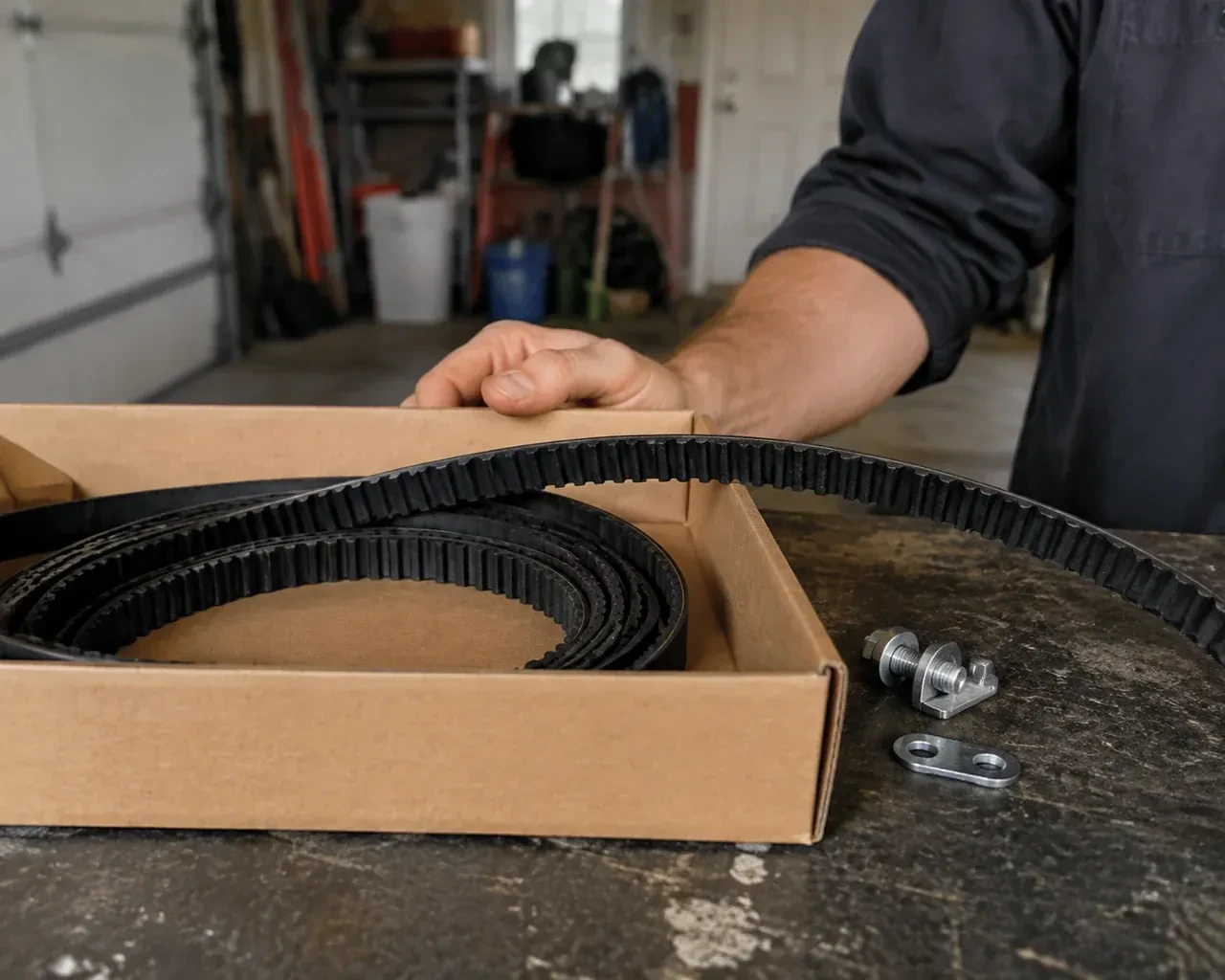
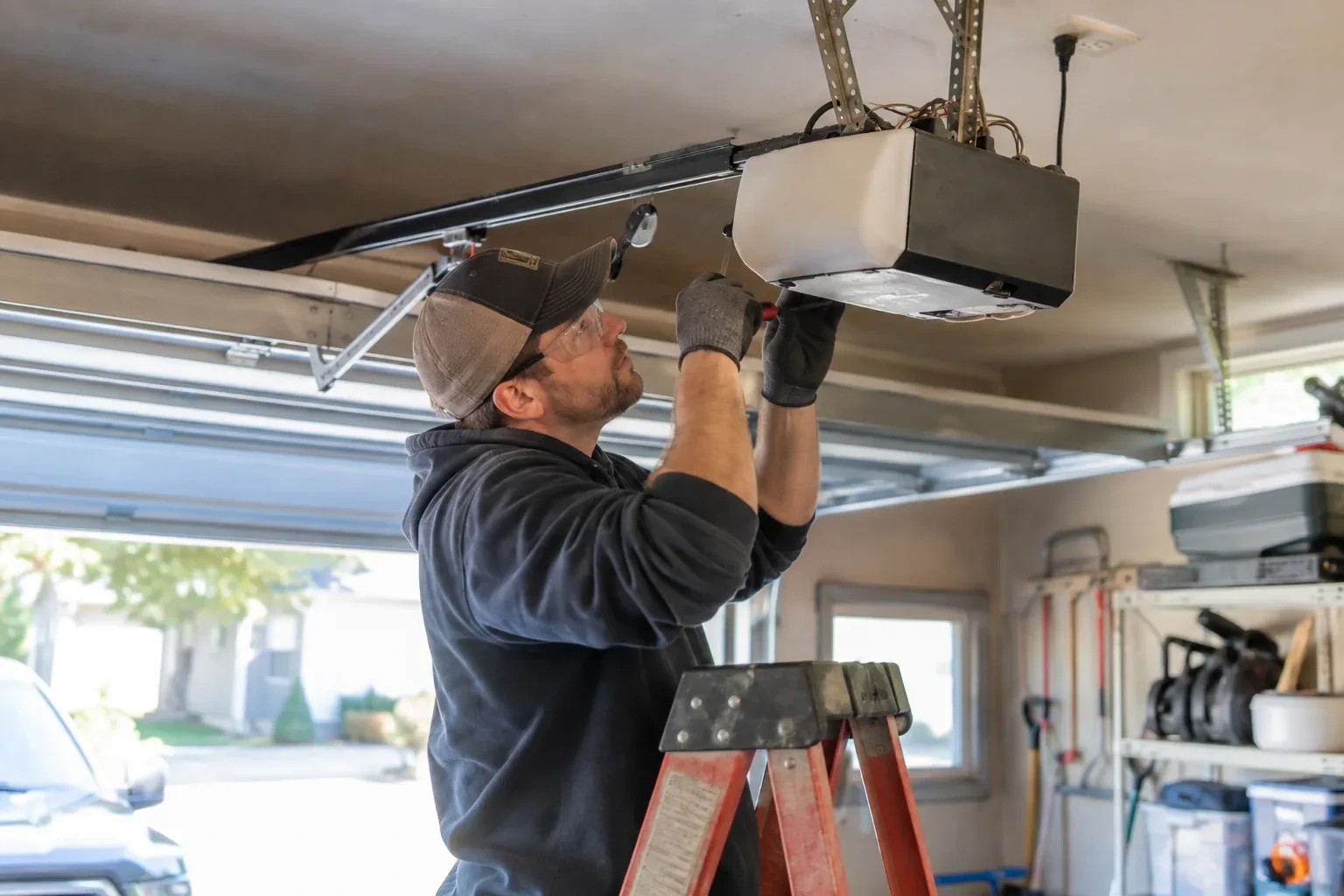
The most common belt-drive repair is the simplest: the belt has stretched over thousands of cycles and hangs slack under the rail. On its way up it slaps the rail and skips a tooth or two on the sprocket. Tension lives at the trolley, where a threaded shaft, a spring and a square nut set how much the belt is pulled taut. The technician sets that spring to the maker's stated length, confirms a little give at mid-span, then runs the door and listens. If the belt has stretched past what the adjuster allows, or the rubber has aged, a new belt goes in instead.
How the visit goesThere is a new squeal from the front of the rail, up near the header, on every cycle. The belt has started tracking to one side and its edge is fuzzy where it has been rubbing.
Belt-Drive Opener Repair
How the visit goes
The trolley and its release
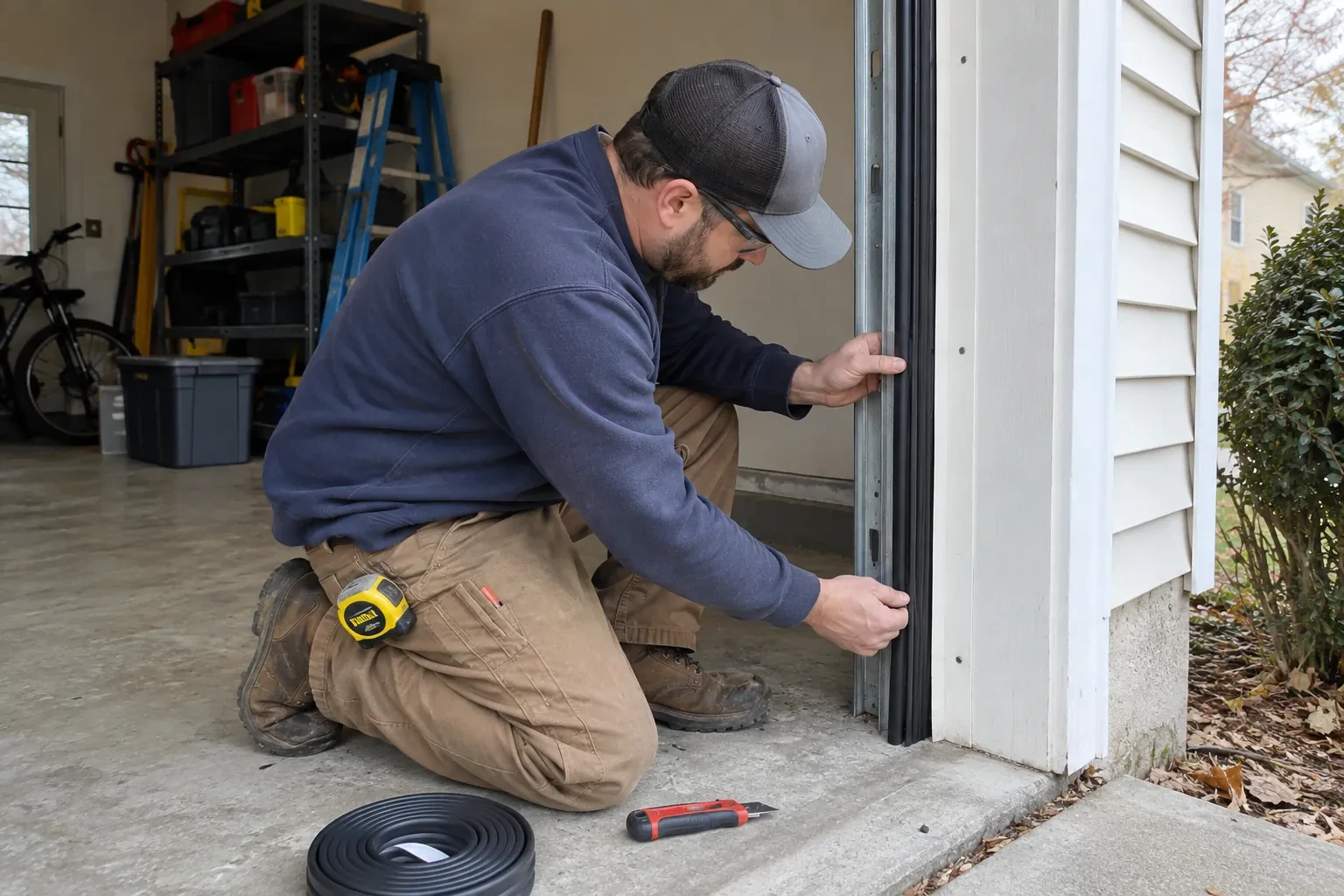
The trolley turns the belt's pull into movement of the door and takes every start and stop. The technician checks its two halves: the inner half the belt is fixed to, and the outer half the door arm hangs from. The release lever should part them cleanly when the cord is pulled and lock them together again when the operator runs or the cord is pulled a second time. Cracks in the housing, a lever gummed with old grease, play on the rail, or a trolley sitting hard against a stop bolt are all noted. Whether trolley and motor are in step is checked too, since a belt that has been off the sprocket often leaves them disagreeing.
Putting motor and trolley back in step
Any time the belt has been off the sprocket, the operator's sense of where the door is can drift from where the trolley actually sits, so this step is done before the door is reconnected. The technician lifts the belt clear of the sprocket, runs the operator until the sprocket turns to its closed position and stops on its own, then slides the trolley to the closed end of the rail and refits the belt. Motor and trolley now agree. On operators with a mechanical limit assembly, the middle contact is adjusted instead. Without this step, the door stops short at one end no matter how the travel limits are turned.
The hush is back
What you notice first is the sound, or the lack of it. A belt drive in good order starts softly, hums along the rail and eases to a stop, and after the repair it should sound the way it did the week it was installed. The clack of a loose belt, the squeal of a dry pulley and the growl of a stripped gear are gone because their causes are gone, not masked. Listen for that baseline over the next few weeks; a new noise arriving is the earliest warning you will get, and a belt drive tends to announce trouble months before it stops. A short call at that stage is a small adjustment.
Belt-Drive Opener Repair
In the van
Idler pulley and bearing
2x4 offcut for the reversal test
Door arm and clevis pins
Garage-door lubricant for hinges and rollers
Rail hanger straps and fasteners
Belt-Drive Opener Repair
What affects the quote
Door size and weight
A wide double door or a heavy insulated one asks more of the belt and trolley, and the inspection may point to a suitably rated opener or a top-section strut for that door, alongside the belt matched to the rail and sprocket.
Idler pulley
A squealing or wandering pulley at the header end of the rail is a separate part and a few extra minutes with the belt slack, quoted only when the inspection finds it.
Access to the rail
Shelving, a car lift or a loft beside the rail, or a garage that is full on the day, mean more careful handling along the belt's length, and the technician allows for it once the space is seen.
What to have ready
- Does the door lift easily by hand and stay put halfway with the opener released?
- Are there plastic shavings or grease on top of the motor housing?
- Has anyone tightened or adjusted the belt recently?
Belt-Drive Opener Repair: questions
QuestionsWill my remotes and keypad still work afterwards?
Yes. Belt, trolley and pulley work happens on the rail and leaves the operator's memory untouched. Replacing the gear at the motor head means opening the head unit, and on some models that is a good moment to confirm every remote, the keypad and any in-car buttons afterwards. The technician tests each before leaving and re-teaches any that need it.
What is the difference between belt-drive repair and opener replacement?
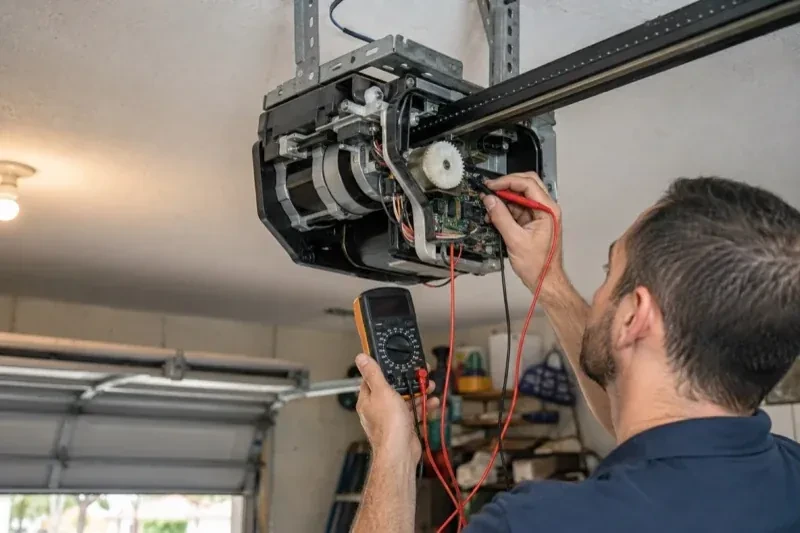
Repair keeps the operator you have and renews the piece of the drive that has failed: the belt, its tension, the trolley, the idler pulley or the gear and sprocket at the motor head. It suits a unit with a sound motor and board, photo eyes near the floor and rolling-code remotes. Replacement is the answer when the operator predates those features or when its board or motor has failed and is no longer made.
Why is the door tested by hand before the belt is touched?
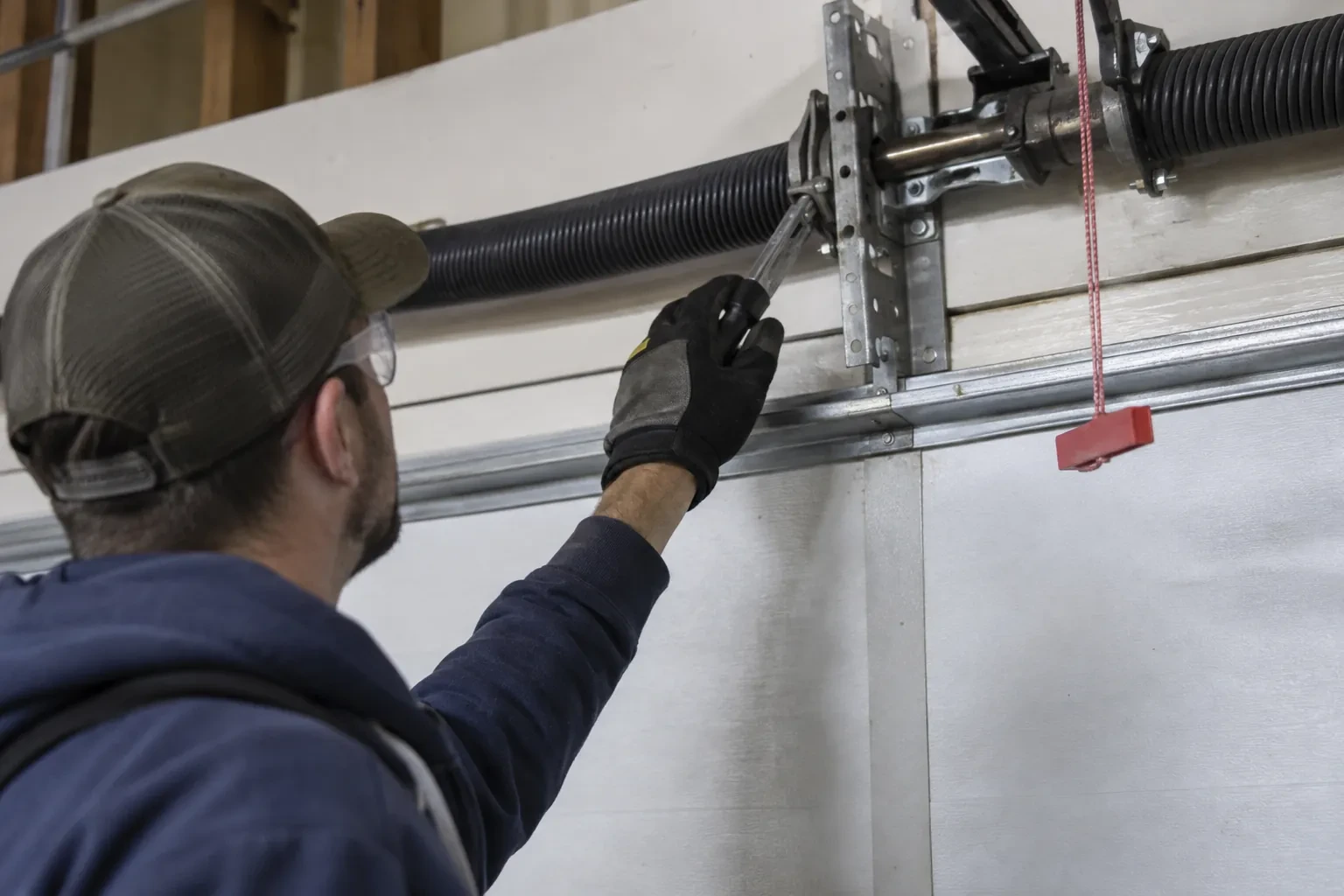
Because the belt guides the door; the springs carry it. A door that lifts with moderate effort and stays put a metre off the floor is balanced, and a belt on that door lasts. A door that drops or drifts is loading the belt, trolley and sprocket far beyond their design, so a new belt would wear the same way. Spring work comes first in that case.
Related services
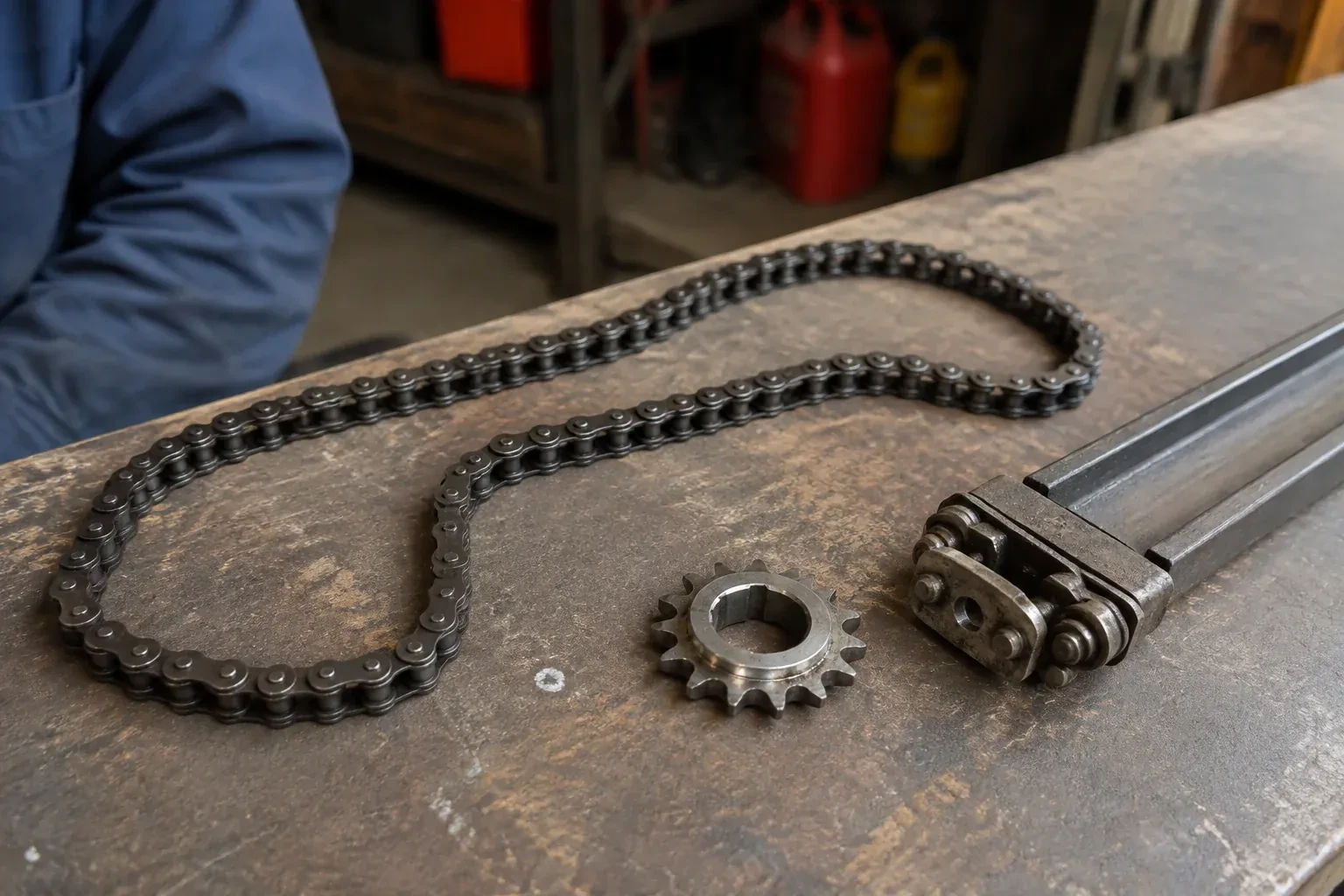
- Chain-Drive Opener RepairPress the button and the opener hums for a second, then quits.
- Garage Door Opener ReplacementDuring the ice storm the power was off for two days.
- Photo-Eye Sensor Alignment or ReplacementSince shelving went up along the garage wall, the door will not close and both sensor lights are dead.