Repairs · Toronto
Garage Door Manual Lock Repair
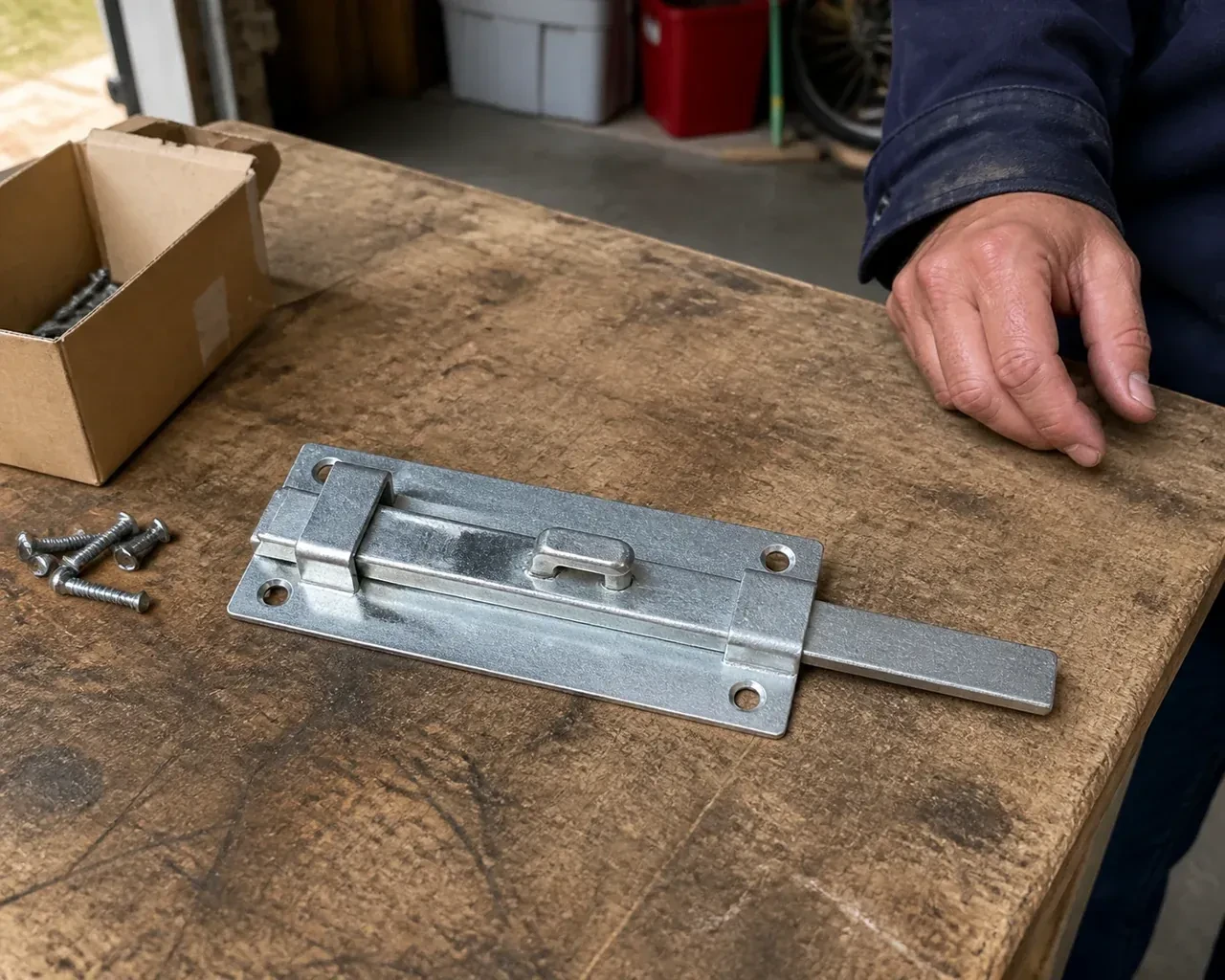
You pushed the slide bolt across like always, but tonight it stops short of the slot in the track and springs back.
In plain words
A keyed garage handle hides more than it shows. On the common bar-style handle, a spindle passes through a centre lock body, where a spring and cam convert the quarter turn into a push on two long bars, each riding in a guide and ending in a track slot; other models pull a cable to release spring latches instead. Any of these can wear: springs weaken, cams round off, spindles twist, guides rust, bars bend. The repair replaces whichever pieces have given up, matching spindle length to the door's thickness and bar length to the door's width, so the rebuilt lock throws and releases with a crisp action.
How the visit goesThe outside handle wobbles in your hand and the inside knob spins round and round with nothing attached. The screws that held the lock through the door skin have pulled loose, leaving oval holes, and the whole thing hangs on by little more than paint.
Garage Door Manual Lock Repair
How the visit goes
How the lock is fixed to the door
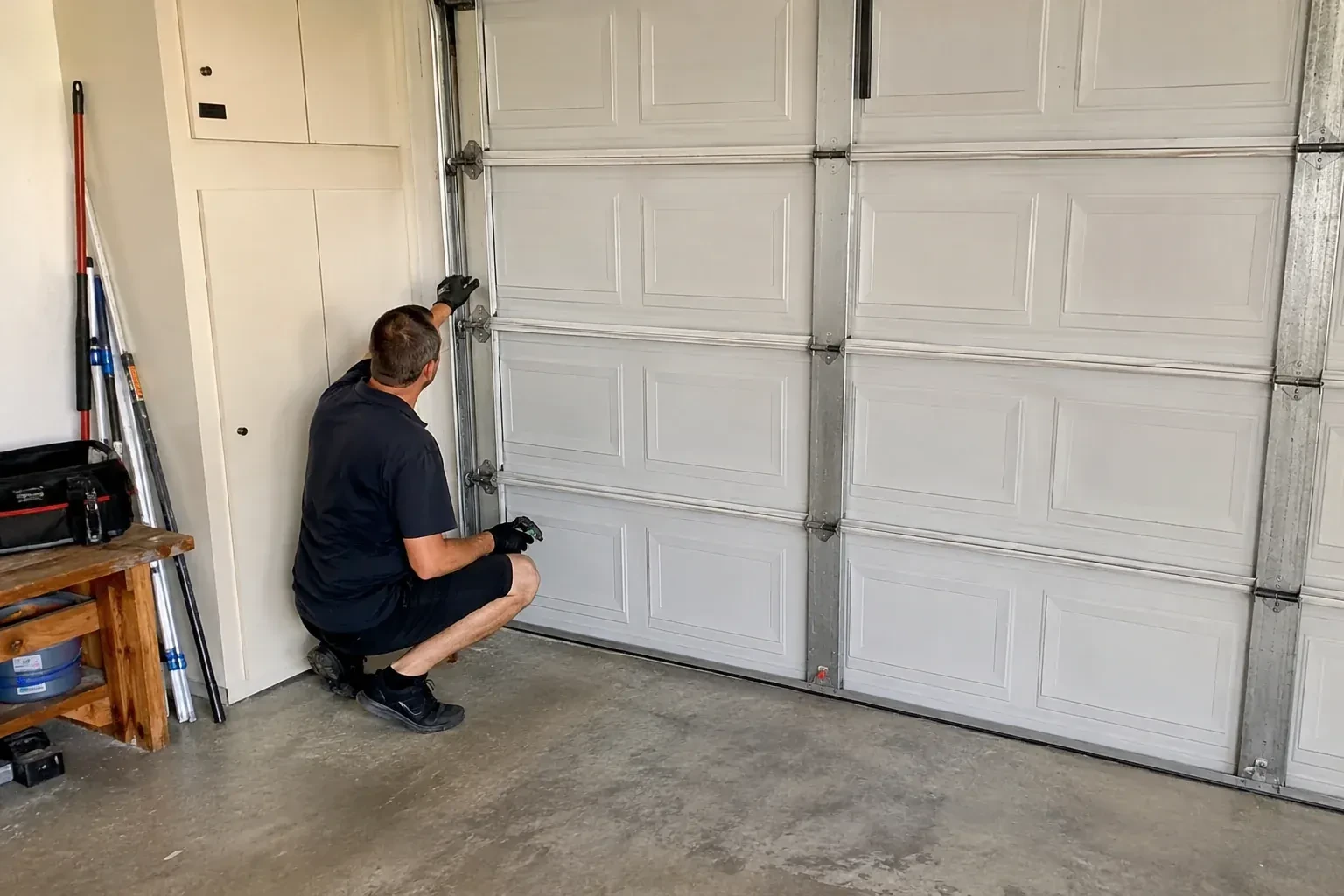
The lock lives on the door section, and the section has to hold it. On a steel door the technician checks whether the screws through the thin skin have pulled and left oval holes, whether the handle base is cracked, and whether the section around the cutout has creased. On a wooden door the check is for softness and rot around the handle and along the stile where the bar guides are screwed, and for a handle that spins in an oversized hole. Insulated doors are measured for thickness so the replacement spindle and through-bolts reach. This tells the technician whether ordinary screws will hold again or whether carriage bolts and backing plates are needed for a lasting fix.
Settling how the lock and the opener will live together
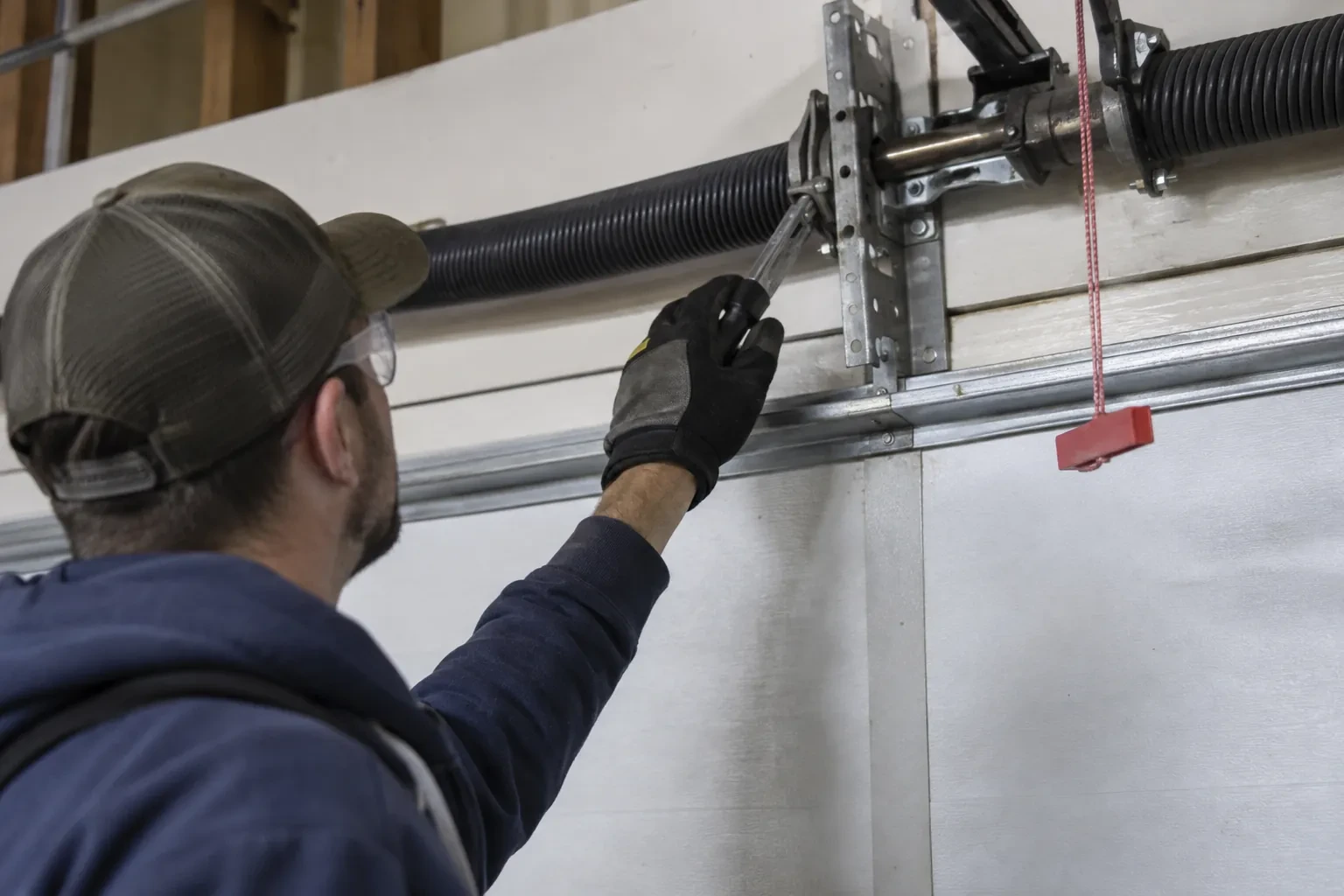
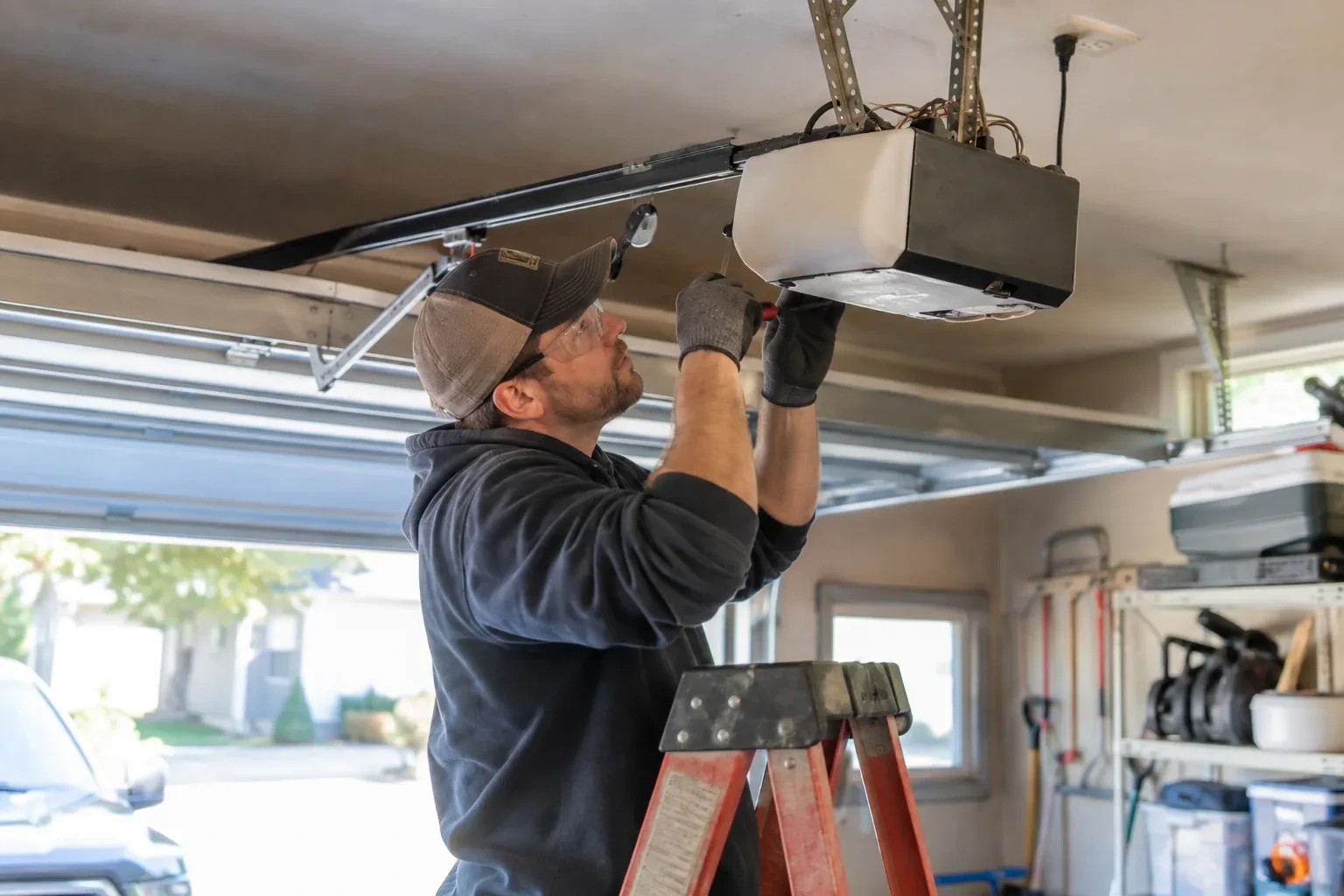
With the lock working, the opener is brought back into the picture. As opener makers direct, the bars are removed or fixed back so they can never reach the track, and the opener's own lock-out feature on the wall console is demonstrated as the way to secure a parked door. If the household wants a lock available for outages, that calls for a manufacturer-approved interlock rather than a label alone, and the technician explains what that would involve. Some openers also accept an add-on automatic deadbolt. The opener is reconnected and run through full cycles.
Other ways to secure the door you now know about
The alternatives to a manual lock are worth knowing. Most wall consoles have a lock-out button that stops every remote from working while you are away, which is the everyday answer for a powered door. Some openers accept an automatic deadbolt that slides a bar into the track each time the door closes and withdraws it before the door opens, so the security of a manual lock arrives without the need to remember it. A keyed outside handle can also be connected to the opener's release for the day the power is out and you are on the wrong side of the door. None of these is required; they are simply options.
Garage Door Manual Lock Repair
In the van
Spring-steel lock bars
Lock bar guides
Inside slide bolt or snap latch
Key blanks and rekeying pins
Centre lock body and return spring
Garage Door Manual Lock Repair
What affects the quote
Rekeying the lock to match your other doors
Some households want the garage's manual lock to turn with the same key as the house, rather than carrying a separate one. Matching a cylinder to an existing key, or cutting a fresh set for both, is arranged once the existing hardware has been looked at.
Door thickness and insulation
Insulated and thicker doors take longer spindles, longer through-bolts and sometimes a sleeve through the foam. Matching those parts to the door affects the parts list.
Condition of the bars and guides
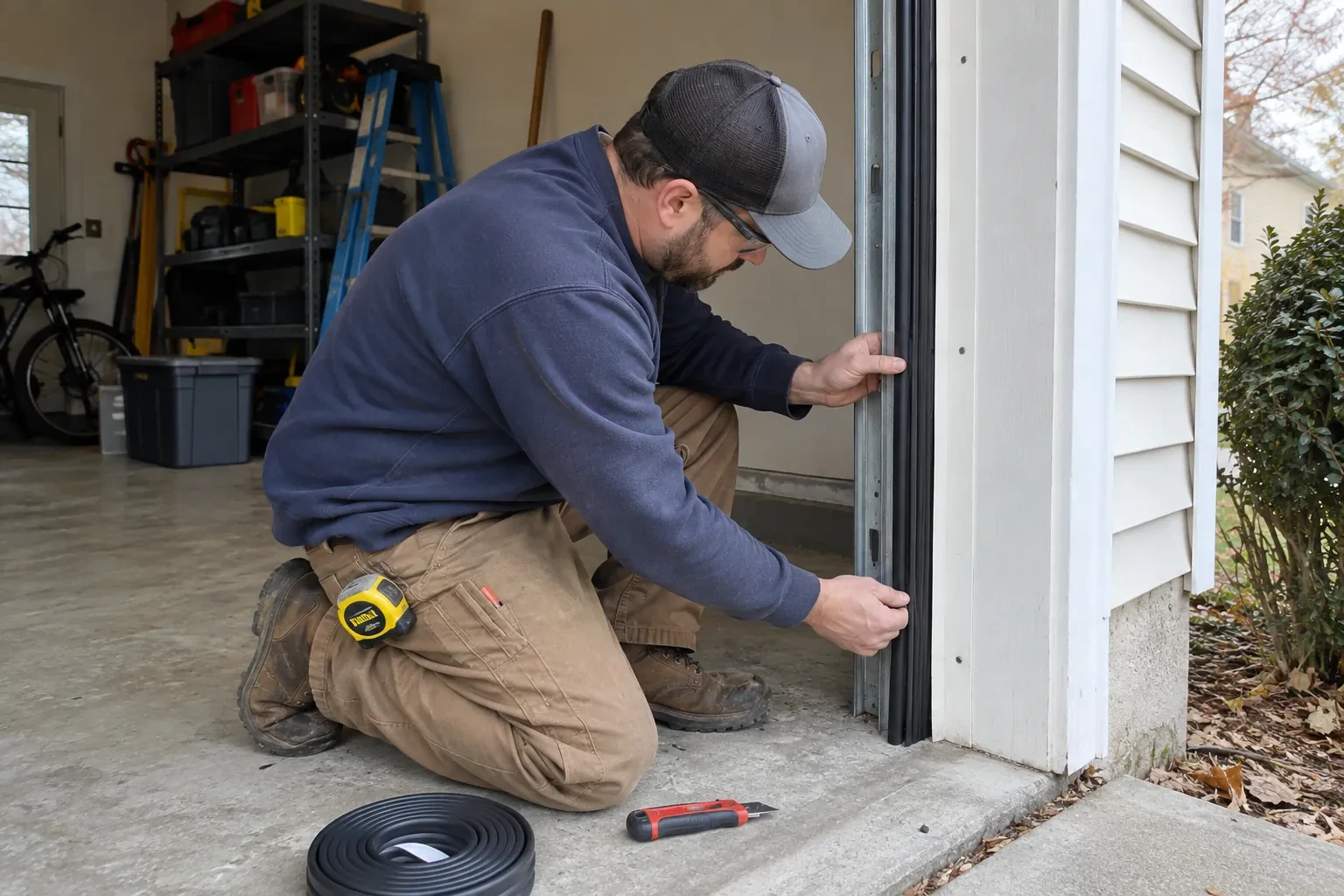
Bars that are merely stiff are cleaned and lubricated; bars that are bent are replaced and cut to length, and rusted guides are renewed. The quote follows what the bars turn out to need.
What to have ready
- Would you like the garage lock keyed to match your house key?
- Does the door close fully to the floor and sit level?
- Is the lock a sliding bar inside, a T-shaped handle outside with a key, or both?
Garage Door Manual Lock Repair: questions
QuestionsMy key will not turn in the cold. What is happening?
Meltwater has run down the door face into the keyway during a thaw and frozen overnight, or cold has stiffened old lubricant inside the cylinder. Lock de-icer or gentle warmth frees it; hot water is avoided because it refreezes and can crack cold metal. Afterwards the cylinder is dried and given a dry graphite or PTFE lubricant that sheds moisture instead of trapping it.
The wood around my lock is soft. Can it still be repaired?
Yes. The decayed wood is cut back to sound material and a hardwood block or a steel backing plate is let in behind the handle and along the stile where the bar guides sit. The handle, mechanism and guides are then fixed to that new material with through-bolts rather than screws into soft grain, so the lock turns without rocking and the bars hold their line.
Why does the inside knob spin without doing anything?
The knob is meant to grip the square spindle with a set screw, and that screw has loosened or the spindle's flat has worn so the knob no longer bites. Sometimes the spindle itself has sheared inside the door. The technician tightens a fresh set screw onto a proper flat or fits a new spindle of the correct length, and the knob and outside handle move as one again.
Related services
- Garage Door Tune-UpHalfway up, the door shudders.
- Off-Track Garage Door ResetYou tapped the door with the bumper while backing in, barely a nudge, and now the bottom corner has swung inward.
- Garage Door Panel ReplacementFrom outside, the horizontal groove between two sections now steps sideways by a centimetre.