Scarborough Bluffs Garage Door Pros · Toronto
Garage Door Safety Inspection: inside the visit
Garage Doors · Toronto, Ontario
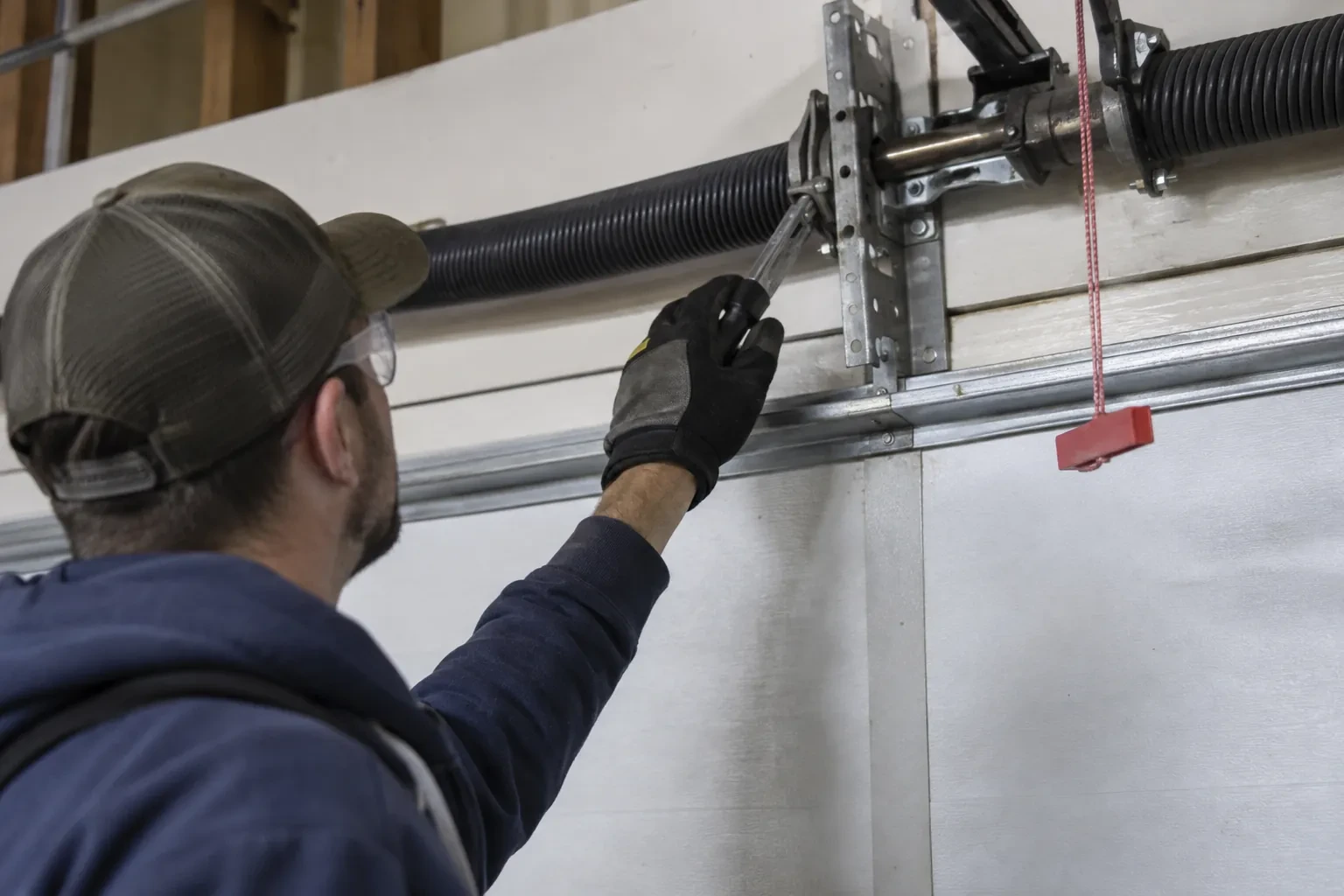
After a vehicle or an object has hit the door, an inspection follows the force rather than the dent. A bump on the bottom section can nudge a track out of plumb, shift a roller, bend a bracket, or leave one cable seated differently on its drum, and each changes how the door hangs and how the springs share its weight. The technician traces the load path from the point of impact through the hinges, rollers, tracks, cables and counterbalance to the opener attachment, and reports whether the mark is cosmetic, whether a section or piece of hardware needs work, or whether the door has moved out of balance.
Watching one full cycle under power
Before anything is measured, the technician stands back and runs the door through a full open and close, listening as much as watching. A healthy door sounds even from bottom to top; a knock at the turn into the horizontal track, a squeal at a particular hinge, a grinding drum or a motor that changes pitch under load each point somewhere specific. The eyes follow both bottom corners to see whether they leave the floor together, the top section as it passes the curve, and the final inch of closing, where the door should settle onto its seal without a thud. This one cycle often tells the technician where to spend the rest of the visit.
The balance test, by hand
With the door fully closed, the technician pulls the release cord to disconnect the opener, then lifts the door by its handle or a safe grip on the bottom section. It should rise with light, even effort, stay put when let go around waist height, and lower to the floor without slamming. A door that drifts up is over-sprung; one that sinks or feels heavy is under-sprung or bound somewhere in its travel. Binding at a particular height points at a roller, a hinge or a track rather than the springs. The result is recorded as a finding; any change to spring tension is quoted as separate work, done under controlled torque with proper winding bars and the door secured.
Signs that call for a visit before the next scheduled one
A few things are worth a call the day you notice them: a door that hangs crooked or stops part-way; a cable that looks slack, frayed or wrapped where it should not be; a gap in a torsion spring coil; a door that suddenly feels heavy on the manual release; an opener that reverses for no reason after the photo eyes are wiped; or a deep dent, one from an impact, or one dragging in the track. In each case, leave the door as it is, keep people and vehicles clear, and use another door until it has been looked at. A small cosmetic dent that leaves the door running smoothly can wait for the planned appointment.