Repairs · Toronto
Garage Door Safety Inspection in Toronto
Your toddler has discovered the wall button.
In plain words
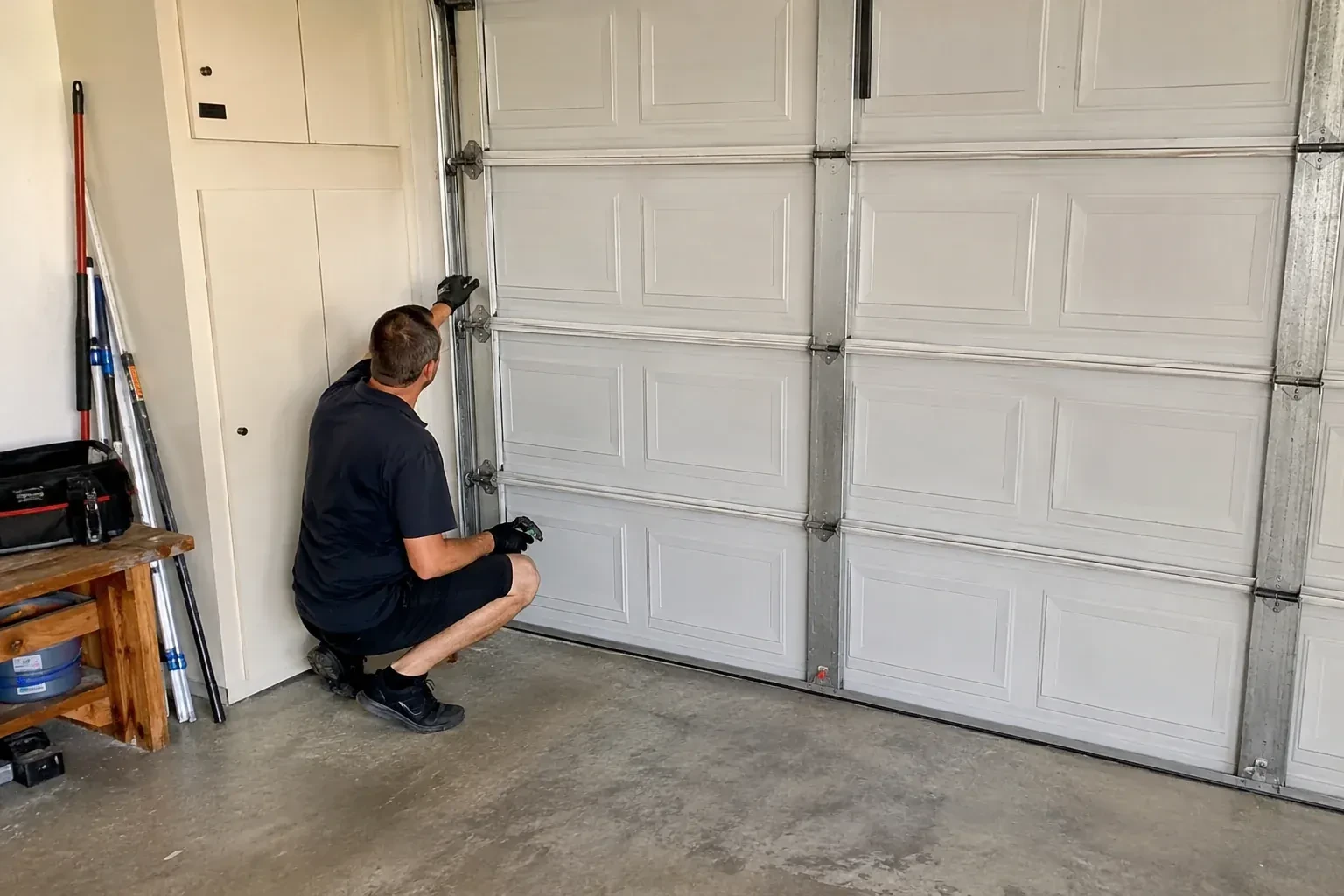
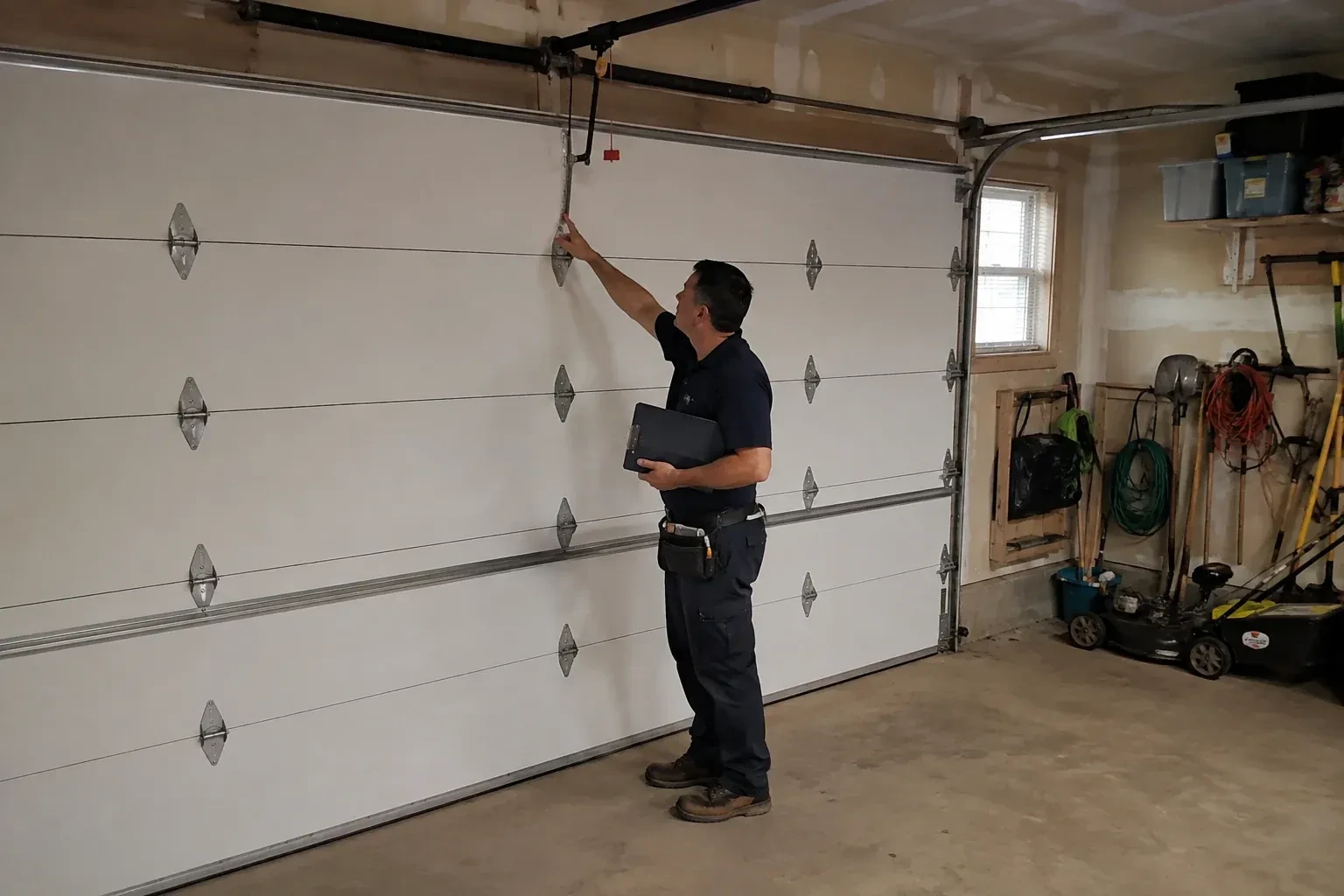
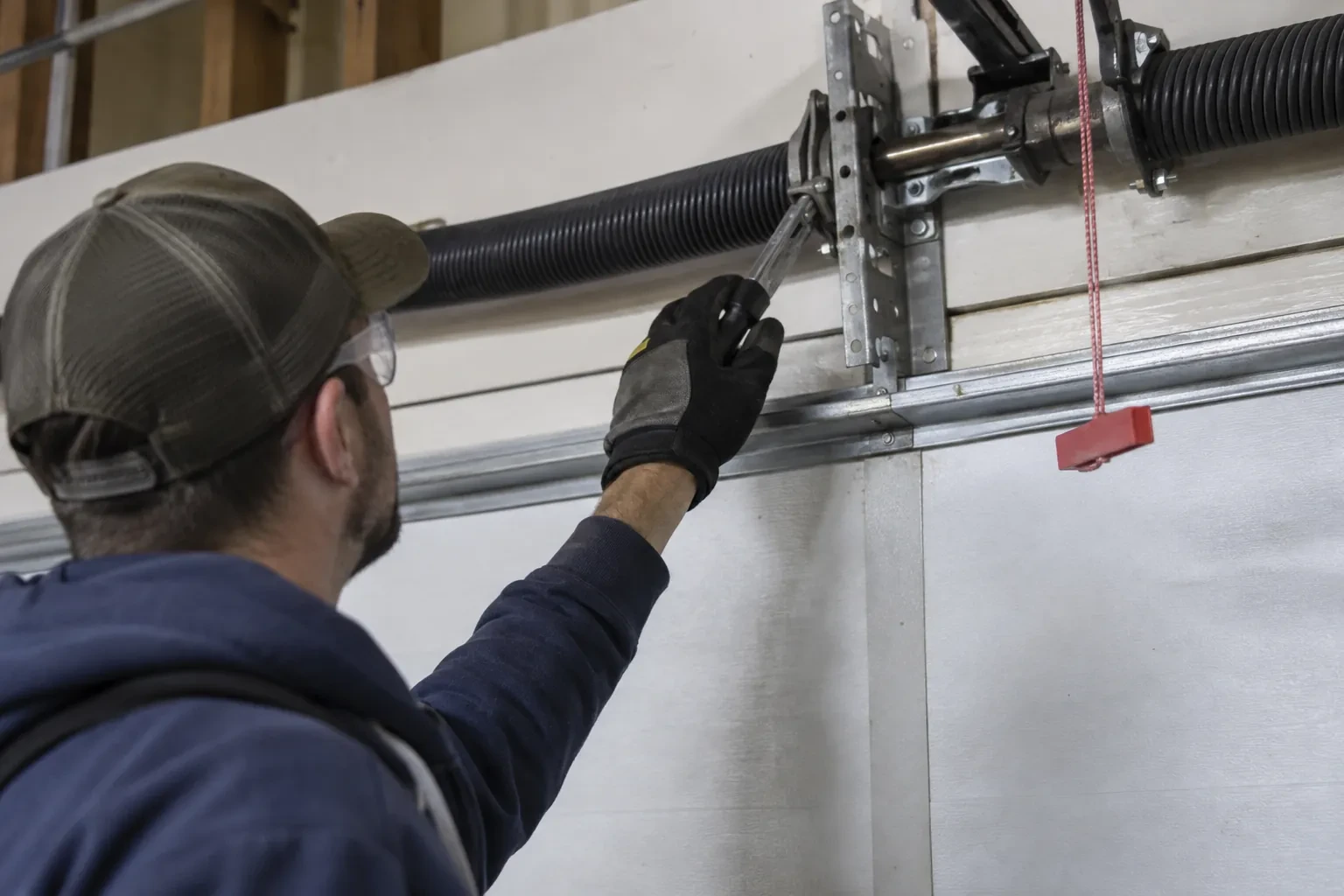
Three tests sit at the heart of the visit. The balance test, done with the opener disconnected, shows whether the springs are still carrying the door's weight or the motor is straining to do it. The contact-reversal test, a flat board laid on the floor, shows whether the door backs off when it meets something solid. The photo-eye test, breaking the beam while the door closes, shows whether the sensors stop it before contact. Each one takes a minute, each answers a different question, and together they tell you the door is doing what it was built to do.
How the visit goesThere is a new sound. Last week the door simply hummed up and down; now there is a bang at the top of travel and a scrape on the way back, and you have started standing well back while it moves.
Garage Door Safety Inspection
How the visit goes
What you have noticed, and when it started
You are part of the assessment. The technician asks when the door last felt normal, what the first change was, whether a sound comes on the way up or the way down, and whether anything happened just before: a bump from the car, a heavy snowfall, a power cut, a new remote. A door that got noisy over a year and a door that changed overnight are different stories, and the second usually has a single cause. Previous repair paperwork, the door's manual and any photos from when the house was bought are all useful. This short conversation tends to shorten the search and adds context to the report that a checklist alone would miss.
Sorting the findings at the door
Before packing up, the technician walks you through what was found, in front of the door so each item can be pointed at. Findings are sorted into four groups: in good order, maintenance, planned repair, and stop-use. For each repair, you hear what the part does, why it matters and roughly what the work involves, so you can decide in your own time. If anything falls into the stop-use group, you are shown the reason and the door is left in a safe position with the opener disconnected until that item is corrected. The written record follows, with the model numbers, the measurements and the photographs.
A dated record you can keep with the manuals
You leave the visit with a written report tied to a date, the door and opener model numbers, and the technician's name. It lists what was in good order, what was maintained on the spot, what is worth planning and, if anything, what must be corrected before the door is used. Measurements and photographs sit alongside the findings so a future repair can be quoted from the record and a future inspection can show what changed. Keep it with the door's manuals or in the home file. It is the kind of document that answers a buyer's question, an insurer's question or your own question in a year's time in one page.
Garage Door Safety Inspection
In the van
Tape measure and level
Flat 2x4 test board
Silicone garage-door lubricant
Inspection checklist and report form
Camera for findings
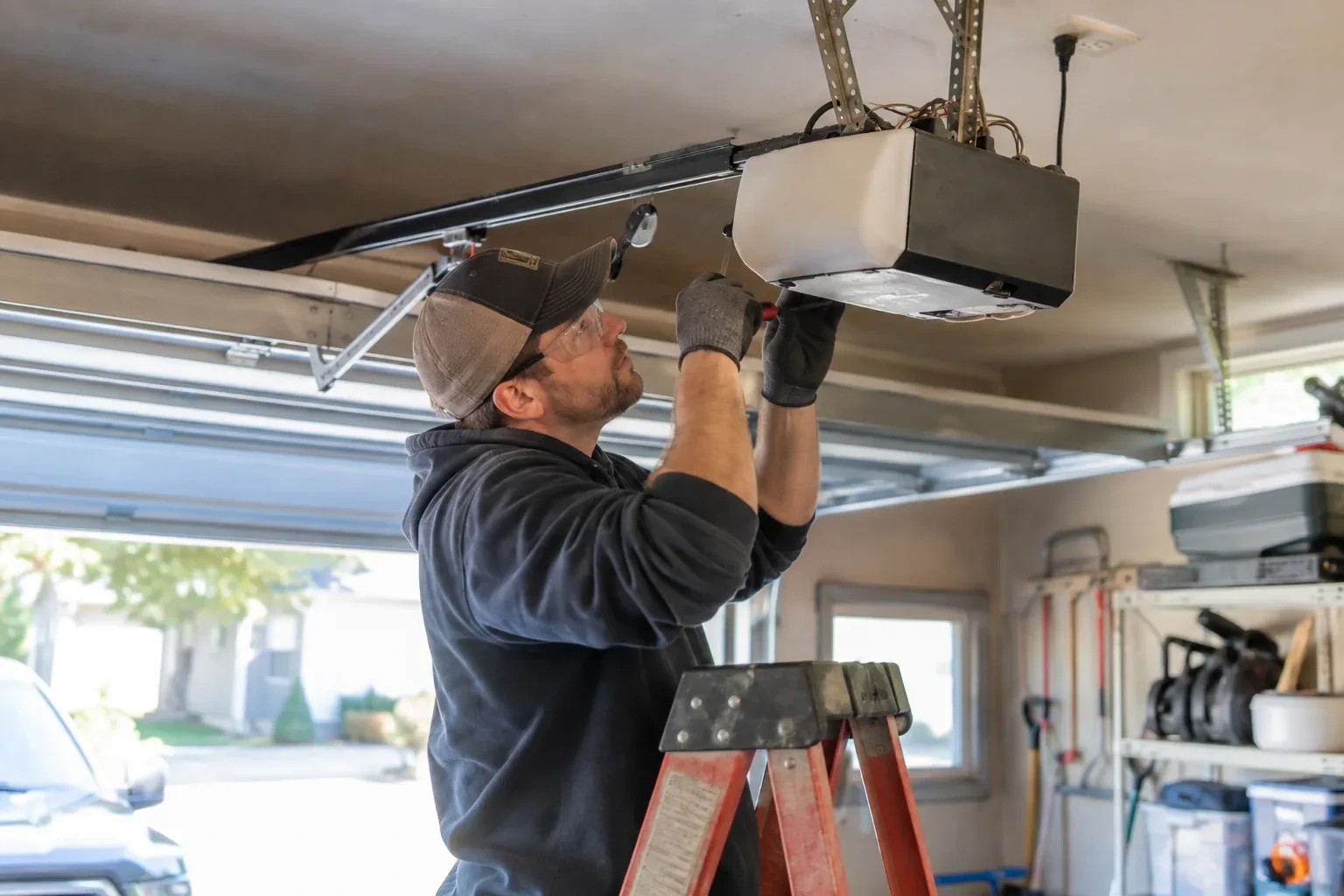
Garage Door Safety Inspection
What affects the quote
Opener type and age
A current opener with photo eyes, a keypad and several remotes has more devices to test than an older unit with contact reversal alone, and the test procedures differ by model.
What is stored around the door
Shelving under the spring shaft, bikes along the tracks or a car left inside slow the visual walk. Clearing the area beforehand keeps the inspection to its planned length.
Small parts replaced on the spot
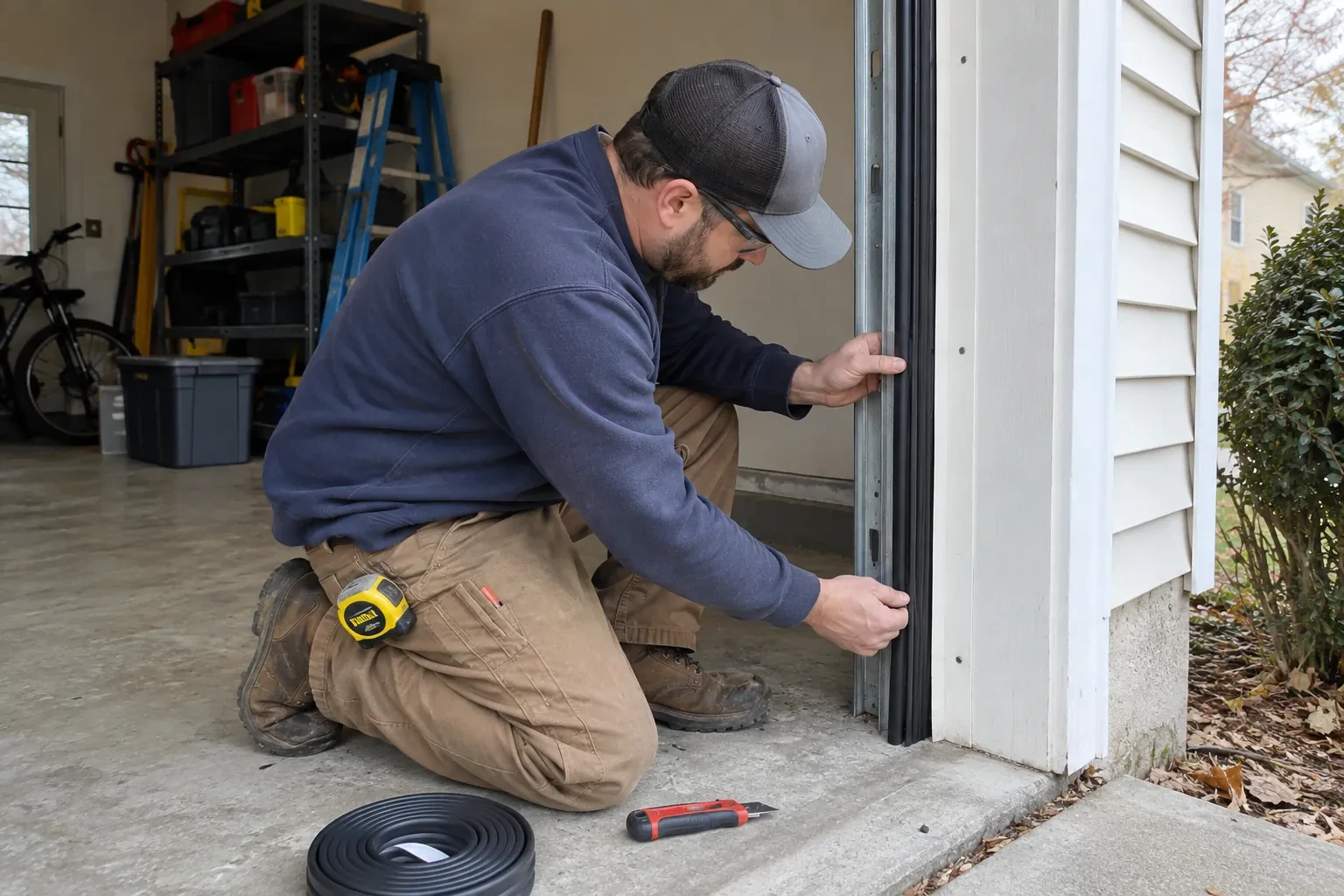
A missing hinge bolt, a stripped track lag or a remote battery can be replaced from the van. Parts fitted this way are listed individually rather than folded into the inspection.
What to have ready
- Have you tried lifting the door by hand, and how did it feel?
- What make is the opener, and does it have sensors near the floor on each side?
- How many doors need inspecting, and are they all at the same address?
Garage Door Safety Inspection: questions
QuestionsWhy does my door reverse on the way down for no reason?
Most often it is the photo eyes. A sensor knocked slightly out of line, a lens with a film of road grime, a loose wire, or low afternoon sun shining straight into one eye will each break the beam as far as the opener is concerned. The next candidates are a down-force setting that has drifted, a binding roller or a door that has gone out of balance. The inspection checks each in turn.
How should I prepare for the appointment?
Move the car out if you can and clear a metre or so in front of the door and along both tracks so the technician can reach the hinges and brackets. Find the door and opener manuals and any earlier repair paperwork. Have every remote and the keypad code to hand. If something has changed lately, be ready to say when and what you noticed first. If the door looks wrong, leave it where it is.
How often should a garage door be inspected?
Once a year suits most households, and early spring, after the salt and freeze-thaw season, is a natural time. A door that opens many times a day, an older door, or one on a rental where nobody watches it closely does well with a look each season. Between visits, the monthly balance, reversal and photo-eye checks that industry guidance recommends catch most changes early.
Related services
- Off-Track Garage Door ResetYou tapped the door with the bumper while backing in, barely a nudge, and now the bottom corner has swung inward.
- Garage Door Panel ReplacementFrom outside, the horizontal groove between two sections now steps sideways by a centimetre.
- Garage Door Bottom Seal ReplacementThe gap under the door is a finger wide at one end and nothing at the other.